New York Mets vs Los Angeles Dodgers: A Rivalry Etched in History
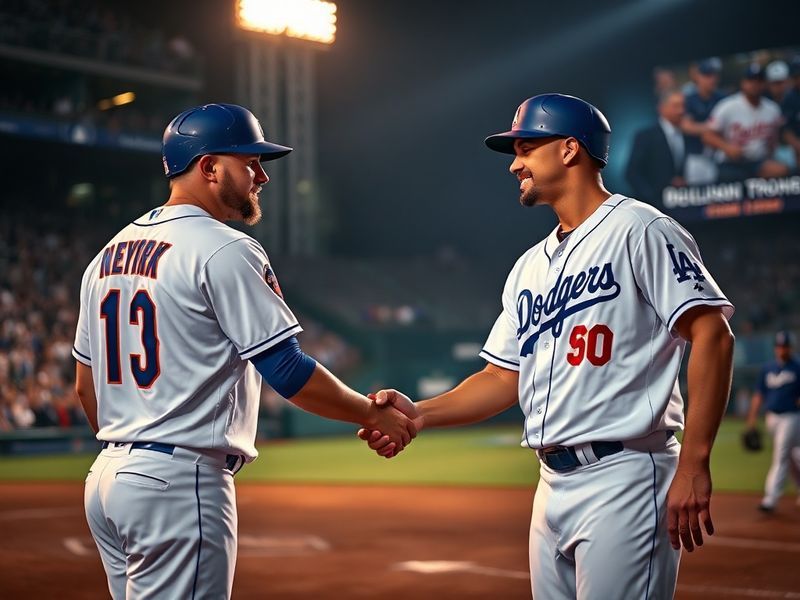
The New York Mets and Los Angeles Dodgers share one of baseball’s most storied rivalries, spanning generations and continents. While their geographic divide spans nearly 2,500 miles, their battles on the field have created a cultural bridge between East Coast grit and West Coast flair. This rivalry isn’t just about wins and losses—it’s woven into the fabric of baseball’s global evolution, reflecting shifts in media, migration, and fan identity.
Born in the late 1950s when the Dodgers left Brooklyn for Los Angeles, the franchise carried a legacy of innovation and fan devotion that the Mets would soon inherit. When the Mets debuted in 1962, they inherited the Dodgers’ mantle as New York’s National League team, setting the stage for a rivalry that would grow beyond New York’s boroughs. Over six decades, the Mets and Dodgers have clashed in iconic moments—from World Series showdowns to no-hitters and walk-off heroics—each chapter adding layer to a narrative that resonates far beyond Citi Field and Dodger Stadium.
The Cultural Divide: East Coast Attitude vs. West Coast Style
The Mets-Dodgers rivalry mirrors broader cultural tensions between New York and Los Angeles—two cities that define American ambition in different ways. New York, with its blue-collar work ethic and relentless energy, is often seen as the heart of tradition. The Mets, born from the ashes of two failed teams (the Giants and Dodgers’ Brooklyn departure), became the city’s scrappy underdog, embraced by a fanbase that thrives on suffering and loyalty. Their fans are known for their passion, even in defeat, and their orange-and-blue colors carry the weight of history.
Los Angeles, by contrast, has long been associated with glamour, innovation, and reinvention. The Dodgers arrived in 1958, bringing Major League Baseball to the West Coast and aligning with Hollywood’s star power. The team became a symbol of sunshine, showbiz, and progress, drawing a diverse, entertainment-savvy fanbase. When the Mets and Dodgers meet, it’s not just a game—it’s a collision of cultures: the unshakable grit of Queens versus the aspirational glow of Chavez Ravine.
This cultural duality has influenced how each team is perceived globally. The Mets are often seen as the embodiment of New York’s resilience, while the Dodgers are viewed as pioneers of baseball’s expansion into new markets. Their rivalry has become a lens through which fans worldwide interpret American identity—where tradition meets transformation, and loyalty clashes with reinvention.
Global Fandom: How the Mets and Dodgers Became International Icons
Baseball’s globalization has turned the Mets and Dodgers into global brands, each with a fanbase that stretches from Tokyo to Toronto. The Dodgers, in particular, have cultivated a massive international following, thanks in part to their historic ties to Jackie Robinson and their embrace of multiculturalism. Their games in Mexico City and London have expanded their reach, making them one of MLB’s most globally recognized teams.
The Mets, too, have carved out an international presence, particularly in Latin America and the Caribbean. Players like Edgardo Alfonzo, Carlos Beltrán, and Francisco Lindor have deepened the team’s connection to communities where baseball is more than a sport—it’s a way of life. The team’s annual Puerto Rico Series games have further cemented this bond, turning San Juan into a temporary home for Mets baseball.
This global fandom isn’t just about merchandise sales or social media followers. It’s about how these teams represent different aspects of the baseball diaspora. The Dodgers, with their history of signing international stars like Fernando Valenzuela and Hyun-Jin Ryu, embody baseball’s melting pot. The Mets, meanwhile, represent the immigrant experience—players like Yoenis Céspedes and Pete Alonso resonate with fans who see themselves in the team’s blue-collar ethos.
In cities like Tokyo, where baseball is a national obsession, fans often split loyalties between the Dodgers and Mets based on their favorite players or playing styles. This global reach has turned their rivalry into a cultural export, with games broadcast in over 200 countries and highlights shared across social platforms in real time.
Key Moments That Defined a Rivalry
No rivalry is complete without defining moments, and the Mets-Dodgers matchups have delivered plenty. Here are some of the most unforgettable:
- 1988 NLCS – Kirk Gibson’s Walk-Off: Though not a Mets-Dodgers postseason series, Gibson’s iconic home run off Dennis Eckersley in Game 1 of the 1988 World Series (Dodgers vs. A’s) became a blueprint for clutch hitting that resonates in every Mets-Dodgers tussle. Gibson’s swing is etched in baseball lore, a moment that transcends teams.
- 2015 Subway Series Reboot: Though technically interleague play, the 2015 matchups between the Mets and Dodgers felt like a modern resurrection of the borough wars. The Dodgers’ Yasiel Puig and the Mets’ Noah Syndergaard brought a new generation of flair and intensity to the rivalry.
- 2022 Pitcher’s Duel – Scherzer vs. Kershaw: In a 2022 game at Dodger Stadium, Max Scherzer and Clayton Kershaw faced off in a masterclass of pitching. Scherzer struck out 11 in seven innings, while Kershaw allowed just two hits. The 2-1 final was a reminder of the rivalry’s ability to showcase baseball at its finest.
- Pete Alonso’s Home Run Derby Dominance: Alonso’s back-to-back Home Run Derby wins (2019, 2021) have given Mets fans bragging rights in a rivalry often dominated by the Dodgers’ star power. His prodigious power has made him a modern symbol of Mets resilience.
These moments aren’t just stats or highlights—they’re cultural touchpoints. They’re shared across generations, retold in bars, on podcasts, and in living rooms. For many fans, a Mets-Dodgers game isn’t just another series; it’s a ritual, a chance to relive history or create new memories.
Why This Rivalry Matters in the Modern Era
In an era where baseball is competing with global sports leagues and entertainment options, the Mets-Dodgers rivalry remains a cornerstone of MLB’s identity. It’s a reminder of why baseball still captivates audiences worldwide: because it’s more than a game. It’s a story of cities, cultures, and communities.
The rivalry also highlights baseball’s evolving role in American culture. With the rise of analytics and the decline of traditional sports media, teams like the Mets and Dodgers have had to adapt. The Dodgers, under the ownership of Guggenheim Baseball Management, have embraced data-driven decision-making while maintaining their star-studded image. The Mets, under Steve Cohen’s ownership, have invested heavily in analytics and international scouting, mirroring the global ambitions of their fanbase.
Social media has also transformed how fans engage with the rivalry. Memes, viral moments, and player interactions on platforms like Twitter and Instagram have turned every matchup into a digital spectacle. A single tweet from a star player can ignite debates that span continents, proving that this rivalry is as much about pixels as it is about pinstripes.
Moreover, the rivalry reflects broader societal shifts. The Mets’ fanbase is increasingly diverse, reflecting New York’s multicultural identity. The Dodgers, meanwhile, have long been a team of immigrants, from Jackie Robinson to Shohei Ohtani. Their games are a celebration of what makes America—and baseball—great: a tapestry of backgrounds, dreams, and determination.
As baseball looks to grow its international footprint, the Mets and Dodgers are at the forefront. Whether it’s the Dodgers playing in Monterrey or the Mets hosting games in Puerto Rico, their rivalry is helping to shape the future of the sport. And as long as there are fans who bleed blue and dodger blue, this rivalry will endure.
A Rivalry That Transcends Baseball
The Mets vs. Dodgers isn’t just a baseball rivalry—it’s a cultural institution. It’s a story of two cities, two coasts, and two ways of life colliding and coexisting. It’s about the immigrant experience, the power of underdogs, and the global appeal of America’s pastime.
For fans, the rivalry is personal. It’s about family traditions, childhood memories, and the simple joy of watching a game. For newcomers, it’s an introduction to baseball’s rich history and its ability to bring people together, no matter where they’re from.
As the 2024 season approaches, anticipation builds once again. Will the Dodgers’ pitching dominate? Can the Mets’ young stars rise to the occasion? Will there be another moment that becomes part of the rivalry’s legend? One thing is certain: when these two teams take the field, the world watches.
For more sports coverage, visit our Sports section.
Explore baseball history and analysis in our Analysis category.