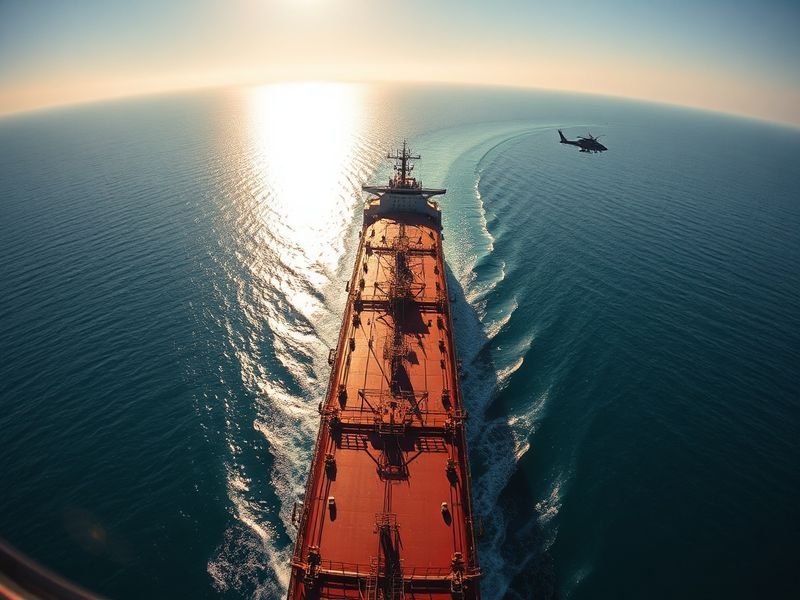
Strait of Hormuz: Why This Waterway Could Disrupt Global Oil
“`html
Strait of Hormuz: The World’s Most Critical Chokepoint
The Strait of Hormuz, a narrow waterway between Iran and Oman, has long been a flashpoint in global energy markets and geopolitical tensions. Connecting the Persian Gulf to the Gulf of Oman, it serves as the sole route for nearly a third of the world’s seaborne oil. Recent developments have intensified scrutiny on this strategic corridor, raising concerns about supply disruptions and regional stability.
In 2023 alone, the U.S. Navy reported multiple confrontations between Iranian forces and commercial vessels, including the seizure of tankers and close encounters with warships. These incidents underscore the strait’s vulnerability and its role as a pressure point in broader conflicts. Analysts warn that any significant disruption could send shockwaves through global oil prices, with ripple effects for economies worldwide.
Recent Incidents and Escalating Tensions
Since early 2023, the Strait of Hormuz has witnessed a surge in maritime incidents. In May, Iranian forces seized two Greek-flagged oil tankers, citing alleged violations of environmental regulations. Days later, a Norwegian-owned tanker was detained near the strait, prompting condemnation from the European Union and calls for diplomatic intervention.
These actions followed a pattern of aggressive tactics by Iran’s Islamic Revolutionary Guard Corps (IRGC), which has increasingly targeted vessels in the region. In August 2023, the U.S. Central Command reported that Iranian drones and helicopters harassed a commercial ship, forcing it to alter course. Such incidents highlight the strait’s role as a theater for proxy conflicts and power projection.
International responses have varied. The U.S. has deployed additional naval assets to the area, including the USS Dwight D. Eisenhower carrier strike group, to deter further provocations. Meanwhile, European nations have urged restraint, emphasizing the need for dialogue to prevent a broader crisis. The situation remains fluid, with each incident raising the stakes for regional and global stakeholders.
Key Players and Their Interests
The Strait of Hormuz is not just a geographic feature; it is a battleground for competing interests. For Iran, control over the strait is both a strategic necessity and a bargaining chip in negotiations with Western powers. The country’s leadership has repeatedly threatened to close the waterway in response to sanctions or perceived aggression, a move that would cripple global oil markets.
Saudi Arabia and the United Arab Emirates, major oil exporters, rely heavily on the strait for their energy exports. Any disruption could force them to reroute shipments through alternative channels, such as the Red Sea or overland pipelines, at significant additional cost. For the U.S. and its allies, maintaining freedom of navigation in the strait is a cornerstone of their regional strategy, ensuring the flow of oil to global markets.
China and India, both major importers of Middle Eastern oil, have also taken notice. China, in particular, has deepened its economic ties with Iran, including oil purchases and infrastructure investments. However, Beijing has remained cautious, balancing its strategic partnerships with the need to avoid entanglement in regional conflicts. India, meanwhile, has sought to diversify its oil sources to reduce dependence on the strait, exploring routes through Russia and Central Asia.
Economic and Geopolitical Implications
The economic stakes of a Strait of Hormuz closure are staggering. According to the U.S. Energy Information Administration, about 21 million barrels of oil pass through the strait daily—roughly 20% of global supply. A prolonged disruption could push oil prices beyond $150 per barrel, triggering a global recession and fueling inflation in energy-dependent economies.
Beyond oil, the strait is a critical artery for liquefied natural gas (LNG) shipments. Qatar, the world’s largest LNG exporter, relies on the strait to transport its gas to Asia and Europe. Any disruption could exacerbate energy shortages in key markets, particularly in Europe, which has sought to reduce dependence on Russian gas.
Geopolitically, the strait’s instability complicates efforts to revive the Iran nuclear deal. Negotiations have stalled repeatedly, with Iran demanding sanctions relief and guarantees against future U.S. withdrawal. The Biden administration has signaled willingness to re-enter talks, but the ongoing maritime tensions add another layer of complexity to an already fraught process.
Military Posturing and Deterrence Strategies
The U.S. has long maintained a robust military presence in the region to ensure the free flow of commerce. The Fifth Fleet, based in Bahrain, oversees operations in the Persian Gulf, Strait of Hormuz, and beyond. In recent years, the fleet has expanded its patrols, deploying advanced destroyers and surveillance aircraft to monitor Iranian activities.
Iran, in turn, has bolstered its asymmetric capabilities, including fast-attack boats, anti-ship missiles, and naval drones. The IRGC’s tactics—such as swarming vessels or deploying mines—are designed to exploit the strait’s narrow confines, where large ships have limited maneuverability. These asymmetric approaches create a dilemma for U.S. forces, who must balance deterrence with the risk of escalation.
Alliances play a crucial role in shaping the strait’s security landscape. The U.S. has strengthened partnerships with Gulf states through initiatives like the International Maritime Security Construct (IMSC), which includes nations such as the UK, Australia, and Bahrain. These coalitions aim to enhance maritime domain awareness and coordinate responses to threats.
Meanwhile, Russia and China have sought to counter U.S. influence in the region. Russia has supplied Iran with advanced missile systems, while China has conducted joint naval exercises with Iran and Pakistan in the Arabian Sea. These moves signal a shift toward a more multipolar security environment, where traditional U.S. dominance is increasingly challenged.
What’s Next for the Strait of Hormuz?
The future of the Strait of Hormuz hinges on several critical factors. Diplomatic efforts to revive the Iran nuclear deal remain a priority, as a comprehensive agreement could ease tensions and reduce the risk of military confrontation. However, the prospects for success are uncertain, given the deep mistrust between Iran and the West.
Technological advancements may also play a role in mitigating risks. The development of autonomous vessels and improved tracking systems could enhance maritime security, allowing for better monitoring of potential threats. Additionally, investments in alternative energy sources and supply chain diversification could reduce global reliance on the strait, though such measures would take years to implement.
For now, the situation remains precarious. The combination of Iran’s assertive behavior, U.S. military posturing, and the strait’s strategic importance creates a volatile mix. Analysts warn that a single miscalculation could trigger a broader conflict, with severe consequences for global energy markets and geopolitical stability.
As the world watches, the Strait of Hormuz remains a litmus test for the resilience of international norms and the effectiveness of deterrence strategies. Whether through diplomacy, technological innovation, or military vigilance, the path forward will require careful navigation of one of the world’s most critical waterways.
How to Stay Informed
Keeping up with developments in the Strait of Hormuz requires a multifaceted approach. For real-time updates, follow reputable sources such as the News section of Dave’s Locker, which covers breaking maritime and geopolitical events. Additionally, organizations like the U.S. Energy Information Administration and the International Energy Agency provide data-driven insights into the economic impacts of strait disruptions.
For a deeper understanding of the region’s dynamics, consider exploring Analysis pieces that examine the geopolitical and economic dimensions of Middle Eastern conflicts. These resources can help contextualize the latest headlines and anticipate future trends.