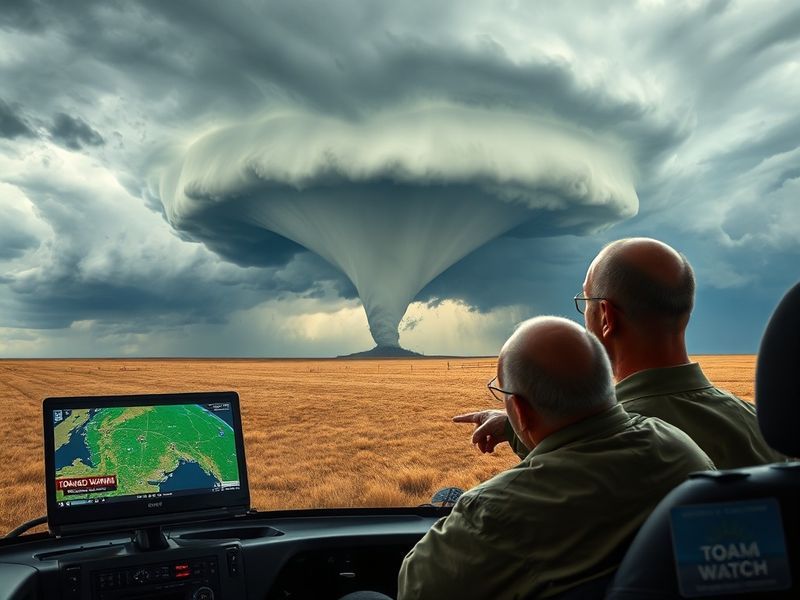
Tornado Watch vs Warning: Know the Critical Difference
“`html
Tornado Warning vs Watch: What You Need to Know
The difference between a tornado warning and a watch is more than just terminology—it’s about time, urgency, and survival. While these terms are often used interchangeably in everyday conversation, they carry distinct meanings for meteorologists and emergency responders. Understanding the distinction could make all the difference when severe weather strikes.
In the United States alone, an average of 1,200 tornadoes occur each year, according to the National Oceanic and Atmospheric Administration (NOAA). These twisters vary in intensity, with some causing minor damage and others wiping out entire communities. Recognizing the difference between a tornado watch and a warning can help individuals and families respond appropriately, potentially saving lives.
What Is a Tornado Watch?
A tornado watch is issued by the Storm Prediction Center (SPC) when atmospheric conditions are favorable for the development of tornadoes. This does not mean a tornado is imminent, but it signals that the environment is primed for severe weather.
During a tornado watch, residents should remain alert and prepared to act quickly. The SPC typically issues watches hours in advance, giving people time to review emergency plans, gather supplies, and monitor local weather updates. These watches often cover large geographic areas and can last several hours.
Key characteristics of a tornado watch include:
- Duration: Usually lasts 4 to 8 hours
- Coverage: Spans multiple counties or states
- Action Required: Stay informed, prepare for possible severe weather
- Issued By: Storm Prediction Center (SPC)
What Is a Tornado Warning?
A tornado warning, on the other hand, is far more urgent. It is issued by local National Weather Service (NWS) offices when a tornado has been detected by radar or reported by storm spotters. This means a tornado is either occurring or imminent in the warned area.
Warnings are typically issued for much smaller areas and shorter timeframes—often only 15 to 30 minutes. The goal is to provide immediate actionable information so people can seek shelter without delay. Unlike watches, warnings require an immediate response to protect life and property.
Key characteristics of a tornado warning include:
- Duration: Usually lasts 30 minutes or less
- Coverage: Targets specific counties or communities
- Action Required: Take shelter immediately
- Issued By: Local National Weather Service offices
Why the Distinction Matters
The difference between a watch and a warning is not just bureaucratic—it’s a matter of life and death. During a watch, people can afford to stay informed and prepare. When a warning is issued, every second counts. Misinterpreting these alerts can lead to unnecessary panic or, worse, complacency in the face of danger.
Consider the case of the 2011 Joplin, Missouri, tornado. The National Weather Service issued a warning 24 minutes before the EF-5 tornado struck, yet 161 people lost their lives. While the warning was timely, the community’s response varied widely. Some took shelter immediately, while others delayed, assuming the danger was exaggerated. This tragic event underscores the importance of clear communication and public education about weather alerts.
Another critical factor is the role of technology in improving warnings. Advances in Doppler radar and storm-tracking software have significantly reduced lead times. In the 1980s, the average warning time was just five minutes. Today, it’s closer to 13 minutes—still not enough for some, but a vast improvement. Meteorologists continue to refine forecasting models, aiming to extend warning times without increasing false alarms.
How to Prepare for Both Scenarios
Preparation is the best defense against tornadoes, whether you’re under a watch or a warning. Start by identifying the safest place in your home—a basement or an interior room on the lowest floor, away from windows. Assemble an emergency kit with essentials like water, non-perishable food, flashlights, batteries, and a first-aid supplies. Keep this kit accessible, as you may not have time to gather it during a warning.
Staying informed is equally critical. Invest in a weather radio or enable emergency alerts on your smartphone. Apps like the National Weather Service’s official app provide real-time updates and location-based warnings. If you live in a tornado-prone region, consider joining a local storm-spotting program. These groups work alongside meteorologists to report on-the-ground conditions, helping refine warnings.
For businesses and schools, tornado preparedness extends beyond individual action. Establish clear evacuation and shelter protocols, and conduct regular drills. Ensure that all staff or students know where to go and what to do when a warning is issued. In tornado-prone areas, reinforced safe rooms can provide additional protection for large groups.
Broader Implications of Effective Weather Communication
The distinction between tornado watches and warnings reflects a broader trend in emergency communication: clarity and precision save lives. In an era where misinformation spreads rapidly, the NWS and SPC prioritize accuracy and timeliness. Their work is a model for how science and public safety intersect.
However, challenges remain. False alarms can lead to complacency, while missed warnings can have catastrophic consequences. Balancing urgency with accuracy is a delicate act. Researchers are exploring new technologies, such as artificial intelligence, to improve forecasting and reduce errors. These innovations could further extend warning times and enhance public trust in weather alerts.
Community engagement also plays a vital role. Local meteorologists often hold public forums to explain weather risks and response strategies. Schools incorporate severe weather education into their curricula, teaching children how to react. When communities are informed and prepared, the impact of tornadoes—even the most severe—can be mitigated.
For more insights into severe weather preparedness and emergency response, explore Dave’s Locker News and Science sections. These resources offer in-depth analysis and practical advice for staying safe in unpredictable conditions.
Ultimately, understanding the difference between a tornado watch and a warning is about more than semantics. It’s about recognizing the urgency of a moment and knowing how to respond. In a world where severe weather is an inevitable reality, preparation and awareness are the best tools for survival.