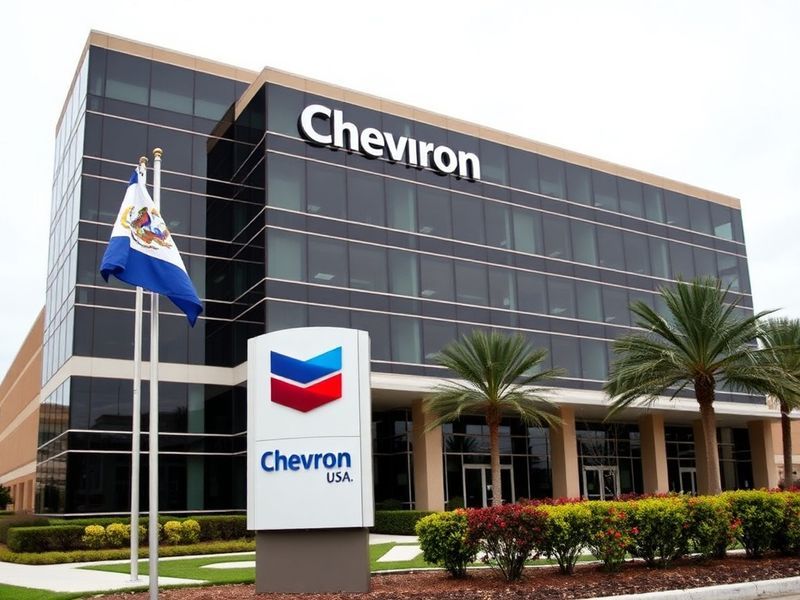
In early 2024, a legal confrontation between Chevron USA Inc and Plaquemines Parish, Louisiana, intensified as the parish filed a lawsuit alleging the energy giant had failed to properly maintain and decommission pipelines in local waters. The case, Chevron USA Inc v. Plaquemines Parish Government, has drawn attention not only for its immediate stakes—potentially millions in cleanup costs and regulatory penalties—but also for what it signals about corporate accountability in coastal environmental management.
Plaquemines Parish, a narrow strip of land where the Mississippi River meets the Gulf of Mexico, has long been a focal point for environmental degradation due to industrial activity. Its wetlands, vital for storm protection and biodiversity, have steadily eroded. The parish government argues that Chevron and other energy companies bear responsibility for pipeline infrastructure that may be leaking or improperly abandoned, worsening land loss and ecosystem damage.
The Roots of the Dispute
The conflict traces back to the 1950s and 1960s, when Chevron and other oil companies built thousands of miles of pipelines across Louisiana’s coastal waters to transport oil and gas. Many of these pipelines were constructed without long-term decommissioning plans. Over time, some have corroded, become structurally unsound, or been improperly abandoned—leaving behind what environmentalists call “zombie pipelines.”
Plaquemines Parish’s lawsuit, filed in state court, specifically targets Chevron for alleged violations of Louisiana’s environmental laws, including the Louisiana Environmental Quality Act and the Louisiana Coastal Resources Law. The parish claims Chevron failed to:
- Conduct proper inspections of aging pipelines;
- Remediate known leaks or risks of leaks;
- Secure permits for pipeline abandonment;
- Provide adequate financial assurance for future cleanup.
Chevron, in response, has argued that it complied with all regulatory requirements at the time and that responsibility for pipeline maintenance and decommissioning should be shared among multiple operators. The company has also pointed to state and federal agencies—like the Bureau of Safety and Environmental Enforcement (BSEE)—as the proper authorities for oversight, not a local government.
Legal Strategy and Counterclaims
Chevron has taken an aggressive legal posture. In March 2024, the company filed a third-party complaint not only against the parish but also against dozens of other energy companies operating in the region. This tactic shifts liability onto smaller operators and contractors, suggesting that Chevron’s role was limited and that others share responsibility for environmental harm.
The company’s strategy appears designed to:
- Dilute legal and financial exposure by spreading blame;
- Shift the burden of proof onto the parish and co-defendants;
- Delay proceedings through procedural maneuvers, including removal to federal court based on diversity jurisdiction.
Plaquemines Parish, however, has doubled down on its local authority argument. Parish President Keith Hinkley has stated publicly that the state has failed to hold companies accountable, forcing local government to act. “We are not waiting for Baton Rouge or Washington to act,” Hinkley said in a March 2024 press conference. “Our wetlands are disappearing. Our people are at risk. We will use every legal tool available.”
Broader Implications for Energy and Environmental Law
This case is more than a local dispute—it represents a growing wave of litigation where local governments, facing the accelerating impacts of climate change and industrial neglect, are taking direct legal action against multinational corporations. Similar lawsuits have emerged in Texas, California, and Alaska, where municipalities and Indigenous groups are suing fossil fuel companies over climate damages or environmental contamination.
Two key legal theories are being tested in Chevron USA Inc v. Plaquemines Parish:
- Public Nuisance Doctrine: The parish argues that Chevron’s pipelines constitute a public nuisance by degrading shared natural resources.
- CERCLA (Superfund) Liability: Though not yet formally invoked, the parish has signaled it may pursue claims under the federal Comprehensive Environmental Response, Compensation, and Liability Act, which allows for retroactive liability for hazardous substance releases.
If the parish prevails, it could set a precedent for local governments nationwide to hold energy companies accountable for legacy infrastructure. Conversely, a ruling favoring Chevron’s narrow interpretation of responsibility could embolden corporations to challenge similar claims elsewhere, arguing that state or federal agencies—not local governments—have exclusive oversight.
The outcome may also influence how the Biden administration’s Justice40 Initiative—which directs 40% of federal climate investments to disadvantaged communities—interacts with ongoing legal battles. Plaquemines Parish, already designated as an environmental justice community, could become a test case for how federal resources are deployed in areas already burdened by industrial harm.
What’s Next? Potential Outcomes and Stakes
The case is still in its early stages. A federal judge in the Eastern District of Louisiana is currently reviewing Chevron’s motion to dismiss or transfer the case. Oral arguments are expected by summer 2024, with a decision possible later in the year.
Regardless of the outcome, the lawsuit has already forced a reckoning. It has:
- Exposed gaps in Louisiana’s pipeline regulation and decommissioning laws;
- Galvanized environmental justice advocates to push for stronger local enforcement;
- Pushed Chevron into a defensive posture, potentially accelerating its own internal reviews of aging infrastructure;
- Highlighted the role of coastal parishes as frontline defenders of environmental integrity.
For Plaquemines Parish, the stakes are existential. The parish loses a football field of land every 100 minutes due to subsidence, sea-level rise, and erosion. Every undetected leak from a rusted pipeline accelerates that loss. The lawsuit is not just about money—it’s about survival.
Chevron, meanwhile, faces reputational risk. In an era where energy companies are under increasing scrutiny for environmental performance, this case could further erode public trust—especially in communities already skeptical of corporate motives.
“This isn’t just about Chevron. It’s about whether a company that profited for decades from our resources can walk away without cleaning up its mess. We’re saying no.” — Keith Hinkley, Plaquemines Parish President
Conclusion: A Watershed Moment for Environmental Justice
Chevron USA Inc v. Plaquemines Parish Government may well become a landmark case—not because it’s the first of its kind, but because it crystallizes a growing tension between corporate legacy liabilities and community survival. It forces a confrontation between short-term profit motives and long-term ecological resilience.
While Chevron’s legal team works to narrow the scope of liability, Plaquemines Parish is making clear that it will not accept deferred responsibility. The outcome could redefine environmental law in Louisiana and serve as a model—or a cautionary tale—for coastal communities across the nation.
One thing is certain: the wetlands of Plaquemines are watching. And so is the rest of America.