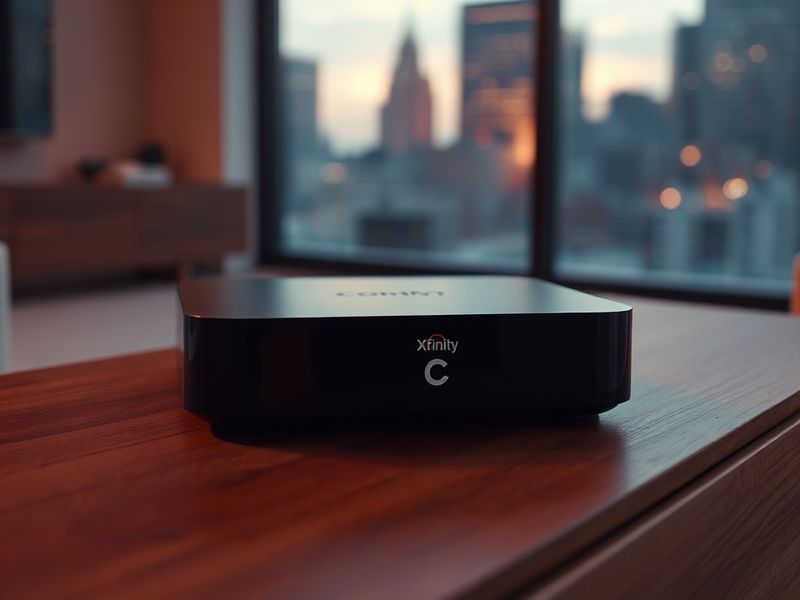
How Comcast Xfinity Shapes Global Broadband and Digital Culture
“`html
Comcast Xfinity: A Broadband Pioneer Shaping Global Connectivity
Comcast Corporation’s Xfinity brand has quietly become one of the most influential broadband and cable service providers on the planet. While often overshadowed by its parent company’s size and scale, Xfinity’s network spans millions of homes across the United States and serves as a case study in how telecom infrastructure evolves in response to consumer demand, technological change, and regulatory environments. Its story is not just about delivering internet and television—it’s about redefining what it means to be “connected” in the 21st century.
From its origins as a regional cable operator to its current status as a national broadband powerhouse, Xfinity has navigated a shifting landscape marked by consolidation, streaming competition, and rising expectations for speed and reliability. Its impact extends beyond U.S. borders, offering lessons in digital inclusion, infrastructure investment, and the challenges of balancing profit with public service in an age where connectivity is a public utility.
The Rise of Xfinity: From Cable Roots to Digital Dominance
Xfinity began as part of Comcast’s strategic rebranding in 2010, consolidating several legacy brands under one unified identity. The move was more than cosmetic—it reflected a pivot from traditional cable TV toward a future built on high-speed internet and digital platforms. By 2015, Xfinity had rolled out gigabit-speed internet across major markets, positioning itself ahead of many competitors in the race to deliver fiber-like speeds over hybrid coaxial-fiber networks.
This evolution mirrored broader trends in global telecom. In countries like South Korea and Japan, government-led initiatives pushed fiber-to-the-home (FTTH) penetration beyond 80%, setting a benchmark for speed and reliability. Meanwhile, in Europe, regulators emphasized open access to infrastructure, fostering competition among providers. Xfinity’s approach—leveraging existing coaxial networks with DOCSIS 3.1 technology—represented a pragmatic middle path: rapid deployment without the massive capital outlay of full fiber rollouts.
By 2024, Xfinity’s network covered over 40 million homes and businesses, with internet speeds reaching up to 6,000 Mbps in select markets. This made it one of the largest providers of gigabit internet in the U.S., a status that carried geopolitical weight. In discussions about digital sovereignty and broadband equity, U.S. infrastructure like Xfinity’s is often cited as a counterpoint to state-controlled models in China or the decentralized fiber networks of the EU.
Technology and Innovation: The Engine Behind Xfinity’s Growth
Xfinity’s technical backbone is built on a mix of coaxial and fiber-optic infrastructure, utilizing the Data Over Cable Service Interface Specification (DOCSIS) standard. DOCSIS 4.0, the latest iteration, enables symmetrical multi-gigabit speeds—up to 10 Gbps downstream and 6 Gbps upstream—blurring the line between cable and fiber. This adaptability has allowed Xfinity to compete with pure-play fiber providers like Google Fiber and AT&T Fiber without overhauling its entire network.
The company has also invested in edge computing and Wi-Fi 6E technology, aiming to reduce latency for cloud gaming, remote work, and 4K streaming. Its Xfinity xFi platform, a home Wi-Fi management system, has become a model for how providers can integrate hardware, software, and customer service into a seamless experience. Globally, similar platforms like Deutsche Telekom’s “Qivicon” or Japan’s “Home IoT” initiatives show how connectivity is increasingly tied to smart home ecosystems.
Yet innovation at Xfinity hasn’t been without friction. Critics point to data caps on some plans and the continued reliance on legacy infrastructure as signs of a company playing catch-up rather than leading. In markets like South Korea, where unlimited gigabit plans are the norm, Xfinity’s tiered pricing can feel restrictive. Still, its investment in AI-driven customer service—using chatbots and predictive analytics—has set a new standard for telecom customer experience in North America.
Global Lessons: What Xfinity Teaches About Broadband Equity
Xfinity’s journey offers insights into the global challenge of broadband equity. In the U.S., internet access is increasingly treated as a civil right, with programs like the Affordable Connectivity Program (ACP) subsidizing service for low-income households. Xfinity participates in this initiative, but critics argue that such efforts are piecemeal compared to universal service models in countries like Sweden or Estonia, where broadband is legally defined as a public utility.
Culturally, Xfinity reflects the tension between American market-driven capitalism and the growing demand for equitable access. While cities like Chattanooga, Tennessee, operate municipally owned fiber networks offering 10 Gbps for $70/month, Xfinity’s average plan in urban areas costs $80–$100 for 1.2 Gbps. This disparity highlights how broadband access in the U.S. is still mediated by corporate strategy, not public mandate.
Abroad, Xfinity’s model contrasts sharply with developments in India, where Reliance Jio disrupted the market with ultra-low-cost 4G and now 5G plans, or in Africa, where initiatives like Liquid Telecom are building open-access fiber networks to connect underserved regions. In each case, the balance between profitability and inclusion shapes the pace and quality of connectivity.
Xfinity’s presence also influences global telecom policy. When it deploys advanced networks in rural Pennsylvania or urban Chicago, it sets expectations for what’s possible—and what’s lacking—in other markets. Policymakers in Canada, Australia, and the EU often look to U.S. models (both public and private) when designing their own digital strategy frameworks.
The Future: Convergence, Competition, and the Next Wave of Connectivity
The next decade will test Xfinity’s ability to remain relevant amid converging industries. The rise of 5G, satellite broadband from companies like SpaceX’s Starlink, and the growing dominance of cloud providers like Amazon and Microsoft are redefining the broadband ecosystem. Xfinity is responding by expanding its Wi-Fi network through partnerships with apartment complexes and small businesses, effectively turning its infrastructure into a shared resource.
There are also cultural shifts to consider. Younger generations expect seamless connectivity not just at home, but on the go. Xfinity’s mobile service, powered by Verizon’s network, is a step toward integrating broadband and wireless—but it faces stiff competition from T-Mobile and Google Fi. Globally, the trend is toward convergence: in South Korea, SK Telecom offers bundled fiber, 5G, and smart home services, while in Europe, Vodafone integrates broadband with entertainment and financial services.
Looking ahead, Xfinity’s greatest challenge may not be technological, but cultural. As streaming services fragment the TV landscape and social platforms replace linear channels, the traditional “cable bundle” is becoming obsolete. Xfinity has pivoted by offering flexible streaming packages and integrating with platforms like Netflix and Prime Video, but the pressure to innovate faster than consumer habits change is relentless.
In this environment, Xfinity’s role as a connectivity provider—rather than just a cable company—may be its saving grace. Whether it can evolve from a utility into a platform for digital life will determine its legacy in the global broadband narrative.
Conclusion: Beyond the Screen
Comcast Xfinity is more than a service provider; it’s a reflection of how infrastructure shapes society. Its growth tells a story of adaptation, of balancing legacy with innovation, and of navigating a world where being “connected” means far more than having a working Wi-Fi signal. From American suburbs to discussions in European parliaments, Xfinity’s network is a touchstone for debates about technology, equity, and the future of communication.
As 6G looms on the horizon and smart cities become reality, companies like Xfinity will be at the center of the transformation. Their choices—whether to prioritize speed, inclusion, or profit—will ripple across economies, cultures, and daily lives. In that sense, the real story of Xfinity isn’t about bandwidth or bills—it’s about what it means to be part of a connected world.
—