The Cultural Impact of the Trump Jesus Meme Explained
“`html
How the “Trump Jesus” Meme Became a Digital Icon
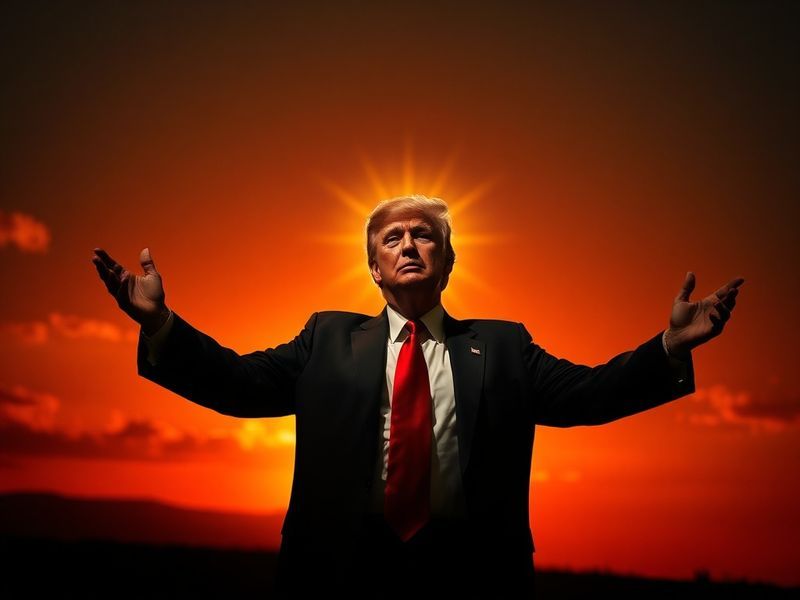
The “Trump Jesus” meme is more than just a viral image—it’s a cultural artifact that blends politics, religion, and internet humor into a single frame. The meme typically features a photograph of former President Donald Trump with his arms outstretched, superimposed with a halo or glowing effect to resemble Jesus Christ. This juxtaposition creates an instantly recognizable visual that has been repurposed across social media, forums, and even mainstream commentary.
What started as a niche internet joke has evolved into a versatile tool for satire, political commentary, and even religious critique. The meme’s simplicity and adaptability have allowed it to transcend its original context, making appearances in discussions about power, faith, and modern leadership. Its endurance on the internet underscores how memes can distill complex ideas into digestible, shareable formats.
The Origins of the Meme
The “Trump Jesus” meme traces its roots back to 2016, during the early days of Trump’s presidential campaign. The earliest iterations appeared on platforms like Reddit and 4chan, where users experimented with photoshopped images to highlight the contrast between Trump’s brash public persona and the humble, self-sacrificing image of Jesus. One of the most iconic versions features a photo of Trump standing in front of a crowd, his arms outstretched as if blessing his supporters—a deliberate nod to traditional depictions of Jesus.
Unlike many memes that fade quickly, “Trump Jesus” gained traction because it tapped into pre-existing cultural divides. It wasn’t just a joke about Trump’s leadership style; it was a commentary on how society views authority, especially when intertwined with religious imagery. The meme’s creators and sharers often used it to question the moral and ethical implications of political power, making it a staple in discussions about populism and evangelical support for Trump.
Why the Meme Resonates with Audiences
The appeal of the “Trump Jesus” meme lies in its ability to simplify complex political and religious debates into a single, relatable image. For critics of Trump, the meme serves as a visual shorthand for perceived hypocrisy—highlighting how his actions and rhetoric often clash with traditional Christian values. For supporters, it can be a form of defiant humor, a way to reclaim religious imagery in a political context.
Psychologically, the meme works because it leverages the power of juxtaposition. By placing Trump in the role of Jesus, it forces viewers to confront uncomfortable questions: Is leadership inherently divine, or is it just a performance? The humor comes from the absurdity of the comparison, but the underlying commentary makes it more than just a joke. It’s a way for people to process and critique the intersection of politics and religion in modern America.
Additionally, the meme’s adaptability has kept it relevant. Users have repurposed it to comment on everything from COVID-19 mandates to election results, proving that its core concept can be applied to nearly any polarizing issue. This flexibility ensures that “Trump Jesus” remains a viable tool for internet satire, even years after its inception.
Controversies and Ethical Considerations
Despite its popularity, the “Trump Jesus” meme has not been without controversy. Religious groups, particularly Christians, have criticized the meme for trivializing sacred imagery. Many argue that superimposing a political figure onto Jesus undermines the sanctity of religious symbols and reduces faith to a partisan tool. Some conservatives, in particular, have pushed back against the meme, viewing it as an attack on their values rather than a harmless joke.
There have also been instances where the meme has been used in harmful ways. For example, some far-right groups have co-opted the image to promote extremist ideologies, framing Trump as a messianic figure in a way that aligns with conspiracy theories. This misuse raises ethical questions about the role of memes in spreading misinformation and radicalizing audiences. While most creators use the meme for satire, its potential for manipulation remains a concern.
The backlash against the meme has led to debates about the boundaries of internet humor. Where do we draw the line between harmless parody and offensive appropriation? The “Trump Jesus” meme forces us to grapple with these questions, especially as memes become increasingly central to political discourse.
The Meme’s Evolution Beyond Trump
As Trump’s presidency ended, many wondered whether the “Trump Jesus” meme would fade into obscurity. Instead, it has evolved. The template has been adapted to fit other political figures, from Joe Biden to figures outside U.S. politics entirely. This shift demonstrates the meme’s staying power—its structure is so adaptable that it can be repurposed for nearly any context where power and authority intersect with public perception.
Even in non-political spaces, the “Trump Jesus” format has been used creatively. For example, artists and activists have reimagined the meme to comment on climate change, social justice, and even corporate greed. One notable iteration features a CEO with a halo, critiquing the cult of personality surrounding tech billionaires. These adaptations prove that the meme’s core concept—juxtaposing authority with divinity—has universal appeal.
The meme has also seeped into mainstream media. Late-night comedians, news outlets, and even political commentators have referenced it, often using it as a visual punchline in discussions about leadership. This mainstream recognition cements its place in internet culture, ensuring that “Trump Jesus” will remain a touchstone for satire and commentary for years to come.
What’s Next for the Meme?
The future of the “Trump Jesus” meme is uncertain, but its legacy is already secure. It represents a moment in internet history where politics, religion, and humor collided to create something entirely new. Whether it continues to evolve or becomes a relic of a specific era, its impact is undeniable.
For creators, the challenge will be to maintain the meme’s relevance without crossing into exploitation. As society becomes more polarized, the line between satire and offense will continue to blur. The “Trump Jesus” meme may one day be replaced by a new visual shorthand, but its influence will linger in the way we use humor to process power and authority.
One thing is certain: the “Trump Jesus” meme is more than just a fleeting internet joke. It’s a reflection of our cultural moment—a snapshot of how we use humor to critique, cope, and communicate in an increasingly complex world.
For more on how internet culture intersects with politics, check out our News section, where we explore the latest trends shaping public discourse. If you’re interested in other viral memes and their cultural impact, our Entertainment category offers deeper dives into the stories behind the jokes.