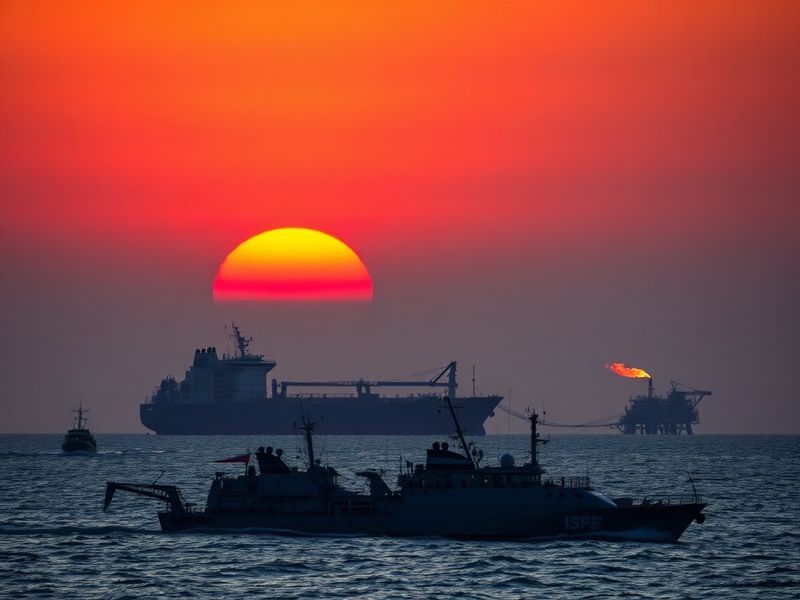
Why the Strait of Hormuz Remains a Global Energy Flashpoint
“`html
The Strait of Hormuz: A Critical Chokepoint in Global Energy and Geopolitics
The Strait of Hormuz, a narrow waterway between Iran and Oman, has long been one of the most strategically significant maritime passages in the world. Connecting the Persian Gulf to the Gulf of Oman and ultimately the Arabian Sea, this 21-mile-wide channel facilitates the passage of roughly 20% of the world’s oil supply. Its importance to global energy markets and international trade cannot be overstated, making it a focal point for geopolitical tensions, military posturing, and diplomatic negotiations.
For centuries, the Strait of Hormuz has been a crossroads of commerce, culture, and conflict. Ancient trade routes once carried spices, silk, and precious metals through its waters, linking the civilizations of the East and West. Today, modern supertankers laden with crude oil navigate its currents under the watchful eyes of naval patrols, regional powers, and international observers. The strait’s role as a geopolitical flashpoint has only intensified in recent decades, as disputes over territorial claims, nuclear programs, and regional influence have turned it into a potential powder keg.
The Historical and Strategic Importance of Hormuz
The Strait of Hormuz derives its name from the Persian word “Hormuz,” meaning “God of Time.” This etymology reflects the strait’s enduring significance in the region’s history. For millennia, it has served as a vital link between the Indian Ocean and the Mediterranean, shaping the economic and cultural development of civilizations from Persia to Arabia.
In the 20th century, the strait’s strategic value grew exponentially with the discovery of vast oil reserves in the Persian Gulf. Countries like Saudi Arabia, Iraq, Kuwait, and the United Arab Emirates became major oil producers, relying on Hormuz to transport their crude to global markets. The strait’s narrow width—just 21 miles at its narrowest point—makes it vulnerable to disruption, whether through military conflict, piracy, or geopolitical maneuvering.
During the Iran-Iraq War in the 1980s, both sides targeted each other’s oil tankers in the strait, leading to one of the most intense periods of maritime conflict in modern history. The so-called “Tanker War” demonstrated how easily the strait could become a battleground, with global oil prices reacting sharply to each escalation. More recently, tensions have flared over Iran’s nuclear program, its support for proxy groups in the region, and its assertions of control over the strait’s waters.
Geopolitical Tensions and Military Presence
The Strait of Hormuz remains a hotspot for geopolitical rivalry, with multiple nations maintaining a military presence to safeguard their interests. The United States, long a guarantor of free navigation in the strait, has stationed naval forces in Bahrain and other Gulf states. Meanwhile, Iran has developed a formidable arsenal of anti-ship missiles, drones, and fast-attack boats, which it has demonstrated in military exercises and real-world confrontations.
In 2019, attacks on oil tankers near the strait, attributed to Iran by the U.S. and its allies, escalated tensions to new heights. The incident highlighted the fragility of the region’s security architecture and the potential for a single miscalculation to trigger a broader conflict. Other regional players, including Saudi Arabia and the UAE, have also invested in military capabilities to protect their shipping lanes, often in coordination with Western powers.
International law, particularly the United Nations Convention on the Law of the Sea (UNCLOS), governs the rights of nations to navigate through the strait. However, Iran has frequently challenged these norms, asserting that it controls the waters within its territorial sea—a claim that has drawn criticism from the U.S. and its allies. The ongoing dispute underscores the strait’s role as both a symbol of sovereignty and a flashpoint for global power struggles.
The Economic Impact of Disruptions in Hormuz
The economic consequences of a closure or disruption in the Strait of Hormuz would be catastrophic for global energy markets. Oil prices would likely skyrocket, as alternative shipping routes—such as the Bab el-Mandeb Strait or the Cape of Good Hope—are longer, more expensive, and logistically challenging. Countries like China, India, and Japan, which rely heavily on Middle Eastern oil, would face severe economic strain, as would the global economy as a whole.
A 2020 report by the U.S. Energy Information Administration estimated that a prolonged closure of the strait could remove up to 17 million barrels of oil per day from global markets. This represents nearly 20% of daily global oil consumption. The resulting price spikes would disproportionately affect developing economies, where energy costs are a significant portion of household and industrial expenses.
Beyond oil, the strait is also a critical transit route for liquefied natural gas (LNG) and other commodities. Disruptions could lead to shortages in Europe and Asia, further destabilizing energy markets. The economic fallout from such a scenario would ripple across industries, from transportation to manufacturing, and could trigger recessions in vulnerable economies.
Diplomatic Efforts and Regional Alliances
Despite the high stakes, diplomatic efforts to stabilize the Strait of Hormuz have yielded mixed results. The Joint Comprehensive Plan of Action (JCPOA), or Iran nuclear deal, was one such attempt to reduce tensions by addressing Iran’s nuclear program in exchange for sanctions relief. However, the U.S. withdrawal from the deal in 2018 and Iran’s subsequent violations of its terms have undermined the agreement’s effectiveness.
Regional alliances, such as the Gulf Cooperation Council (GCC), have also sought to address the strait’s security challenges. The GCC, which includes Saudi Arabia, the UAE, and other Gulf states, has emphasized the need for collective defense and deterrence against Iranian aggression. Meanwhile, initiatives like the International Maritime Security Construct (IMSC), led by the U.S., aim to protect commercial shipping in the region through multilateral cooperation.
Yet, the effectiveness of these efforts remains uncertain. Deep-seated mistrust, competing national interests, and the shadow of historical conflicts continue to hinder progress. Without a sustained commitment to dialogue and de-escalation, the strait’s future remains precarious.
A Look Ahead: The Future of Hormuz
The fate of the Strait of Hormuz will be shaped by a complex interplay of geopolitical, economic, and environmental factors. As the world transitions toward renewable energy, the strait’s importance to oil markets may diminish over time. However, in the near term, its role as a chokepoint for global energy remains unchallenged.
For now, the international community must grapple with the reality that Hormuz is both a lifeline and a liability. Military preparedness, diplomatic engagement, and economic diversification will all play crucial roles in mitigating the risks associated with this critical waterway. Meanwhile, the people who live and work along its shores—fishermen, sailors, and traders—continue to navigate the strait’s turbulent waters, bearing the brunt of the region’s instability.
Ultimately, the Strait of Hormuz serves as a reminder of how geography and power intersect to shape global affairs. Its story is one of resilience, conflict, and the enduring struggle for control over the world’s most vital resources. As long as oil and geopolitics remain intertwined, Hormuz will remain at the heart of the world’s energy security—and its most pressing challenges.
—