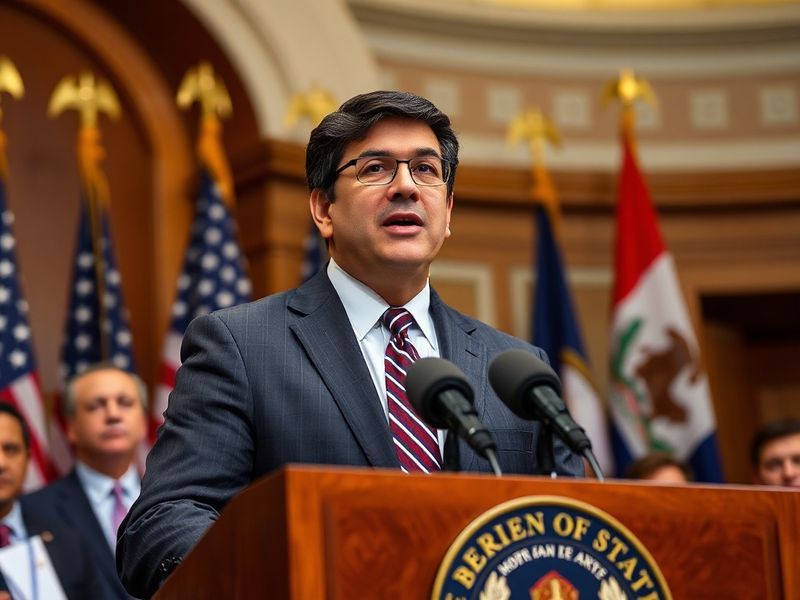
Xavier Becerra: A Political Profile of California’s Leading Advocate
“`html
Xavier Becerra: A Political Profile of California’s Leading Advocate
Xavier Becerra has spent decades shaping American healthcare policy, defending immigrant rights, and championing progressive causes. As California’s Attorney General and later as the nation’s top health official, Becerra has consistently positioned himself at the intersection of legal advocacy and public health innovation. His career reflects the evolving priorities of the Democratic Party, particularly in areas where governance meets social justice.
Born in 1958 in Sacramento, Becerra grew up in a working-class family with Mexican immigrant roots. His father worked in construction, and his mother was a social worker—values rooted in service and resilience that would later define his political identity. After graduating from Stanford University and earning his law degree from Stanford Law School, Becerra began his career as a deputy attorney general in California, quickly rising through the ranks of public service.
From Congress to California’s Top Cop
Becerra’s political career took a major leap in 1992 when he was elected to the U.S. House of Representatives. He served twelve terms in Congress, representing California’s 30th and later 34th districts. During his tenure, he became a vocal advocate for healthcare reform, immigration reform, and labor rights. His work on the House Ways and Means Committee gave him a platform to influence fiscal and social policy at the federal level.
In 2017, Becerra’s career trajectory shifted dramatically when he was appointed California Attorney General by Governor Jerry Brown. The appointment came after Senator Kamala Harris’s election to the U.S. Senate, creating a vacancy. Becerra’s confirmation made him the first Latino to serve as California’s Attorney General—a historic milestone in a state where nearly 40% of residents identify as Latino.
As Attorney General, Becerra became known for his aggressive legal battles against the Trump administration. He led multistate coalitions challenging federal policies on immigration, environmental regulations, and healthcare. His office filed over 100 lawsuits against the federal government, earning him a reputation as a leading progressive counterweight to conservative federal policies.
Leading the Nation’s Health Agency During a Crisis
In 2021, President Joe Biden nominated Becerra to serve as Secretary of the U.S. Department of Health and Human Services (HHS). After a contentious confirmation process, he was confirmed by the Senate and became the first Latino to lead the department. His tenure has been defined by the ongoing challenges of managing the COVID-19 pandemic, expanding healthcare access, and addressing systemic inequities in the American healthcare system.
One of Becerra’s most significant early actions was overseeing the distribution of vaccines and therapeutics during the pandemic. His leadership emphasized equity, prioritizing underserved communities and people of color who were disproportionately affected by the virus. This approach reflected his broader commitment to reducing health disparities—a hallmark of his tenure as California’s Attorney General.
Under his guidance, HHS has also advanced policies to lower prescription drug costs, strengthen mental health services, and protect reproductive rights. His office played a key role in implementing the Inflation Reduction Act’s provisions, including Medicare drug price negotiations, which aim to make medications more affordable for millions of Americans.
Key Policy Positions and Controversies
Becerra’s leadership has not been without controversy. His tenure at HHS has drawn criticism from conservatives and some industry groups, particularly over his support for the Affordable Care Act (ACA) and his push for stricter regulations on healthcare providers. Opponents have accused him of overreach, while supporters praise his commitment to expanding access to care.
Here are some of the key policy areas where Becerra has left his mark:
- Healthcare Access: Expanded Medicaid enrollment and defended ACA protections in court.
- Drug Pricing: Implemented Medicare drug price negotiations to reduce costs for seniors.
- Reproductive Rights: Mobilized legal defenses for abortion access after the overturning of Roe v. Wade.
- Immigration and Healthcare: Ensured that immigrant communities, including those covered under DACA, could access healthcare services.
- Public Health Equity: Focused on reducing disparities in healthcare outcomes for communities of color and low-income populations.
Becerra’s approach to healthcare policy is rooted in the belief that access to medical care is a fundamental right, not a privilege. This philosophy has made him a polarizing figure in some circles but has also solidified his role as a key architect of progressive health policy in the United States.
Broader Implications for American Governance
Becerra’s career offers a lens into the broader shifts in American politics over the past three decades. His rise from a congressional representative to a cabinet-level official mirrors the Democratic Party’s increasing focus on health policy, social justice, and immigrant rights. His tenure at HHS, in particular, highlights how federal agencies can serve as instruments of policy change, even amid political gridlock.
His leadership during the pandemic demonstrated the critical role of government in crisis response. By prioritizing equity in vaccine distribution and healthcare access, Becerra underscored the importance of addressing systemic inequities that have long plagued the U.S. healthcare system. These efforts have set a precedent for future administrations, particularly in how they approach public health emergencies.
Moreover, Becerra’s background as a Latino leader in government reflects the growing influence of Hispanic Americans in shaping national policy. As the Latino population continues to expand, leaders like Becerra serve as role models and advocates for a more inclusive political landscape. His career challenges the notion that progress in healthcare and civil rights is a zero-sum game, instead framing it as a collective effort to build a more just society.
Looking ahead, Becerra’s legacy will likely be defined by his ability to navigate the complexities of a divided government while advancing policies that prioritize the most vulnerable. Whether through litigation, legislation, or executive action, his work underscores the enduring power of public service in addressing the most pressing challenges of our time.
Conclusion
Xavier Becerra’s career is a testament to the impact of persistent advocacy and strategic leadership. From his early days in Congress to his current role at HHS, he has consistently championed policies that expand healthcare access, protect civil rights, and address systemic inequities. His tenure has not been without controversy, but his commitment to equity and justice has left an indelible mark on American governance.
As the nation continues to grapple with healthcare disparities, reproductive rights, and the aftermath of the pandemic, Becerra’s approach offers a blueprint for how federal agencies can drive meaningful change. His story is one of resilience, adaptability, and an unwavering belief in the power of government to improve lives. For those interested in the intersection of law, policy, and social justice, Becerra’s career provides a compelling case study in leadership and impact.
To explore more about political leadership and policy analysis, visit Dave’s Locker Politics and Dave’s Locker Analysis.