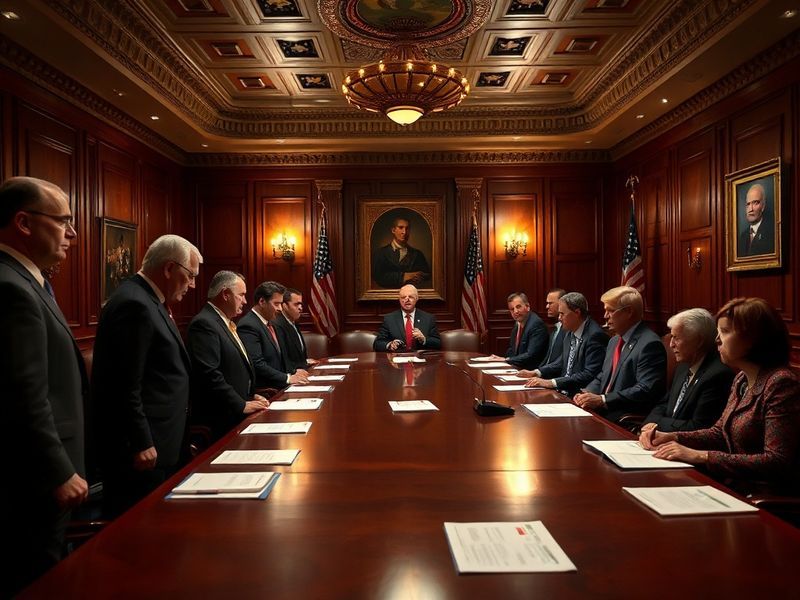
The House Republican conference has reignited efforts to overhaul the Foreign Intelligence Surveillance Act (FISA) following former President Donald Trump’s recent allegations that his campaign was improperly surveilled during his first term. The renewed focus on FISA reform reflects broader Republican skepticism about the federal government’s surveillance powers, particularly when applied to political figures. These concerns have gained traction among House Republicans, who argue that current surveillance authorities are ripe for abuse.
FISA, originally enacted in 1978, grants federal agencies like the FBI and NSA the ability to conduct surveillance on foreign intelligence targets within the United States under court-approved warrants. However, critics—including many Republicans—have long argued that the law’s broad authority has been exploited to justify intrusive monitoring of Americans, including political opponents. The debate has intensified in recent weeks as lawmakers prepare to reauthorize key provisions of FISA that are set to expire at the end of April 2024.
Republicans Argue FISA Lacks Sufficient Safeguards
House Republicans, led by Judiciary Committee Chairman Jim Jordan, have framed FISA reform as a critical national security issue. They contend that the law’s current structure lacks meaningful oversight, allowing for potential political weaponization. The controversy surrounding Trump’s claims—particularly regarding the FBI’s use of the Steele dossier in obtaining a surveillance warrant against his 2016 campaign—has become a rallying cry for reform advocates.
Key Republican lawmakers, including House Intelligence Committee Chairman Mike Turner, have signaled openness to revisiting FISA’s Section 702, which permits the collection of communications data from non-U.S. persons located abroad. While Section 702 does not explicitly target Americans, civil liberties groups argue that it enables “backdoor searches” of Americans’ communications without a warrant. Republicans have proposed amendments to require a warrant before accessing such data, a move that has drawn sharp opposition from the Biden administration and some national security officials.
FISA’s Controversial History
The debate over FISA is not new. In 2013, Edward Snowden’s disclosures revealed the NSA’s bulk collection of phone records under Section 215, leading to public outcry and legal challenges. Congress later reformed parts of FISA in the USA FREEDOM Act of 2015, but many Republicans argue those changes did not go far enough. The 2016 election and subsequent investigations into Trump’s campaign further exposed divisions over how FISA is used, with Republicans accusing the FBI of bias and Democrats defending the agency’s actions as necessary for national security.
Today, the tensions persist. Trump’s recent statements—including his claim that he was “wiretapped” by the Obama administration—have amplified Republican demands for stricter oversight. While no definitive evidence has emerged to support Trump’s wiretapping allegations, the perception of politicized surveillance has fueled bipartisan (though often fractured) support for reform.
Proposed Reforms and Political Divisions
House Republicans have outlined a series of proposed changes to FISA, which they argue would restore public trust in the surveillance system. Their key proposals include:
- Warrant Requirement for Backdoor Searches: Mandating a warrant before accessing communications data collected under Section 702 that involves U.S. persons.
- Stricter FISA Court Oversight: Increasing transparency in the Foreign Intelligence Surveillance Court (FISC) by allowing amici curiae (friend-of-the-court briefs) to challenge surveillance applications.
- Term Limits for FISA Judges: Implementing rotation policies to prevent judges from serving indefinitely on FISC, reducing the risk of institutional bias.
- Criminal Penalties for Abuse: Introducing legal consequences for officials who knowingly misuse FISA authorities for political purposes.
- Sunset Deadlines for Key Provisions: Requiring periodic reauthorization of FISA authorities to force regular congressional review.
Not all Republicans support these reforms, however. A faction of the conference, led by figures like Rep. Elise Stefanik, has argued that weakening FISA could undermine national security by limiting intelligence agencies’ ability to track foreign threats. Meanwhile, Democrats are divided, with some—like Rep. Adam Schiff—supporting modest reforms while others, such as Rep. Jerry Nadler, resist significant changes to FISA’s structure.
Broader Implications for Surveillance and Democracy
The push for FISA reform extends beyond partisan politics. Civil liberties organizations, such as the American Civil Liberties Union (ACLU) and the Electronic Frontier Foundation (EFF), have long advocated for stricter limits on government surveillance. They argue that FISA’s broad authorities enable mass surveillance that disproportionately impacts communities of color and political dissidents.
Critics of the current system point to incidents like the FBI’s reliance on the Steele dossier—a document funded by the Democratic National Committee and compiled by a former British intelligence officer—as evidence of systemic flaws in FISA’s oversight. While the dossier contained unverified claims, it was used to obtain a warrant to surveil Carter Page, a former Trump campaign advisor. The FBI’s subsequent errors in handling the investigation have fueled Republican claims that FISA is susceptible to abuse.
The debate also intersects with broader discussions about executive power and congressional oversight. As the House prepares to vote on FISA reauthorization, the outcome could set a precedent for how surveillance laws are shaped in an era of heightened political polarization. A failure to reach consensus could result in a temporary extension of FISA authorities, kicking the can down the road while leaving unresolved questions about government overreach.
What’s Next for FISA Reform?
With the April 2024 deadline looming, House Republicans are under pressure to coalesce around a reform package that can secure enough votes to pass. Speaker Mike Johnson has indicated that FISA will be a priority in the coming weeks, but the path forward remains uncertain. Key hurdles include:
- Bipartisan Negotiations: Republicans will need to find common ground with Democrats, particularly moderates like Rep. Will Hurd, who have historically supported surveillance reforms.
- White House Opposition: The Biden administration has signaled its preference for maintaining the status quo, arguing that reforms could hinder counterterrorism and counterintelligence efforts.
- Public Pressure: Advocacy groups and high-profile figures, including Trump, continue to amplify calls for reform, potentially swaying undecided lawmakers.
- Senate Dynamics: Even if the House passes reforms, the Senate’s divided chamber could water down or block legislation, forcing a conference committee to reconcile differences.
The stakes are high. Without reform, FISA’s authorities will continue to operate under the same framework that has drawn criticism for decades. Yet, as Republicans push for change, the risk of unintended consequences looms large. Overly restrictive reforms could hamper intelligence agencies’ ability to monitor genuine national security threats, while inadequate reforms may fail to address public concerns about government overreach.
Conclusion: A Crossroads for Surveillance Policy
The House Republicans’ push for FISA reforms represents more than just a legislative battle; it is a test of whether the U.S. government can restore faith in its surveillance apparatus. The outcome will shape how future administrations wield surveillance powers and whether Americans—particularly those with dissenting political views—can trust that their rights are protected.
As lawmakers debate the future of FISA, the conversation extends beyond Capitol Hill. It touches on fundamental questions about privacy, security, and the balance of power between the government and the governed. For House Republicans, the challenge is to craft reforms that address legitimate concerns without ceding ground on national security. For the rest of the country, the debate is a reminder of the delicate equilibrium between liberty and safety in an age of digital surveillance.
Regardless of the outcome, one thing is clear: the FISA reform debate is far from over. As surveillance technologies evolve and political divisions deepen, the fight to define the boundaries of government spying will continue to define American democracy for years to come.
For more on government surveillance and its implications, visit Dave’s Locker Politics and Dave’s Locker Analysis for in-depth coverage.