Irish Census 1926: A Window into Early Free State Life
“`html
The First Census of the Irish Free State
The Irish Census of 1926 marked a pivotal moment in the young Irish Free State, just four years after the signing of the Anglo-Irish Treaty. Conducted on June 18, 1926, it was the first comprehensive census after the tumultuous years of the War of Independence and the Civil War. The census provided an unprecedented look at a nation grappling with identity, reconstruction, and the lingering effects of partition. Unlike earlier censuses, which were conducted under British administration, this one reflected the newfound sovereignty of Ireland, albeit within a dominion of the British Empire.
For the Irish government, led by W.T. Cosgrave, the census was not merely a bureaucratic exercise but a tool for nation-building. It aimed to gather data on population distribution, housing conditions, and economic activity to inform policy decisions. The timing was critical, as the country was still recovering from years of conflict and economic stagnation. The census results would help shape infrastructure development, educational reforms, and social welfare programs in the decades to follow.
Methodology and Challenges
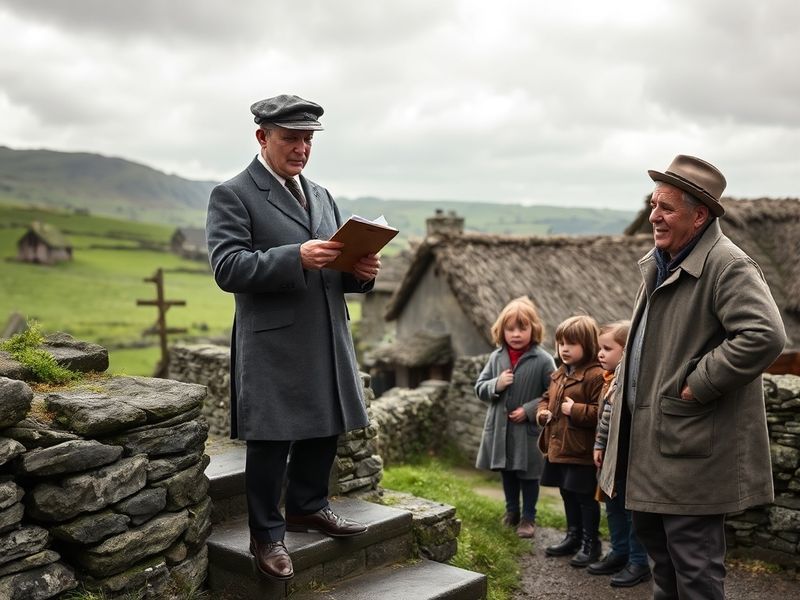
The 1926 census was conducted using traditional methods, with enumerators visiting every household in the 26 counties of the Irish Free State. This was no small feat, given the rural nature of much of the country and the limited infrastructure at the time. Enumerators faced challenges such as poor road conditions, incomplete address records, and the reluctance of some communities to participate due to lingering distrust of government institutions. Despite these obstacles, the census achieved a 98% response rate, a testament to its thoroughness and the dedication of those who carried it out.
The census questionnaire itself was designed to capture a wide range of data. It included questions on age, sex, marital status, occupation, and education, as well as more detailed inquiries into housing conditions, such as the number of rooms, type of dwelling, and access to sanitation. One notable addition was the inclusion of questions about the Irish language, reflecting the government’s interest in reviving the language as a cornerstone of Irish identity. This was part of a broader cultural revival movement that sought to distinguish Ireland from its British past.
A Global Context: Post-War Reconstruction
From a global perspective, the Irish Census of 1926 took place against the backdrop of post-World War I reconstruction and the rise of new nation-states. Countries across Europe and beyond were grappling with the aftermath of war, political upheaval, and economic instability. The census in Ireland mirrored efforts in other newly formed nations, such as Poland and Czechoslovakia, which were also conducting censuses to establish their demographic and economic footing. However, Ireland’s situation was unique due to its colonial past and the partition that divided the island into the Irish Free State and Northern Ireland.
The partition, formalized with the creation of Northern Ireland in 1921, had significant implications for the census. While the Irish Free State conducted its own census, Northern Ireland carried out its own separate enumeration. This division created a fragmented picture of Ireland as a whole, complicating efforts to understand the island’s demographics comprehensively. The 1926 census, therefore, not only reflected the priorities of the Irish Free State but also highlighted the challenges of nationhood in a divided land.
Key Findings and Insights
The results of the 1926 census revealed a population of approximately 2.97 million people in the Irish Free State, a slight decline from previous decades. This was largely attributed to emigration, a persistent issue that would continue to shape Ireland’s demographic landscape for generations. The census also showed a predominantly young population, with over 40% under the age of 25, reflecting both the high birth rate and the loss of working-age adults to emigration.
One of the most striking findings was the urban-rural divide. Dublin, the capital, accounted for nearly 10% of the population, while other urban centers like Cork, Limerick, and Waterford were growing but still relatively small by modern standards. The majority of the population lived in rural areas, where agriculture remained the dominant industry. However, the census highlighted a shift toward industrialization, particularly in urban areas, as the government sought to reduce reliance on agriculture and stimulate economic growth.
The housing conditions revealed in the census painted a mixed picture. While many rural homes were modest but adequate, urban areas faced significant overcrowding and poor sanitation. This was particularly evident in working-class neighborhoods, where families often lived in cramped, multi-room tenements. The government recognized these challenges and began to address them through housing reform initiatives, though progress would be slow.
Language and Identity
The census included a question about the Irish language, asking respondents whether they spoke Irish and, if so, whether they used it daily or occasionally. The results showed that only about 18% of the population spoke Irish, with the majority concentrated in the Gaeltacht regions of the west and northwest. This data underscored the challenges of reviving the language, which had been in decline for centuries. The government responded by establishing the Irish Folklore Commission and expanding Irish-medium education, though the language’s revival would remain a contentious and complex issue for decades.
The census also asked about religious affiliation, reflecting the deeply divided society of the time. The results showed that over 90% of the population identified as Roman Catholic, with the remaining majority being Protestant or other denominations. This religious divide would continue to shape Irish politics and society, particularly in Northern Ireland, where tensions between Catholics and Protestants would erupt into violence decades later.
Legacy and Impact
The Irish Census of 1926 set a precedent for future enumerations, establishing a tradition of data collection that continues to this day. Its findings provided a foundation for economic planning, social policy, and cultural initiatives in the decades that followed. For historians, the census is an invaluable resource, offering a window into life in early 20th-century Ireland. It reveals not only the hardships and challenges of the time but also the resilience and determination of the Irish people as they navigated a period of profound change.
Today, the census is more than just a historical document; it is a testament to the power of data in shaping a nation. It reminds us of the importance of understanding our past to inform our present and future. For those interested in exploring Ireland’s history further, the National Archives of Ireland holds the original census records, which are available to the public for research. Additionally, the Cultural and History sections of Dave’s Locker offer deeper insights into Ireland’s rich heritage and its journey toward independence and self-determination.
The 1926 census also serves as a reminder of the global context in which Ireland’s story unfolded. Like many nations emerging from colonial rule or conflict, Ireland faced the dual challenges of nation-building and economic recovery. The census captured these struggles in vivid detail, offering a snapshot of a society in transition. It is a story of resilience, adaptation, and the enduring quest for identity—a narrative that continues to resonate in Ireland and beyond.