The newest installment in the television adaptation of Tom Clancy’s Jack Ryan franchise, Ghost Recon War, has arrived with a level of intensity that feels ripped from today’s headlines. Set against the backdrop of a shadow war between global superpowers, the series doesn’t just entertain—it reflects real-world tensions in geopolitics, cyber warfare, and asymmetric conflict. While previous seasons focused on counter-terrorism and intelligence gathering, this chapter shifts toward high-stakes military operations and the blurred lines between conventional and unconventional warfare.
In an era where nation-states increasingly rely on private military companies and digital proxies, Ghost Recon War feels less like fiction and more like a dramatized training manual for 21st-century conflict. The show’s writers have leaned into authenticity, consulting with former special operators and intelligence analysts to craft scenarios that, while dramatized, remain grounded in plausible reality. This isn’t just another spy thriller. It’s a window into how wars are now fought—quietly, remotely, and often without clear declarations.
The Evolution of Jack Ryan: From Analyst to Action Hero
John Clark, the iconic character from Tom Clancy’s novels, has always been a bridge between the CIA and the battlefield. In Ghost Recon War, that transition is complete. The series follows Clark as he leads a covert multinational unit tasked with dismantling a rogue bioweapons program before it destabilizes an already fragile global order. Unlike earlier seasons where Ryan was the analytical centerpiece, this installment places Clark at the forefront—a deliberate choice that underscores the shifting role of intelligence operatives in modern conflicts.
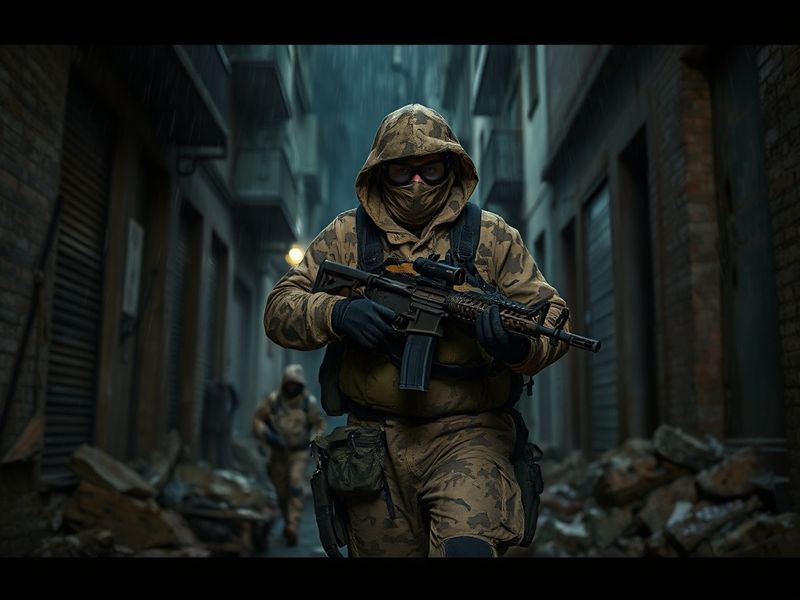
The show’s narrative arc reflects a broader trend in military fiction: the rise of the operator as protagonist. Where once the spy was a master of disguise and deception, today’s operative must also be fluent in drone operations, cyber intrusion, and rapid deployment tactics. Ghost Recon War captures this evolution by blending traditional espionage with kinetic military action. The result is a character study of Clark as both strategist and soldier—a man who operates in legal gray zones, where the rules of engagement are written in real time by shifting political winds.
This evolution mirrors real-world changes within intelligence agencies. The CIA’s recent emphasis on “over-the-horizon” counterterrorism and the growing influence of Special Operations Command (SOCOM) reflect a similar pivot. In this context, Ghost Recon War isn’t just entertainment. It’s a cultural artifact that mirrors the institutional identity crisis within Western security apparatuses—caught between maintaining global influence and avoiding direct confrontation.
Technology and Tactics: How the Show Mirrors Real-World Warfare
Ghost Recon War leans heavily into the role of technology in modern conflict. From AI-driven threat detection to swarms of autonomous drones, the series presents a near-future battlefield where human operators must adapt—or become obsolete. While some elements stretch credibility (no, we’re not quite at the point of fully autonomous assassination drones), the underlying premise aligns closely with the Pentagon’s Third Offset Strategy, which emphasizes technological superiority to counter near-peer threats like China and Russia.
The show’s portrayal of cyber warfare is particularly prescient. In one pivotal sequence, Clark’s team must hack into a secure biolab to disable a deadly pathogen before it’s weaponized. The tactics mirror real-world cyber operations conducted by agencies like the NSA and Cyber Command. What’s notable is how the show frames cyber as just another domain of conflict—on par with land, sea, and air. This reflects the U.S. military’s official recognition of cyberspace as a warfighting domain in 2018.
Another standout element is the use of private military contractors (PMCs). Clark’s team operates under a multinational umbrella that includes former special forces from allied nations. This reflects the increasing reliance on contractors in real-world conflicts, from Ukraine to the Middle East. While PMCs offer flexibility and deniability, they also introduce ethical and legal complications—issues the show explores through moral dilemmas faced by Clark and his team.
Key Elements of Modern Warfare in Ghost Recon War
- AI and Machine Learning: Used for pattern recognition, threat assessment, and even predictive targeting—mirroring real-world programs like Project Maven.
- Autonomous Systems: Drones and robotic platforms conduct surveillance and strikes, raising questions about accountability in lethal engagements.
- Cyber Operations: Disrupting enemy networks isn’t just a tactic; it’s a strategic imperative in disabling infrastructure and command systems.
- Hybrid Warfare: The blending of conventional forces, irregular troops, and digital sabotage creates a battlefield where lines between war and peace blur.
- Denial and Deception: Operatives must operate in environments where truth is fluid, and misinformation is a primary weapon.
The Broader Implications: Why This Story Matters Beyond the Screen
Ghost Recon War arrives at a critical juncture in global security. As nation-states invest in proxy wars, disinformation campaigns, and next-generation weaponry, the traditional frameworks of international law and diplomacy are struggling to keep pace. The show’s central conflict—a rogue actor attempting to escalate a regional crisis into a global catastrophe—resonates with current events, from the war in Ukraine to tensions in the South China Sea. What makes the series compelling is its refusal to offer easy answers. There are no clear heroes or villains, only flawed individuals navigating a system that rewards secrecy and punishes transparency.
This ambiguity reflects real-world challenges in modern intelligence and defense. The U.S. and its allies face a paradox: they must project strength to deter aggression, yet they must also avoid actions that could spiral into direct conflict. Ghost Recon War dramatizes this tension by placing Clark in situations where every decision carries unintended consequences. In one scene, a drone strike intended to neutralize a biolab accidentally kills civilians, forcing Clark to confront the moral cost of technological warfare. It’s a moment that feels ripped from headlines about U.S. counterterrorism operations in Somalia or Yemen.
The series also highlights the growing role of non-state actors in warfare. Terrorist groups, cybercriminals, and mercenary outfits now possess capabilities once reserved for nation-states. This democratization of violence complicates traditional notions of sovereignty and self-defense. For Clark and his team, the enemy isn’t a single country or ideology—it’s a decentralized network of actors who exploit gaps in global governance. This reflects the reality faced by intelligence agencies today, where threats emerge from unexpected corners of the world, often with little warning.
What Comes Next: The Future of Espionage and Action in Fiction
Ghost Recon War isn’t just a standalone story. It’s part of a larger trend in spy and military fiction that prioritizes realism over spectacle. Shows like The Terminal List and SEAL Team have similarly embraced gritty, procedural storytelling, eschewing the glamour of earlier eras in favor of authenticity. This shift reflects both audience demand and a recognition that the stakes of modern conflict are too high for escapism.
For fans of the Jack Ryan universe, the series offers a satisfying evolution of familiar themes. Clark’s journey from shadow operative to battlefield commander provides a narrative arc that feels both earned and timely. It also sets the stage for future seasons that could explore even more contentious scenarios: escalation in the Arctic, conflict over critical minerals, or the weaponization of space. The show’s writers have already hinted at these possibilities, ensuring that Ghost Recon War isn’t just a conclusion—but a beginning.
As for broader implications, the series serves as a cautionary tale. It warns that in an era of rapid technological advancement, the line between war and peace is eroding. It challenges audiences to question the cost of technological superiority and the ethical dilemmas of operating in legal gray zones. And it reminds us that, in the world of espionage and warfare, the most dangerous adversaries aren’t always the ones we see coming.
In the end, Ghost Recon War is more than a thrilling ride. It’s a mirror held up to the present, reflecting our fears, our ambitions, and the complex machinery of modern conflict. Whether it’s the latest episode or the next season, one thing is clear: the war isn’t over. It’s just getting started.
What do you think of the show’s portrayal of modern warfare? Share your thoughts in the comments below.