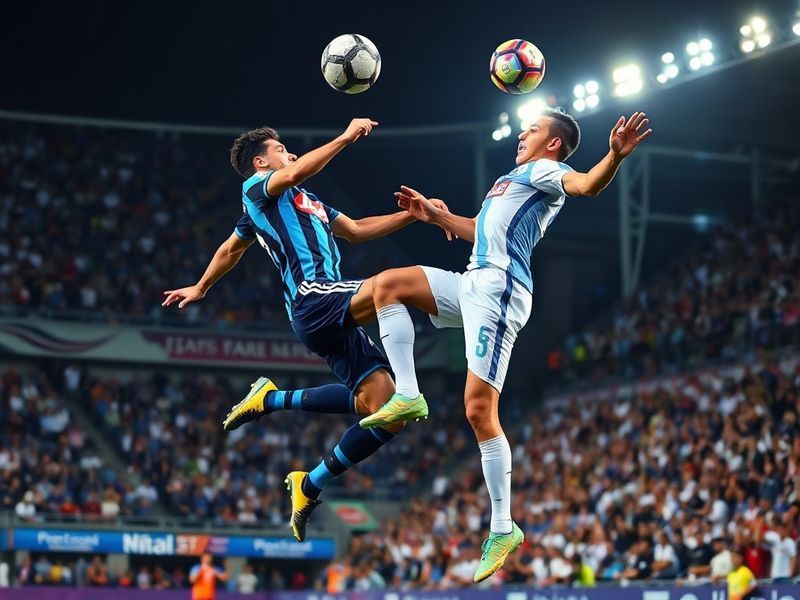
The Stadio Diego Armando Maradona roared under floodlights as Napoli prepared to face Lazio in a Serie A fixture that transcended mere football. This wasn’t just another match in Italy’s top flight; it was a cultural collision between Naples’ working-class grit and Rome’s imperial heritage. The stakes were high—three points could mean survival, relegation, or, for the most optimistic, a title push. But beyond the standings, this fixture represented something deeper: a battle of identities played out on the pitch.
Napoli, once a sleeping giant, had risen from financial ruin to become a symbol of southern Italy’s resilience. Their red-and-blue jerseys carried the weight of a city that refused to be forgotten. Lazio, meanwhile, was the team of the capital—wealthy, politically connected, and often polarizing. The clash between these two clubs wasn’t just tactical; it was ideological. For Neapolitans, beating Lazio wasn’t just about football. It was about proving that the south could stand tall against the north’s dominance.
The Historical Rivalry: More Than Just Points
Serie A has no shortage of historic rivalries, but few carry the cultural weight of Napoli vs Lazio. The fixture first gained prominence in the 1970s, when Lazio emerged as a force under the ownership of entrepreneur Umberto Lenzini. But it was in the late 1980s that the rivalry truly intensified, when Napoli—led by the incomparable Diego Maradona—began their ascent to the top of Italian football. Their 1987 victory over Lazio, secured by a Maradona masterclass, became the stuff of legend in Naples but left a bitter taste in Rome.
The tension wasn’t just about football. Lazio, often associated with Rome’s elite, had a fanbase that included far-right political groups in the 1990s and early 2000s. Napoli’s supporters, on the other hand, were (and remain) fiercely working-class, with a deep connection to the city’s left-leaning identity. This political divide seeped into the stands, where chants and banners often reflected broader societal tensions. While the club itself has distanced itself from extremist politics in recent years, the legacy of those divisions lingers in the rivalry’s intensity.
Key Moments in the Rivalry
Over the decades, Napoli vs Lazio has produced unforgettable moments that extend beyond the 90 minutes. Here are a few that defined the fixture:
- 1987: Maradona’s Masterclass – Napoli’s 3-1 victory, with Maradona scoring a sublime free-kick, announced the south’s arrival on the footballing map.
- 1993: The Last Dance – Napoli’s final Serie A title was sealed with a 1-0 win over Lazio, a bittersweet moment as it marked the end of their golden era.
- 2006: Serie B Return – Lazio won 1-0 in a tense relegation battle, a match overshadowed by the Calciopoli scandal that rocked Italian football.
- 2018: Insigne’s Heroics – Napoli’s captain Lorenzo Insigne scored a late winner in a 1-0 victory, sparking wild celebrations in Naples.
These matches weren’t just about points. They were about pride, identity, and the unspoken rivalry between Italy’s north and south. For Napoli fans, beating Lazio was a statement. For Lazio supporters, victory was a way to reassert Rome’s dominance in Italian football.
Tactical Battles: Two Philosophies Collide
Beyond the cultural narrative, Napoli vs Lazio is a fascinating tactical duel. Napoli, under managers like Maurizio Sarri and Gennaro Gattuso, has built its identity on high-pressing, possession-based football. Their system demands relentless energy, with players like Khvicha Kvaratskhelia and Victor Osimhen leading the charge. The idea is simple: suffocate opponents with pressure and overwhelm them with quick, incisive attacks.
Lazio, under Simone Inzaghi (and now Maurizio Sarri), has often taken a more pragmatic approach. While they possess technical quality in midfield—think Sergej Milinković-Savić and Luis Alberto—they’re not afraid to sit deep, absorb pressure, and strike on the counter. This tactical contrast makes the fixture unpredictable. Napoli’s high line can be exposed by Lazio’s direct play, while Lazio’s mid-block can be overrun by Napoli’s relentless pressing.
In recent years, the tactical battle has evolved. Napoli’s reliance on Kvaratskhelia’s dribbling and Osimhen’s physicality has forced Lazio to adapt. The Roman side has increasingly used their full-backs—like Alessandro Bastoni—to stretch play, while their wingers, such as Ciro Immobile, provide a goal threat from deeper positions. The midfield battle between Hicham Kanouzi and Piotr Zieliński often decides the tempo of the game.
The Global Perspective: How Serie A’s Underdogs Are Rewriting the Script
While Napoli vs Lazio might seem like a purely Italian affair, the fixture holds significance beyond Serie A’s borders. In an era where football is increasingly dominated by financial powerhouses like Manchester City, Paris Saint-Germain, and Real Madrid, Serie A’s smaller clubs are fighting to keep the league competitive. Napoli’s rise—culminating in a historic Scudetto in 2023—has been a beacon of hope for underdogs worldwide.
Globally, Napoli’s success has resonated with football fans who see the club as a symbol of resilience. Their story mirrors that of clubs like Athletic Bilbao in Spain or FC Copenhagen in Denmark—teams that punch above their weight by developing talent and playing attractive football. Lazio, meanwhile, represents the traditional power of big-city football, a model that has struggled in recent years to maintain consistency.
For international fans, the Napoli-Lazio rivalry offers a glimpse into Italy’s complex social fabric. It’s a reminder that football isn’t just about trophies or global brands; it’s about communities, history, and identity. In an era where football is increasingly commercialized, matches like this one serve as a counterpoint—a celebration of passion over profit.
Why This Rivalry Matters in 2024
As of the 2023-24 season, Napoli and Lazio are once again locked in a tight battle for European qualification. Napoli, despite losing key players like Kalidou Koulibaly and Fabian Ruiz, has remained competitive under Francesco Calzona. Their young squad, featuring talents like Giacomo Raspadori and Juan Jesus, embodies the club’s commitment to youth development.
Lazio, meanwhile, has re-emerged as a force under Sarri, blending defensive solidity with attacking flair. Their recent signings, such as Dutch midfielder Jeroen Zoet, have added depth to a squad that already boasts one of Serie A’s most lethal strikers in Immobile. For Lazio, consistency is the goal. For Napoli, it’s about proving that their Scudetto wasn’t a fluke.
Beyond the pitch, both clubs are navigating financial challenges. Napoli’s ownership has faced scrutiny over their spending, while Lazio has had to balance ambition with fiscal responsibility. These off-field battles add another layer to the rivalry, making each encounter a test of not just skill, but also resilience.
Conclusion: More Than a Football Match
The next time Napoli and Lazio face off, it won’t just be a football match. It will be a clash of cultures, a battle of ideologies, and a reminder that football is about more than trophies and rankings. For the fans, it’s personal. For the players, it’s a chance to etch their names into history. For the neutrals, it’s a spectacle of passion, skill, and drama.
In a league often dominated by the same handful of clubs, Napoli vs Lazio stands out as a fixture that matters. It’s a reminder that football is at its best when it reflects the communities it represents. And whether you’re in Naples or Rome, the stakes couldn’t be higher.