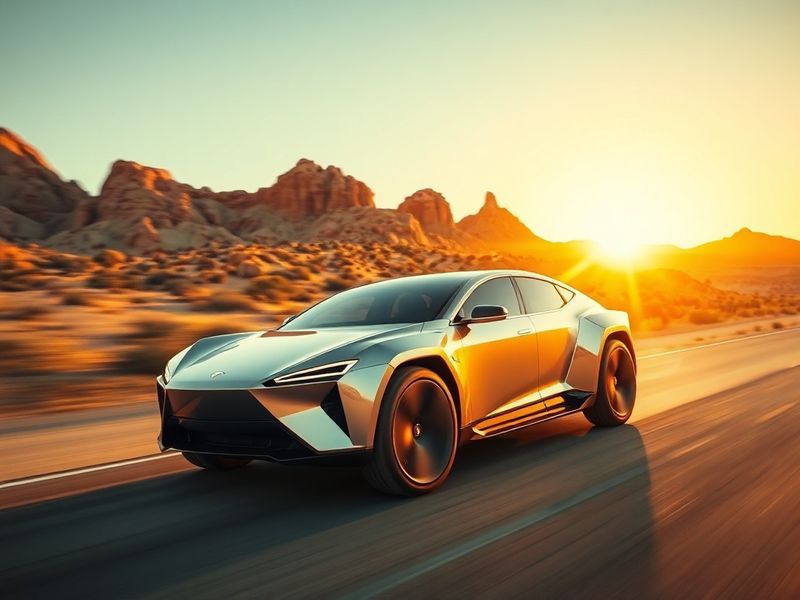
The Tesla Cybertruck: A Polarizing Vision of the Future of Driving
The Tesla Cybertruck arrived not just as another electric vehicle but as a statement wrapped in stainless steel and controversy. Since its unveiling in November 2019, the angular, wedge-shaped pickup has sparked debates far beyond automotive circles. It has become a symbol—of innovation, of resistance to change, and of the blurred line between technology and design. Unlike traditional trucks that prioritize curves and aerodynamics, the Cybertruck embraces sharp edges and an industrial aesthetic, drawing inspiration from dystopian sci-fi rather than the farm or construction site.
Its global reception has been equally divided. In the United States, where pickup trucks dominate the market, the Cybertruck was met with both curiosity and skepticism. Meanwhile, in Europe, where pickup sales are modest, it was often dismissed as a novelty. But in markets like Australia, where rugged utility vehicles are cultural icons, the truck found a niche audience eager to embrace its bold design. The Cybertruck’s journey reflects a broader truth about innovation: it doesn’t just compete on specs—it competes on identity.
A Design That Defies Convention
The Cybertruck’s most striking feature is its exterior, a seamless exoskeleton of brushed stainless steel with sharp, geometric lines. This wasn’t an aesthetic choice alone—it was a functional one. Tesla aimed to eliminate traditional body panels and paint, reducing weight and maintenance while increasing durability. The result is a vehicle that looks like it rolled out of a 1980s sci-fi film set in a post-apocalyptic world.
The angular design isn’t just for show. Tesla claims the exoskeleton is stronger than conventional car bodies, capable of withstanding significant impacts. The truck’s “unbreakable” glass, famously shattered during a live demonstration in 2019, became an instant meme and a symbol of both the company’s boldness and its occasional missteps. That moment, though embarrassing, only amplified the Cybertruck’s notoriety.
Inside, the Cybertruck continues the theme of minimalism. The cabin features a single curved touchscreen dominating the dashboard, replacing nearly all physical controls. There’s no traditional instrument cluster—just a digital display behind the steering wheel. The seating is minimalist, with a center console that doubles as a storage space or a second front seat. The overall effect is one of futuristic simplicity, though some critics argue it sacrifices comfort and practicality for style.
Performance and Practicality: Can It Really Work?
Tesla’s claims about the Cybertruck’s performance have been ambitious. The base model promises 250+ miles of range, 0–60 mph in under 6.5 seconds, and a towing capacity of up to 7,500 pounds. The higher-end Cyberbeast variant aims for 0–60 mph in under 2.6 seconds, making it one of the fastest production trucks ever. These numbers place the Cybertruck in direct competition not just with other electric trucks like the Ford F-150 Lightning and Rivian R1T, but with high-performance sports cars.
But performance isn’t everything. Practicality has been a recurring concern. The lack of a traditional frunk (front trunk) due to the angular hood design limits storage space. The rear cabin is spacious, but the rear seats are fixed and lack underfloor storage. Towing large loads may be possible on paper, but real-world efficiency drops significantly under heavy loads, a challenge common to all electric vehicles.
In rural areas of the U.S. and Australia, where trucks are used daily for work, these limitations matter. In Europe, where charging infrastructure is improving but still inconsistent, the Cybertruck’s long-range variants are more appealing. Yet, even there, the truck’s size and charging demands make it less practical for daily urban use. The Cybertruck appeals most to those who see it as a lifestyle statement rather than a utilitarian tool.
Cultural Symbolism and the Cybertruck’s Global Identity
The Cybertruck isn’t just a vehicle—it’s a cultural artifact. In America, it has been adopted by tech enthusiasts, YouTubers, and even celebrities. It has appeared in music videos, TikTok challenges, and political commentary, often as a symbol of Silicon Valley’s disruption of traditional industries. Elon Musk’s personal brand, intertwined with Tesla’s, amplifies this perception. The Cybertruck becomes an extension of Musk himself: polarizing, visionary, and unapologetically bold.
In Europe, where environmental regulations are tightening, the Cybertruck’s zero-emission status makes it a darling among green advocates—though its size and energy demands make it a target for critics of oversized EVs. In China, where Tesla already has a strong brand presence, the Cybertruck has been received with cautious curiosity. Local automakers, seeing an opportunity, have accelerated their own electric truck development, signaling that the Cybertruck’s influence extends even beyond Tesla’s reach.
The truck’s design has also inspired fashion and art. Designers have incorporated Cybertruck-inspired elements into clothing lines. Artists have used its silhouette in murals and digital art. Even architecture has been influenced, with buildings featuring angular, metallic facades reminiscent of the truck’s body. This crossover into pop culture solidifies the Cybertruck’s role not just as a vehicle, but as a cultural icon.
Challenges and the Road Ahead
Despite its hype, the Cybertruck has faced significant hurdles. Production delays pushed the initial launch from 2021 to late 2023. Quality control issues have led to reports of panel gaps and inconsistent finishes. Early owners have complained about build quality, software glitches, and the truck’s polarizing aesthetics. Tesla’s usual approach of iterating in real time through software updates may help improve the experience, but it hasn’t silenced critics who argue the Cybertruck was rushed to market.
There are also broader challenges. The global supply chain for stainless steel and large-format batteries remains tight. Labor shortages in manufacturing hubs, especially in the U.S., have slowed production. And in some markets, consumer resistance to electric trucks persists due to range anxiety and charging infrastructure gaps.
Yet, the Cybertruck’s long-term potential shouldn’t be underestimated. With each software update, the truck becomes more refined. Tesla’s aggressive expansion of its Supercharger network is addressing one of the biggest consumer concerns. And as governments worldwide push for zero-emission vehicles, the Cybertruck could become a key player in industries like construction, agriculture, and emergency services—sectors where its durability and power output could shine.
The road ahead for the Cybertruck is not just technical—it’s cultural. It will continue to be a lightning rod for debate, a canvas for creativity, and a test case for how far automotive design can push boundaries. Whether it succeeds as a truck or remains a niche statement piece, its impact is undeniable.
One thing is certain: the Tesla Cybertruck has redefined what it means to drive into the future. And in a world where cars are increasingly seen as extensions of identity, that may be its most important achievement of all.
What’s Next for the Cybertruck?
The coming years will determine whether the Cybertruck becomes a mainstream success or remains a bold experiment. Here’s what to watch:
- Software Updates: Tesla’s ability to improve the truck’s interface, performance, and reliability through over-the-air updates will be critical.
- Second-Generation Models: Rumors suggest Tesla is already working on a revised version with better build quality and improved range.
- Global Expansion: As Tesla builds more Gigafactories in Europe and Asia, local production could reduce costs and improve availability.
- Cultural Momentum: The truck’s presence in media, fashion, and art will continue to shape its legacy beyond the road.
For now, the Cybertruck remains a work in progress—a vehicle that challenges conventions as much as it challenges drivers’ expectations. Whether you see it as a masterpiece or a monstrosity, there’s no denying it has changed the conversation about what a truck can—and should—be.