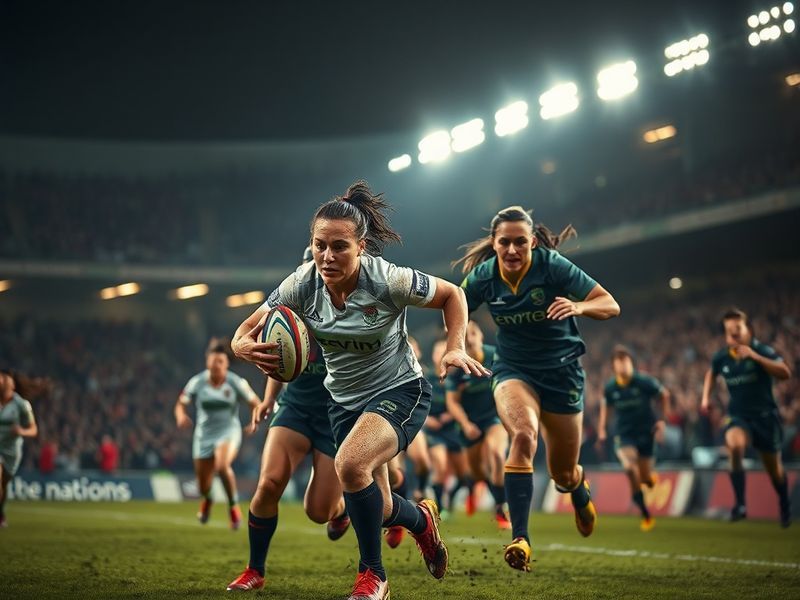
The Women’s Six Nations Championship stands as a testament to the growing strength and visibility of women’s rugby in Europe. Since its inception in 1996 as the Women’s Home Nations, the tournament has evolved into one of the most prestigious competitions in the sport, featuring England, France, Ireland, Italy, Scotland, and Wales. Over the years, the tournament has not only showcased elite athletic performance but has also become a platform for challenging stereotypes and expanding opportunities for female athletes.
Unlike its men’s counterpart, which boasts a century-long history, the Women’s Six Nations has carved its own path with remarkable growth. The 2024 edition, for instance, drew record-breaking attendance and broadcast audiences, signaling a shift in public interest and investment. This progress reflects broader trends in women’s sports, where visibility and commercial support have begun to catch up with the undeniable talent on display.
The Evolution of the Tournament: From Humble Beginnings to Global Stage
The Women’s Six Nations traces its origins to a 1996 meeting in Dublin, where representatives from England, Ireland, Scotland, and Wales agreed to formalize their annual encounters. France joined in 1999, followed by Italy in 2007, expanding the competition’s scope and competitiveness. Initially played under amateur conditions, the tournament has gradually professionalized, with many players now balancing rugby with full-time training and sponsorships.
Key milestones in the tournament’s history include:
- 2007: Italy’s admission marked a turning point, adding depth to the competition and introducing new tactical dynamics.
- 2017: The introduction of a fifth matchday and the first-ever Grand Slam decider between England and Ireland highlighted the growing intensity.
- 2020: The tournament was expanded to include a second tier, the Women’s Six Nations Festival, featuring emerging nations like Spain and the Netherlands.
- 2022: England’s historic 57-0 victory over Wales set a new benchmark for scoring margins in the competition.
The shift toward professionalism has been uneven but undeniable. While top nations like England and France have made strides in securing contracts for their players, others continue to rely on amateur structures. This disparity underscores the ongoing challenge of achieving parity in women’s rugby, where funding and resources remain critical issues.
Standout Performers: The Athletes Redefining Women’s Rugby
The Women’s Six Nations has produced legendary figures who have transcended the sport. Players like England’s Emily Scarratt, France’s Jessy Trémoulière, and Ireland’s Claire Molloy have become household names, celebrated for their skill, leadership, and resilience. Scarratt, in particular, stands out for her versatility—capable of playing at fly-half, centre, or fullback—while Trémoulière is renowned for her tactical kicking and clutch performances.
The 2023 season saw the emergence of younger talents like England’s Marlie Packer, whose dynamic ball-carrying and defensive prowess have drawn comparisons to some of the game’s greats. Meanwhile, Italy’s Sofia Stefan, one of the tournament’s top try-scorers in recent years, has become a symbol of her nation’s progress in women’s rugby.
These athletes are not just redefining what it means to play rugby; they are redefining what it means to be a female athlete. Their stories—of perseverance, sacrifice, and triumph—resonate far beyond the pitch, inspiring a new generation of girls to take up the sport. As the Women’s Six Nations continues to grow, so too does the opportunity for these players to achieve the recognition and rewards they deserve.
The Tactical Chess Match: How Strategy Shapes the Championship
Women’s rugby may not yet command the same tactical complexity as the men’s game, but the Women’s Six Nations has seen a steady evolution in strategy, particularly as the physicality and technical skills of players improve. Coaches now employ a mix of possession-based play, quick rucks, and intelligent kicking to exploit defensive weaknesses, mirroring trends in the men’s game.
One of the most noticeable shifts has been the increased emphasis on set-piece dominance. Teams like England and France have prioritized lineout throws and scrum stability, using these platforms to control the tempo of matches. Meanwhile, nations like Ireland and Italy have adopted a more expansive, running-based approach, leveraging speed and agility to stretch defences.
Defensive structures have also become more sophisticated. Gone are the days when teams relied solely on brute strength to stop opponents. Modern defensive systems, such as the drift defence or blitz defence, require players to read the game in real-time, anticipate plays, and communicate effectively. This tactical evolution has made matches tighter and more unpredictable, with upsets becoming increasingly common.
Another area of innovation is the use of analytics. Teams now track metrics like territory gained, tackle success rates, and breakdown efficiency to refine their strategies. While still in its infancy compared to professional men’s rugby, data-driven decision-making is slowly becoming a staple of the Women’s Six Nations.
The Road Ahead: Challenges and Opportunities for Women’s Rugby
Despite its progress, the Women’s Six Nations faces significant hurdles. Chief among these is the issue of funding. While corporate sponsorships and broadcast deals have increased, they still lag far behind those in men’s rugby. The recent multi-year broadcast deal with BBC and ITV in the UK is a step forward, but sustainable revenue streams remain a challenge for many unions.
Player welfare is another critical concern. The physical demands of rugby, combined with the lack of professional contracts in some countries, can lead to burnout or injury. Initiatives like the Women’s Player Development Programme aim to address these issues by providing medical support, career guidance, and financial assistance to athletes.
Yet, the opportunities are vast. The inclusion of rugby sevens in the Olympics has spotlighted the sport’s global appeal, while grassroots programs in countries like Spain and Portugal are producing talent that could soon challenge the traditional Six Nations powers. The tournament itself is also expanding, with plans to introduce a second tier featuring emerging nations like Belgium and Sweden.
For fans, the future promises more thrilling encounters and storylines. The rivalry between England and France, for instance, has intensified in recent years, with both nations vying for dominance. Meanwhile, Ireland’s rise under coach Greg McWilliams—culminating in their first-ever Grand Slam in 2023—has injected fresh excitement into the competition. These narratives are not just about trophies; they are about the growing narrative of women’s rugby as a sport in its own right.
Why the Women’s Six Nations Matters Beyond the Pitch
The Women’s Six Nations is more than just a rugby tournament; it is a cultural movement. It challenges outdated notions of what women’s sports can achieve and serves as a barometer for societal progress. The visibility of female athletes in traditionally male-dominated spaces like rugby helps normalize women’s participation in all aspects of life, from leadership to physical activity.
The tournament also fosters community. Women’s rugby clubs across Europe have reported surges in membership following standout performances in the Six Nations. Events like the tournament’s fan zones and community rugby festivals create spaces for fans to engage with the sport in meaningful ways, bridging gaps between players and supporters.
Moreover, the Women’s Six Nations has become a platform for advocacy. Players and organizers have used the tournament to highlight issues such as gender pay gaps, access to coaching, and the importance of media coverage. Campaigns like #IAmEnough, launched by the Six Nations Rugby organization, aim to celebrate the diversity of women’s rugby and encourage more girls to participate.
As the 2025 tournament approaches, the stakes have never been higher. With increasing investment, growing fan bases, and a new generation of talent ready to take the stage, the Women’s Six Nations is poised to reach new heights. For rugby enthusiasts, it offers a chance to witness history in the making. For everyone else, it serves as a reminder of the power of sport to inspire, unite, and transform.
To stay updated on the latest developments in women’s rugby and other sports, visit Dave’s Locker for in-depth analysis and coverage.