Who Is Harmeet Dhillon?
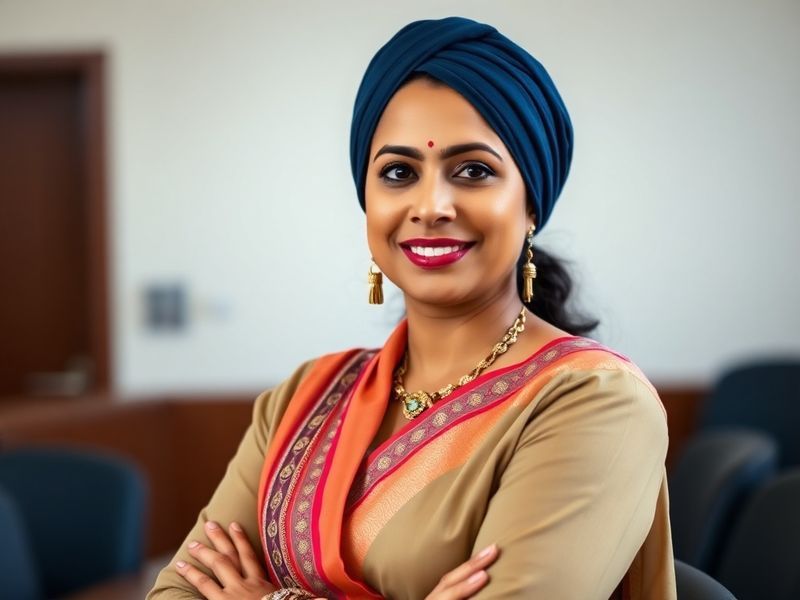
Harmeet Kaur Dhillon is a prominent attorney, political commentator, and conservative activist whose career has spanned high-profile legal cases, media appearances, and grassroots political organizing. Born in Chandigarh, India, in 1971, Dhillon immigrated to the United States with her family as a child, settling in California. Her upbringing in a Sikh household shaped her early worldview, instilling values of resilience and justice that would later define her professional path.
Dhillon earned her undergraduate degree from the University of California, Berkeley, before pursuing a law degree at the University of California, Davis. She quickly made a name for herself in civil rights litigation, particularly in cases involving free speech and religious liberty. Her legal career took a notable turn when she began representing clients in politically charged cases, often aligning with conservative causes. This shift brought her into the national spotlight, where she became known for her unapologetic advocacy on behalf of free speech and against what she describes as progressive overreach in institutions.
A Legal Career Defined by High-Stakes Battles
Dhillon’s legal work has often intersected with cultural and political divides. One of her most recognized cases involved representing the family of Kate Steinle, whose 2015 killing in San Francisco sparked national debates over immigration and sanctuary city policies. The case drew widespread attention, with Dhillon’s firm arguing that the city’s policies had contributed to Steinle’s death. The litigation highlighted her willingness to take on controversial issues, even when they placed her at odds with powerful institutional forces.
Beyond immigration, Dhillon has been involved in cases addressing religious discrimination, particularly against Sikh Americans. She has spoken extensively about the challenges faced by minority communities in the U.S., often framing these issues through the lens of constitutional protections. Her legal strategy frequently emphasizes precedent-setting arguments, aiming to influence broader policy discussions rather than merely securing wins for individual clients.
Her courtroom victories have earned her respect among conservatives, while her critics argue that her legal work sometimes prioritizes ideological goals over nuanced legal interpretation. Regardless of perspective, Dhillon’s cases have consistently pushed boundaries, challenging existing norms in areas ranging from campus free speech to corporate accountability.
Rise in Conservative Media and Political Circles
Dhillon’s transition from litigation to media commentary marked a new phase in her career. She became a familiar face on Fox News, where her sharp critiques of progressive policies and her defense of conservative values resonated with audiences. Her commentary often focuses on issues such as critical race theory, gender ideology in schools, and the perceived erosion of free speech on college campuses.
Her media presence expanded as she joined platforms like Newsmax and The Daily Wire, where she contributed essays and appeared as a guest analyst. Dhillon’s ability to articulate conservative positions with clarity and conviction has made her a sought-after voice in right-leaning circles. However, her outspoken views have also drawn criticism from progressives, who accuse her of promoting divisive rhetoric or aligning too closely with partisan agendas.
In 2021, Dhillon took on a more formal role in Republican politics by running for vice chair of the Republican National Committee (RNC). Though she ultimately lost the election, her campaign underscored her ambition to shape the party’s direction. Dhillon positioned herself as a champion of grassroots conservatism, advocating for a return to core principles such as limited government and individual liberty. Her candidacy highlighted her belief that the GOP needed stronger voices willing to challenge both Democratic policies and what she sees as institutional betrayals within her own party.
Cultural Influence and Global Perspectives
Dhillon’s work extends beyond American borders, reflecting her broader interest in global cultural and political shifts. She has spoken at international conferences about the challenges facing diaspora communities, particularly Sikh Americans navigating identity in multicultural societies. Her insights often draw from her own experiences as an immigrant navigating the complexities of U.S. society while maintaining ties to her cultural heritage.
Her commentary on global issues frequently intersects with domestic debates. For example, she has criticized the Indian government’s policies toward Sikhs, framing these discussions within broader conversations about religious freedom worldwide. Dhillon’s ability to connect local struggles to global movements has broadened her appeal, attracting followers who see her as a bridge between diaspora communities and mainstream political discourse.
One of her notable interventions involved addressing the 2020 farmer protests in India, where she argued that the international media had misrepresented the situation. Her statements sparked debate, with supporters praising her courage in challenging dominant narratives and critics accusing her of oversimplifying complex issues. Regardless of the controversy, Dhillon’s willingness to engage with global topics has cemented her role as a thought leader in transnational conservative circles.
Challenges and Controversies
Dhillon’s career has not been without controversy. Her legal and political positions have made her a polarizing figure, particularly on issues like affirmative action, gender identity, and immigration. Critics argue that her rhetoric sometimes perpetuates harmful stereotypes or dismisses legitimate concerns raised by marginalized communities. For instance, her opposition to policies like California’s ethnic studies curriculum has drawn accusations of erasing historical injustices faced by minority groups.
She has also faced backlash for her defense of figures associated with controversial organizations. In one instance, she represented a group linked to the 2021 U.S. Capitol riot, arguing that their legal rights had been violated. The case reignited debates about the boundaries of free speech and the responsibilities of attorneys representing unpopular clients. Dhillon’s willingness to defend such clients has led some to question whether her legal work is driven by principle or ideology.
Despite these challenges, Dhillon remains undeterred. She frequently frames criticism as evidence of her effectiveness, arguing that meaningful change requires challenging entrenched power structures. Her resilience in the face of adversity has endeared her to her base, even as it deepens divisions among her detractors.
A Legacy in the Making
As Dhillon continues to expand her influence, her legacy remains a work in progress. She has carved out a unique space in American conservatism, blending legal expertise with media savvy and grassroots activism. Her career reflects the growing role of immigrant voices in shaping U.S. political discourse, particularly within the Republican Party.
Looking ahead, Dhillon’s next steps could include further political engagement, whether through another RNC bid, a run for office, or expanded media ventures. Her ability to mobilize support among grassroots conservatives suggests that she will remain a significant figure in the movement for years to come. For observers outside her ideological circle, Dhillon serves as a reminder of how legal and cultural battles are increasingly fought in the public arena, where the lines between law, media, and activism continue to blur.
Ultimately, Harmeet Dhillon embodies the tensions and opportunities of 21st-century conservatism. She challenges audiences to confront uncomfortable truths while advocating for her vision of justice. Whether one agrees with her positions or not, her career offers a compelling case study in the power of persistence, the complexities of identity politics, and the enduring influence of legal advocacy in shaping society.