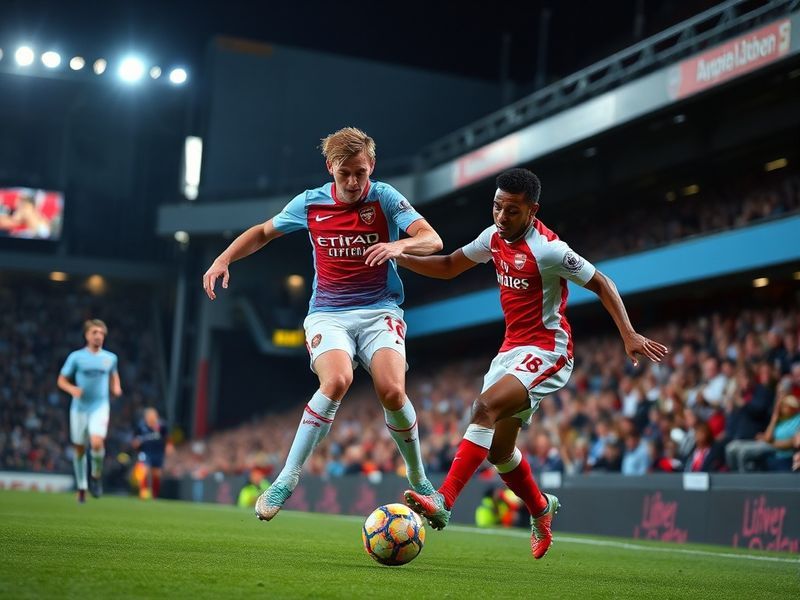
The Premier League has long been a stage for some of the most thrilling football rivalries in the world, but few matches capture the global imagination quite like the encounters between Manchester City and Arsenal. These two clubs, each with its own distinct identity and rich history, have produced some of the most dramatic and pivotal moments in modern football. Beyond the pitch, their clashes reflect broader cultural and tactical shifts in the sport itself.
Manchester City, backed by the financial might of the City Football Group, has transformed from a mid-table club into a dominant force in English and European football over the past decade. Their rise has been marked by meticulous planning, technological innovation, and a global recruitment strategy that has brought world-class talent to the Etihad Stadium. Meanwhile, Arsenal, one of England’s most storied clubs, has carved out a reputation for developing young talent and playing an attacking, aesthetically pleasing style of football. The contrast between the two teams—one built on financial power, the other on tradition and youth—makes their meetings a fascinating study in modern football’s evolution.
The Tactical Evolution of Two Premier League Giants
When Pep Guardiola arrived at Manchester City in 2016, he brought with him a philosophy rooted in possession, positional play, and relentless pressing. His influence has reshaped the club into a tactical powerhouse, with City often dominating games through intricate passing sequences and high pressing. The 2022-23 season, in which City secured a historic treble, was a testament to this approach, blending technical brilliance with physical endurance.
Arsenal, under Mikel Arteta, has taken a different path. Arteta, a former Guardiola disciple, has blended his mentor’s principles with a more direct, counter-attacking style. The Gunners’ resurgence in recent years has been built on a foundation of young, homegrown talent like Bukayo Saka and Emile Smith Rowe, as well as astute signings such as Declan Rice. Their tactical flexibility—shifting between a 4-3-3 and a 4-2-3-1—has made them unpredictable and difficult to contain.
These tactical differences create a compelling narrative whenever the two sides meet. City’s possession-heavy approach often clashes with Arsenal’s willingness to absorb pressure and strike on the break. The midfield battles between Rodri and Declan Rice, or the wing play of Kevin De Bruyne and Saka, become microcosms of the broader tactical trends in football. For fans, these matches offer more than just points—they provide a masterclass in strategy and execution.
A Rivalry with Global Implications
The Manchester City vs Arsenal rivalry extends far beyond the confines of the Premier League. With a combined global fanbase of over 100 million, these matches are broadcast to audiences across every continent. The Premier League’s international appeal has turned these fixtures into cultural touchstones, with fans in Asia, Africa, and the Americas tuning in to watch the drama unfold.
Social media amplifies the global reach of these matches. Platforms like Twitter and Instagram buzz with reactions, memes, and debates in the hours before and after kickoff. The rivalry has also become a battleground for narratives about the state of English football. City’s financial model, often criticized for its wealth disparity, is frequently contrasted with Arsenal’s more traditional approach. These debates play out in online forums, talk shows, and even political discussions in the UK, reflecting broader anxieties about the commercialization of sport.
The clubs’ global identities are also shaped by their ownership. City’s ownership by Abu Dhabi’s sovereign wealth fund has drawn scrutiny and admiration in equal measure, while Arsenal’s American ownership under Stan Kroenke has faced criticism from fans frustrated by the club’s perceived lack of investment. These ownership dynamics add another layer to the rivalry, making it a proxy for discussions about the future of football governance.
Key Moments in the Rivalry
The history between Manchester City and Arsenal is punctuated by iconic moments that have left an indelible mark on Premier League history. Here are a few that stand out:
- 2012: Agüero’s Last-Gasp Winner – Manchester City’s 3-2 victory on the final day of the 2011-12 season, secured by Sergio Agüero’s dramatic stoppage-time goal, denied Arsenal the title and cemented City’s place as a dominant force.
- 2017: Kompany’s Heroics – Vincent Kompany’s towering header in a 3-1 win at the Etihad was a statement of intent, showcasing City’s growing self-belief under Guardiola.
- 2020: A Tactical Masterclass – Arsenal’s 2-0 win at the Emirates, where Arteta’s side nullified City’s midfield dominance, was seen as a turning point in Arsenal’s resurgence.
- 2022: The 5-0 Thrashing – City’s emphatic 5-0 victory at the Etihad, featuring goals from De Bruyne, Mahrez, and Silva, was a statement of their title-winning credentials.
The Cultural Impact of City vs Arsenal
Beyond tactics and trophies, the Manchester City vs Arsenal rivalry is a reflection of broader cultural shifts in football. The Premier League, once dominated by clubs like Manchester United and Liverpool, has evolved into a more competitive and financially diverse landscape. City and Arsenal represent two of the most prominent clubs in this new era, each embodying different aspects of modern football’s identity.
For City, the club’s global appeal is tied to its ambition and innovation. The Etihad Stadium is a hub for fan engagement, with state-of-the-art facilities and a growing international academy system that seeks to develop talent from around the world. The club’s global tours and marketing campaigns have turned it into a brand as much as a football team, with partnerships spanning from the Middle East to China.
Arsenal, meanwhile, has long been associated with its traditional fanbase and iconic stadium. The Emirates, with its modern facilities and intimate atmosphere, has become a symbol of the club’s commitment to its roots. The club’s focus on youth development, embodied by the Hale End academy, has produced a generation of players who embody the club’s values of resilience and creativity.
The rivalry also highlights the changing demographics of football fandom. Younger fans, particularly in Asia and Africa, are increasingly drawn to clubs like City for their global brand and on-field success. Meanwhile, Arsenal’s traditional fanbase, spread across the UK and beyond, remains fiercely loyal to the club’s history and identity. This generational and cultural divide adds another layer to the narrative of their clashes.
The Future of the Rivalry
As both clubs continue to evolve, the Manchester City vs Arsenal rivalry is poised to remain one of the most compelling in world football. City’s recent dominance under Guardiola has set a new standard, but Arsenal’s resurgence under Arteta suggests that the gap between the two sides is narrowing. The next chapter of this rivalry will likely be defined by a new generation of players, as well as the clubs’ ability to adapt to the changing landscape of football.
For fans, the matches between City and Arsenal offer more than just points—they provide a glimpse into the future of the sport. Whether it’s through tactical innovation, global expansion, or the development of young talent, these two clubs are shaping the direction of football in the 21st century. The rivalry is a reminder that football is not just a game, but a cultural force that transcends borders and generations.
As the Premier League continues to grow in stature and influence, matches like these will remain at the heart of its appeal. For now, the world waits with anticipation for the next chapter in this storied rivalry.