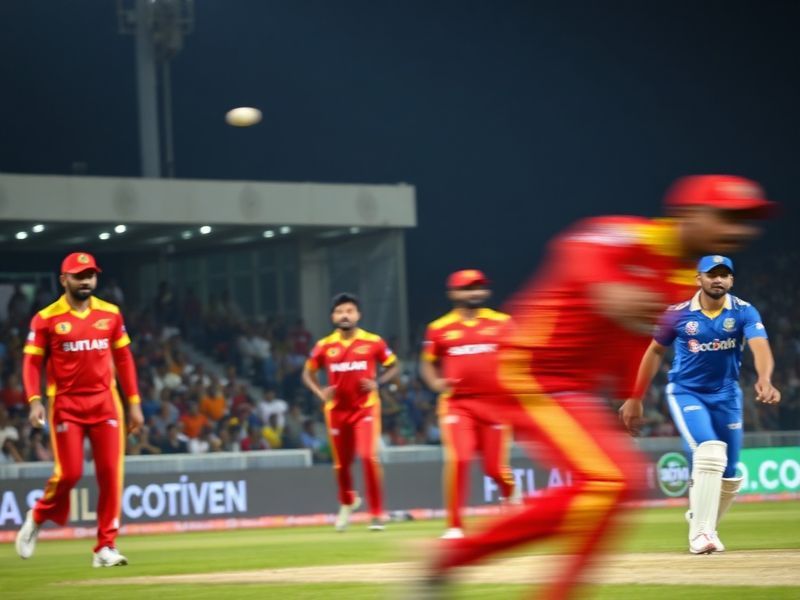
Multan Sultans vs Karachi Kings: The Rivalry That Defines Pakistan Super League
The Pakistan Super League (PSL) has emerged as one of cricket’s most dynamic Twenty20 leagues since its inception in 2016. Among its fiercest rivalries is the recurring clash between the Multan Sultans and the Karachi Kings. These two franchises not only represent Pakistan’s largest and most culturally significant cities but also embody a clash of identities—tradition versus modernity, discipline versus flair, and regional pride versus national unity.
While the PSL has grown into a global spectacle, drawing international stars and millions of viewers, it remains deeply rooted in Pakistan’s social fabric. The Sultans and Kings are more than just teams; they are symbols of their cities’ aspirations, frustrations, and unyielding spirit. Every match between them is more than a game—it is a cultural showdown, a battle for local bragging rights, and a reflection of how sport can transcend boundaries in a complex nation.
The Cultural Significance of Multan and Karachi
Multan, known as the City of Saints, is an ancient urban center in South Punjab with a rich heritage of Sufi shrines and Mughal-era architecture. Its people are known for their resilience, warmth, and deep-rooted traditions. The Multan Sultans franchise, owned by Schon Properties, has struggled in early seasons but has steadily built a reputation for nurturing young talent and playing an aggressive brand of cricket.
Karachi, by contrast, is Pakistan’s sprawling commercial capital and largest city. It is a melting pot of cultures, languages, and communities, often described as the country’s beating heart. The Karachi Kings, led by ARY Media, are seen as the glamour team of the PSL, attracting top international players and a massive urban fanbase. The city’s cosmopolitan identity—its neon-lit streets, sea breeze, and energetic chaos—mirrors the team’s high-energy, star-studded approach.
The contrast between the two cities shapes their cricketing philosophies. Multan values grit and underdog spirit; Karachi thrives on spectacle and star power. When these teams meet, it’s not just a match—it’s a clash of philosophies and identities, broadcast across Pakistan and watched by a global diaspora.
Head-to-Head: A Statistical Snapshot
As of the 2024 season, the two teams have faced each other 18 times in the PSL. The Karachi Kings lead the head-to-head record with 11 wins, while the Multan Sultans have secured 7 victories. However, the Sultans have shown improvement in recent years, especially in home games at the Multan Cricket Stadium, where they have developed a reputation as tough opponents.
The rivalry has produced several memorable moments:
- 2018, Karachi: Kings won by 19 runs in a low-scoring thriller, with Babar Azam top-scoring.
- 2020, Multan: Sultans chased down 186 in a high-scoring thriller, led by an unbeaten 99 from Mohammad Rizwan.
- 2022, Karachi: Kings won by 6 wickets in a rain-affected match, with Imad Wasim’s all-round performance.
- 2023, Multan: Sultans won by 37 runs, with Shan Masood’s captain’s knock anchoring the innings.
These matches are often decided in the final overs, reflecting the parity between the teams. While Karachi’s star power has historically given it an edge, Multan’s rise in recent seasons has added unpredictability to the rivalry.
Key Players Who Define the Rivalry
Both franchises have featured some of Pakistan’s—and the world’s—most exciting cricketers. These players often become the faces of the rivalry, their performances magnified under the pressure of a high-stakes PSL encounter.
For the Karachi Kings, the following players have become synonymous with the team’s identity:
- Babar Azam – The national captain and one of the world’s best batsmen, known for his elegant stroke play and consistency.
- Imad Wasim – A left-arm spinner and aggressive batsman, often the difference-maker in close games.
- Sharjeel Khan – A hard-hitting opener whose explosive starts have won matches single-handedly.
- Mohammad Amir – The left-arm pacer whose fiery spells have turned games around.
For the Multan Sultans, the team’s recent resurgence can be attributed to:
- Mohammad Rizwan – The wicketkeeper-batsman and T20 specialist, whose calm demeanor masks his explosive batting.
- Shan Masood – The stylish left-handed opener, whose leadership and technique have stabilized the top order.
- David Miller – The South African power-hitter, known for his ability to finish games in style.
- Usama Mir – A leg-spinner whose variations have caused problems for top-order batsmen.
These players don’t just represent their teams—they represent the cities they play for. When Rizwan walks out to bat for Multan or Babar Azam steps up for Karachi, they carry the hopes of millions of fans, each inning a statement of loyalty and pride.
A Rivalry That Reflects Broader Trends in Pakistani Cricket
The Multan Sultans vs Karachi Kings rivalry is not just about cricket—it mirrors the evolution of Pakistan’s cricketing culture. In the early years of the PSL, foreign players dominated headlines, and the league was seen as a platform for global stars to showcase their T20 skills. However, in recent seasons, there has been a deliberate push to promote local talent, with both franchises investing in young Pakistani cricketers.
This shift reflects a broader movement in Pakistani cricket, where the Pakistan Cricket Board (PCB) is trying to balance commercial appeal with the development of homegrown players. The Sultans, in particular, have been praised for giving opportunities to uncapped players from South Punjab, a region historically underrepresented in top-level cricket. This has not only strengthened the team but also given local fans a sense of ownership and pride.
On the other hand, the Karachi Kings continue to be a magnet for international stars, reflecting the city’s status as a hub for entertainment and commerce. The team’s ability to attract marquee players has helped the PSL gain global visibility, especially among diaspora communities in the UK, UAE, and Australia.
The rivalry, therefore, encapsulates the dual identity of modern Pakistani cricket: a blend of local passion and global ambition, tradition and innovation, discipline and entertainment. Every match between the Sultans and Kings is a microcosm of this broader narrative.
Beyond the Boundary: Fan Culture and Social Impact
The passion of the fans is what truly elevates this rivalry. In Multan, the stadium comes alive with Sufi music, traditional drums, and chants of “Sultans Zindabad!” In Karachi, the stands are a sea of blue, with banners, fireworks, and chants of “Karachi ka dil, Karachi ki jaan!” The emotional investment of the fans turns every match into a communal event.
This fan culture has also had a social impact. The PSL has become a unifying force in a country often divided along ethnic and political lines. Whether in Multan or Karachi, cricket provides a rare moment of shared joy and collective identity. The rivalry between the Sultans and Kings, therefore, transcends sport—it becomes a celebration of diversity and unity.
Moreover, the PSL has inspired a new generation of cricketers, especially from smaller cities like Multan. Young boys and girls now see local heroes like Rizwan and Masood as role models, dreaming of wearing the same colors and representing their cities on the biggest stage. This grassroots impact is perhaps the most enduring legacy of the PSL and its rivalries.
Looking Ahead: What the Future Holds
The Multan Sultans vs Karachi Kings rivalry is set to grow even stronger in the coming seasons. With the PSL expanding to six teams and introducing a women’s league, the stakes are higher than ever. Fans can expect more intense matches, higher scores, and greater drama as both franchises invest in world-class talent and innovative strategies.
For Multan, the challenge is to sustain their recent success and build a consistent winning culture. For Karachi, the goal is to reclaim their dominance while maintaining their star-studded appeal. Either way, the rivalry will continue to captivate audiences, both in Pakistan and around the world.
The PSL is no longer just a domestic league—it is a global brand. And at its heart are rivalries like the one between the Sultans and Kings. These matches remind us that cricket is more than a sport; it is a story of cities, cultures, and communities. It is a story that continues to unfold, one sixer and wicket at a time.