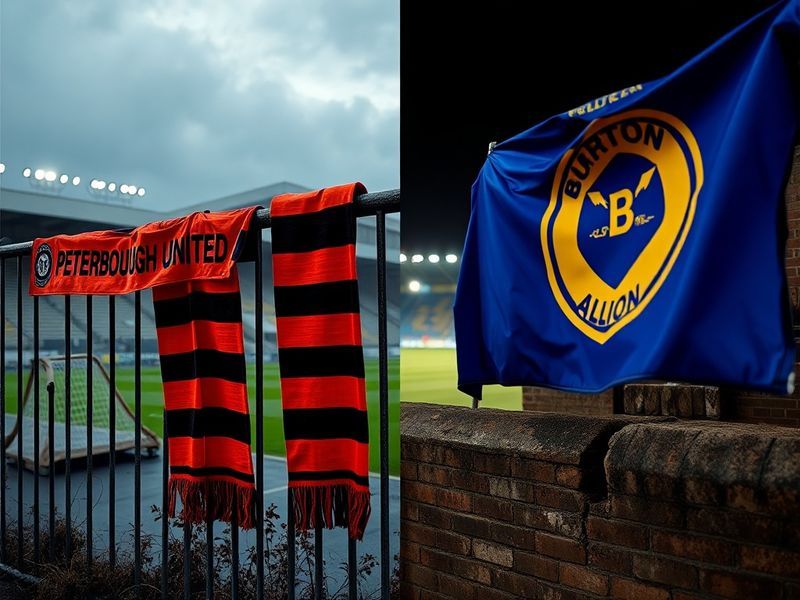
Football rivalries often emerge from proximity, history, or a clash of philosophies. The rivalry between Peterborough United and Burton Albion fits neatly into all three categories. Though separated by just 70 miles, these clubs represent distinct approaches to the game—one rooted in community tradition, the other in rapid professionalization. Their encounters on the pitch have become more than just matches; they are microcosms of broader trends in English football.
Their most recent meetings have only intensified the narrative. Burton, a club that rose from the National League to the Championship within a decade, faces Peterborough, a historic lower-league side with a loyal fanbase but limited financial muscle. The contrast raises questions about sustainability, ambition, and what it truly means to build a football club in the modern era.
From Humble Beginnings to Football League Stages
Peterborough United was founded in 1934 and has long been a club defined by its local identity. Based at London Road Stadium, affectionately known as “The POSH,” the club has spent most of its history in the lower divisions, with brief flirtations with the Championship. Its style of play and recruitment often reflect a pragmatic approach—focusing on developing young talent and securing steady progress rather than chasing immediate glory.
Burton Albion, on the other hand, was founded in 1950 but remained in the shadows until the 2000s. Under the ownership of Nigel Clough and later the formation of the Burton-based beverage company’s involvement, the club underwent a rapid transformation. By 2015, they had reached the Championship, a meteoric rise that stunned many in the football world. Their style was characterized by organization, financial backing, and a clear upward trajectory.
These divergent paths have created a fascinating dynamic. Peterborough’s fans often see themselves as purists, while Burton’s rise has been emblematic of the “new money” ethos in football—where ambition is measured in promotions and commercial growth rather than tradition.
The Matches That Matter: Recent Encounters and Tactical Nuances
Their head-to-head record over the past decade reflects this imbalance. In League One and the Championship, Burton has often held the upper hand, particularly in terms of league position and financial clout. Yet, Peterborough has enjoyed moments of triumph, particularly in cup competitions, where underdog stories can shine.
Tactically, the two sides approach the game differently. Burton, under various managers, has favored a structured, possession-based system with an emphasis on defensive solidity. Peterborough, while capable of adapting, has often relied on quick transitions and exploiting set-pieces—a hallmark of lower-league football.
Their most recent league meeting in November 2023 ended in a 2-1 victory for Burton, a result that underscored their superior technical quality. However, Peterborough’s goal came from a set-piece, a reminder that even in an era dominated by analytics and high pressing, traditional methods still have their place.
Key Takeaways from Recent Meetings
- Possession vs Pragmatism: Burton averages more possession and structured play, while Peterborough often prioritizes directness and set-pieces.
- Financial Disparity: Burton’s higher wage budget and transfer spending contrast sharply with Peterborough’s more modest resources.
- Cup Drama: Peterborough has historically performed better in knockout competitions, where tactical flexibility can outweigh financial disadvantage.
- Fan Culture: Peterborough’s loyal fanbase contrasts with Burton’s more transient support, reflecting their different stages of growth.
Broader Implications: What This Rivalry Says About Football’s Future
The Peterborough vs Burton rivalry is more than a local derby—it’s a case study in the evolving economics of English football. Burton’s rise mirrors that of clubs like Brentford and MK Dons, which have leveraged investment and modern management to climb the pyramid. Peterborough, meanwhile, represents the traditional lower-league club, fighting to survive in an environment where financial disparities are widening.
This dynamic raises important questions about the sustainability of the football pyramid. As clubs like Burton push for promotion to the Premier League, smaller clubs like Peterborough risk being left behind, unable to compete financially. The EFL’s financial fair play regulations and parachute payments for relegated Premier League clubs further exacerbate this imbalance.
Yet, there is an argument to be made for the romance of clubs like Peterborough. In an era where football is increasingly dominated by global superclubs and financial investors, Peterborough’s existence is a reminder of the game’s grassroots origins. Their survival depends not on vast wealth, but on community support, smart recruitment, and a bit of luck.
Looking Ahead: What’s Next for Both Clubs?
For Burton, the challenge is clear: consolidate their position in League One and push for a return to the Championship. Their recent struggles—including managerial changes and financial constraints—suggest that their rapid rise may have come at a cost. Can they balance ambition with stability?
Peterborough, meanwhile, faces a different set of challenges. With a new ownership group taking over in 2023, there is cautious optimism about the club’s future. The goal is simple: return to the Championship and compete at a higher level. But with limited resources, every decision—from transfers to stadium upgrades—must be carefully considered.
The next chapter of this rivalry will be written in the coming seasons. Will Burton reclaim its place in the upper echelons of English football? Can Peterborough defy the odds and climb back up the league? One thing is certain: their clashes will continue to offer a compelling narrative about what it means to build and sustain a football club in the 21st century.
As football evolves, rivalries like Peterborough vs Burton remind us that the game is not just about trophies and TV revenue—it’s about identity, ambition, and the communities that keep it alive.
“Football clubs are more than just businesses. They are institutions that reflect the hopes, dreams, and frustrations of their supporters. In Peterborough and Burton, we see two different visions of what football can be—and that’s what makes their rivalry so compelling.”
For fans of both clubs, the next matchday cannot come soon enough. The pitch will decide the winner, but the story behind it is what truly matters.
For more on the broader trends in English football, explore our News and Analysis sections.