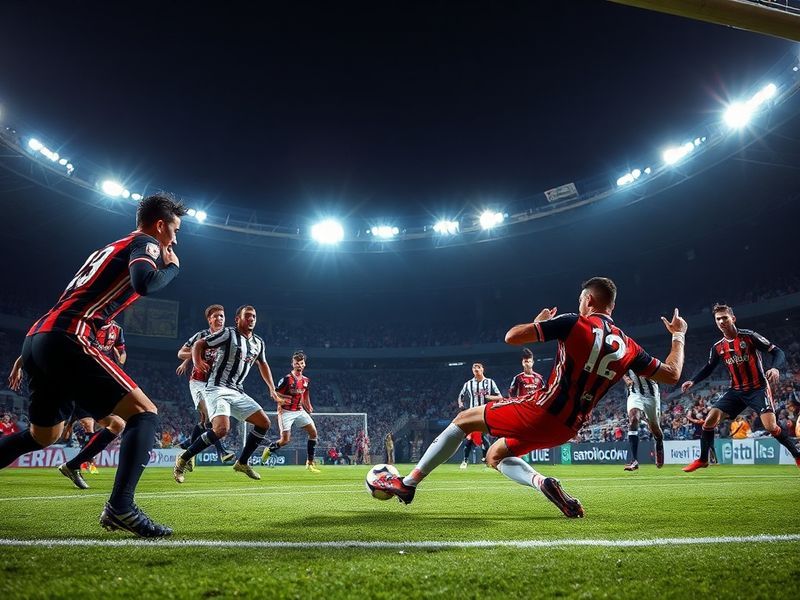
Italian football has long been defined by the stories of its clubs—some rooted in aristocratic tradition, others forged in working-class neighborhoods. Two such clubs, AC Pisa 1909 and Genoa CFC, represent this duality perfectly. While Genoa stands as Serie A’s oldest surviving club, Pisa has spent decades oscillating between obscurity and fleeting glory. Their upcoming encounters are more than just matches; they represent a collision of heritage, ambition, and the harsh realities of modern football.
The Origins: Genoa’s Aristocratic Legacy Meets Pisa’s Working-Class Resilience
Founded in 1893, Genoa Cricket and Football Club is a relic of Italy’s football infancy. Born in the port city of Genoa, the club was initially a melting pot of British expatriates and local elites, playing the game with a level of sophistication unusual for the era. Their early dominance—winning six of the first seven Italian championships—cemented their place in history. Yet, over the past century, Genoa has oscillated between Serie A and Serie B, often relying on financial injections from wealthy owners to survive.
Pisa, by contrast, traces its origins to 1909, when a group of students and workers in the Tuscan city formed a club to challenge the dominance of neighboring powerhouses. While not born of aristocracy, Pisa’s identity was built on resilience. The club’s most famous era came in the late 1980s and early 1990s, when it briefly competed in Serie A under the guidance of coach Luigi Cagni. That team, featuring players like midfield maestro Gabriele Pin, became a symbol of underdog success. However, financial mismanagement and relegation soon followed, sending Pisa into a spiral that saw it drop as low as Serie D in the 2010s.
Today, both clubs find themselves at a crossroads. Genoa, despite its illustrious past, has become a perennial struggler in Serie A, saved only by financial lifelines. Pisa, now back in Serie B after years of administrative turmoil, is desperate to prove it belongs among Italy’s professional ranks. Their matches are not just about points—they’re about identity.
On the Pitch: Tactical Approaches and Recent Form
When these two clubs meet, tactical battles often take a backseat to sheer willpower. Genoa, under head coach Alberto Gilardino, has adopted a pragmatic 3-5-2 formation designed to stifle opponents and exploit counterattacks. Gilardino, a former Italian international and World Cup winner, has instilled a disciplined but uninspiring style. The team relies heavily on the defensive solidity of veterans like Domenico Criscito and the creativity of young talents like Matteo Bianchi. However, inconsistency has plagued them, with draws against lower-table sides exposing their lack of cutting edge.
Pisa, managed by the experienced Roberto D’Aversa, has taken a different path. D’Aversa, who led Empoli to Serie A promotion in 2021, has implemented a fluid 4-3-3 system that emphasizes high pressing and quick transitions. The club’s reliance on homegrown players and loan signings from larger clubs has given it a scrappy, unpredictable edge. Key performers like forward Simone Dell’Orco—a product of Pisa’s youth academy—have become symbols of the club’s fight for respect. Yet, away form remains a persistent weak point, with Pisa often struggling to impose their game beyond the Arena Garibaldi.
In their most recent Serie B clash, Pisa edged out a 2-1 victory at home, with Dell’Orco scoring the decisive goal in the 87th minute. The result was celebrated as a statement, but Genoa’s resilience in away games suggests this rivalry will remain unpredictable.
Key Statistical Insights from Recent Encounters
- Head-to-Head Record (Last 10 Years): Genoa 5 wins, Pisa 3 wins, 2 draws
- Average Goals per Game: 2.4 (indicating a relatively open, attacking style)
- Most Common Score Line: 2-1 (suggesting tight, competitive matches)
- Pisa’s Home Advantage: Pisa has won 60% of their home games against Genoa since 2015
- Genoa’s Away Struggles: Genoa has failed to score in 40% of their away matches against Pisa in the last decade
The Off-Field Struggle: Finances, Fan Culture, and Future Ambitions
Beyond the tactical nuances, the Pisa vs Genoa rivalry is a microcosm of the broader challenges facing Italian football. Genoa’s financial instability has been a recurring theme, with the club frequently linked to takeover rumors and ownership disputes. In 2021, the club was acquired by 777 Partners, a U.S.-based investment group that has since taken over several Italian clubs. While the new ownership has brought much-needed capital, questions linger about long-term sustainability and fan engagement.
Pisa’s journey has been even more tumultuous. After declaring bankruptcy in 2016 and restarting in Serie D, the club clawed its way back to Serie B in 2022 under the ownership of the Danieli family, who have injected stability. Yet, the club’s fanbase remains one of the most passionate in Italy’s lower divisions. The Curva Nord of the Arena Garibaldi is renowned for its vocal support, with ultras often traveling en masse to away games despite financial constraints. This loyalty contrasts sharply with Genoa’s more transient fanbase, which has seen attendance decline in recent years.
The financial disparities between the two clubs are stark. Genoa’s annual turnover hovers around €100 million, while Pisa’s is closer to €30 million. Yet, Pisa’s model of sustainability—relying on youth development and smart transfers—offers a blueprint that larger clubs might envy. For Genoa, the pressure to maintain Serie A status while appeasing investors is a delicate balance. For Pisa, the challenge is to use this rivalry as a springboard for further growth, potentially challenging for Serie A promotion in the coming seasons.
Broader Implications: What This Rivalry Says About Italian Football
The Pisa vs Genoa narrative extends far beyond the two clubs involved. It reflects the broader fractures in Italian football: the gap between historic giants and ambitious underdogs, the tension between financial pragmatism and sporting idealism, and the role of fan culture in an increasingly commercialized sport.
Italy’s top flight, once the pinnacle of European football, has seen its competitive balance erode. Clubs like Juventus, Inter, and AC Milan dominate financially, while mid-tier teams like Genoa struggle to keep up. Smaller clubs like Pisa represent the hope of a more organic, community-driven football model—one that prioritizes tradition over transactions. Yet, their ability to compete is constantly undermined by the financial powerhouses of Serie A.
This rivalry also highlights the importance of local identity in football. Pisa’s connection to its city is visceral, with the club serving as a source of civic pride. Genoa, while historically significant, has struggled to maintain the same emotional resonance with its fanbase. The contrast underscores how football clubs can either uplift or disappoint their communities, depending on their ability to navigate financial and sporting challenges.
As Italian football grapples with the dual pressures of globalization and financial fair play regulations, clubs like Pisa and Genoa embody the resilience required to survive. Their matches are not just about three points—they’re about proving that football’s soul still matters in a sport increasingly dominated by money and spectacle.
Looking Ahead: What’s Next for Pisa and Genoa?
For Genoa, the immediate priority is survival in Serie A. The club’s survival often hinges on its ability to navigate the January transfer window and secure key loans. Meanwhile, Pisa’s focus is on consolidating its place in Serie B and building toward a potential promotion push. The Danieli family’s long-term vision for the club includes expanding the youth academy and increasing commercial revenue through innovative partnerships.
In the grander scheme, this rivalry could become a case study in how smaller clubs can punch above their weight. If Pisa can continue its upward trajectory while Genoa stabilizes its finances, their future encounters might shift from battlegrounds to celebrations of Italian football’s diversity. Until then, each match remains a reminder of the sport’s beauty—and brutality.
One thing is certain: when Pisa and Genoa take the field, the stakes are always high, the drama is inevitable, and the stories written will be remembered long after the final whistle.
For fans looking to dive deeper into the tactical and cultural nuances of Italian football, explore our Analysis and Sports sections for more in-depth coverage.