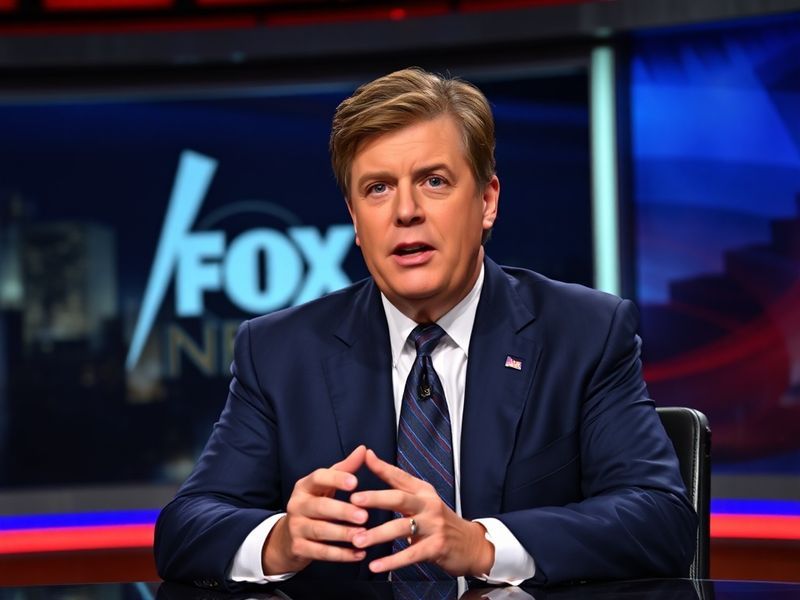
Sean Hannity has spent decades at the forefront of conservative media, becoming one of the most recognizable and influential voices in American political discourse. From his early days in talk radio to his current role as a prime-time host on Fox News, Hannity has built a career on blending opinion with advocacy, often blurring the lines between journalism and commentary. His rapid-fire delivery, unapologetic conservatism, and close ties to Republican leadership have made him both a polarizing figure and a defining force in right-leaning media.
Hannity’s impact extends beyond television. He is a bestselling author, a frequent campaign surrogate, and a key player in the conservative media ecosystem. With a platform that reaches millions nightly, his commentary often shapes public perception of current events, policy debates, and electoral politics. Yet, his career has not been without controversy, as critics argue that his approach prioritizes partisanship over factual reporting. As media consumption evolves, Hannity remains a pivotal figure in understanding the intersection of politics, media, and public trust.
Early Career and Rise to Prominence
Sean Patrick Hannity was born on December 30, 1961, in New York City, and grew up in Long Island. His early interest in politics and media was evident long before he became a household name. After dropping out of New York University and working odd jobs, Hannity landed his first radio job in 1989 at WGOW in Chattanooga, Tennessee. There, he honed his on-air persona—a mix of confrontational rhetoric and populist appeal that would later define his style.
His big break came in 1996 when he joined Fox News as a host of Hannity & Colmes, a show that paired him with liberal commentator Alan Colmes. The format was designed to present a balanced debate, but Hannity quickly became the dominant voice, often overshadowing Colmes in tone and substance. By 2009, after Colmes’ departure, the show was rebranded simply as Hannity, solidifying his role as the sole ideological anchor of the program. This shift reflected a broader trend in conservative media, where balance was increasingly replaced by advocacy.
Hannity’s rise coincided with the growth of Fox News into a dominant force in cable news. His show became a ratings powerhouse, consistently drawing millions of viewers and attracting a loyal base of conservative listeners. This success allowed him to expand his influence into other media ventures, including bestselling books like Let Freedom Ring and Deliver Us from Evil, which reinforced his brand as a defender of conservative values.
The Hannity Brand: Opinion as Advocacy
What sets Hannity apart from traditional journalists is his explicit embrace of advocacy. Unlike network news anchors who strive for objectivity, Hannity has never pretended to be neutral. His programming is unapologetically conservative, often framing issues through a lens of defending America, supporting the military, and opposing what he views as liberal overreach. This approach has earned him both fervent supporters and fierce critics.
His on-air rhetoric frequently aligns closely with Republican talking points, particularly during election cycles. Hannity has been a vocal advocate for GOP candidates, often serving as an unofficial campaign surrogate. During the 2016 and 2020 presidential elections, he was a staunch defender of Donald Trump, using his platform to promote the former president’s agenda and counter negative media coverage. This alliance has led to accusations that Hannity’s journalism is compromised by his personal and political connections.
For instance, Hannity’s role in the Trump era extended beyond commentary. In 2018, it was revealed that he was one of several Trump associates who had unreported contacts with Michael Cohen, Trump’s former lawyer, regarding a hush-money payment to adult film actress Stormy Daniels. While Hannity denied being a direct client of Cohen’s, the revelation raised ethical questions about the blurred boundaries between Hannity’s media work and his political alliances.
Content and Style: What Defines a Hannity Segment
A typical Hannity segment is fast-paced, visually dynamic, and laced with rhetorical flourishes. His opening monologues often set the tone for the show, blending current events with conservative talking points. He frequently employs a call-and-response style with his audience, reinforcing shared beliefs and creating a sense of communal outrage or celebration.
His segments often feature a mix of:
- Breaking news analysis: Hannity reacts to unfolding stories, often framing them in a way that aligns with conservative narratives.
- Interviews with conservative figures: From politicians to activists, these conversations reinforce his ideological consistency.
- Documentary-style segments: Pre-produced reports that explore topics like immigration, the “Deep State,” or media bias, often with a conspiratorial edge.
- Viewer interaction: Callers and social media comments are integrated to create a participatory experience.
This format has made Hannity a destination for viewers seeking validation rather than information, a phenomenon that has reshaped expectations for cable news consumption.
Controversies and Criticisms
Hannity’s career has been marked by repeated controversies, many of which stem from his blending of media and political roles. Critics argue that his commentary frequently crosses into propaganda, particularly when he promotes conspiracy theories or dismisses mainstream journalism as “fake news.” For example, during the COVID-19 pandemic, Hannity downplayed the severity of the virus on his show, even as cases surged. A 2021 analysis by the News outlet Media Matters found that Hannity’s early coverage of the pandemic may have contributed to public confusion about the risks.
Another recurring criticism is Hannity’s selective use of facts. In 2017, he aired a segment alleging that the FBI had framed Donald Trump for colluding with Russia, a claim that was later debunked. Similarly, he has repeatedly amplified claims about election fraud in the 2020 presidential race, despite no evidence supporting widespread fraud. These incidents have led to accusations that Hannity prioritizes narrative over truth, a charge that resonates with broader concerns about media polarization.
The ethical dilemmas extend to his professional relationships. Hannity’s close ties to Republican leaders, including Trump, have raised questions about conflicts of interest. For instance, during Trump’s presidency, Hannity was reportedly in regular contact with White House officials, raising concerns about whether his reporting was influenced by these connections. While Hannity has defended these interactions as part of his role as a commentator, they underscore the challenges of maintaining journalistic integrity in an era of partisan media.
The Future of Hannity and Conservative Media
As of 2024, Sean Hannity remains a central figure in conservative media, but his influence is not what it once was. Fox News has faced significant challenges, including a $787.5 million settlement with Dominion Voting Systems over false election fraud claims and a decline in cable news viewership across the board. Hannity’s show, while still a top-rated program, has seen fluctuations in its audience, reflecting broader shifts in media consumption habits.
Younger conservatives, in particular, are turning to digital platforms like podcasts and streaming services, where hosts like Ben Shapiro and Charlie Kirk offer more tailored content. Meanwhile, traditional cable news faces competition from social media influencers who blend politics with entertainment in new ways. Hannity’s ability to adapt to these changes will determine whether he remains a dominant force or becomes a relic of an earlier media era.
Yet, Hannity’s legacy is already secure as one of the architects of the modern conservative media landscape. His career illustrates how opinion-driven programming can shape public opinion, influence elections, and redefine the boundaries of journalism. Whether viewed as a champion of conservative values or a purveyor of misinformation, Hannity’s impact on American media is undeniable.
For those interested in exploring how conservative media has evolved alongside figures like Hannity, Analysis sections often dissect these trends in greater depth. The intersection of politics and media remains a critical area of study, particularly as new platforms and formats continue to emerge.
Conclusion: A Media Personality Defined by His Era
Sean Hannity’s career reflects the transformation of American media over the past three decades. From his early days in radio to his current role as a Fox News titan, he has embodied the fusion of politics and media in ways that were once unimaginable. His unapologetic conservatism and confrontational style have made him a lightning rod for criticism, but they have also cemented his place as a defining voice of the right.
As the media landscape continues to evolve, Hannity’s ability to adapt—or resist change—will be closely watched. One thing is certain: his influence on conservative media is unlikely to fade anytime soon. For better or worse, Sean Hannity has shaped the way millions of Americans consume news, form opinions, and engage with politics.