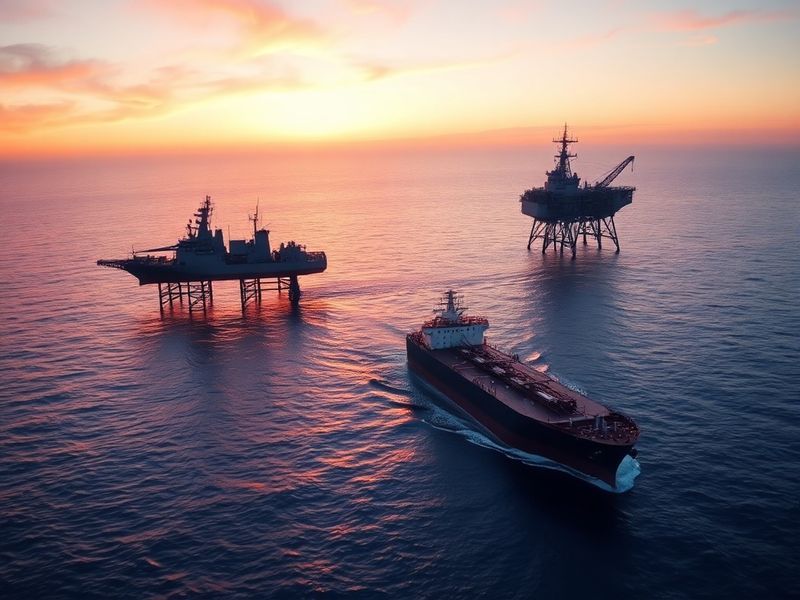
Strait of Hormuz: Why This Narrow Channel Controls Global Oil Prices
“`html
Strait of Hormuz: A Critical Chokepoint in Global Oil Trade
The Strait of Hormuz remains one of the most strategically significant maritime routes in the world. Connecting the Persian Gulf to the Gulf of Oman, this narrow passage facilitates the movement of approximately 20-30% of the world’s oil supply each day. Recent geopolitical tensions have elevated its importance, turning it into a flashpoint for international diplomacy and military posturing.
In 2023 alone, over 17 million barrels of crude oil passed through the strait daily, according to data from the U.S. Energy Information Administration. This volume underscores why disruptions in the region can send shockwaves through global energy markets within hours. The strait’s shallow waters—measuring just 21 miles at its narrowest point—make it particularly vulnerable to blockades, accidents, or deliberate acts of aggression.
Geopolitical Tensions and Military Posturing
The Strait of Hormuz has long been a focal point of regional and global tensions. Iran, which shares borders with several Gulf states, has repeatedly threatened to disrupt shipping in the strait in response to sanctions or perceived threats. In 2019, Iran seized a British-flagged oil tanker, the Stena Impero, in retaliation for the UK’s detention of an Iranian vessel. The incident highlighted the fragility of maritime security in the region.
Military presence in the area is dominated by the U.S. Fifth Fleet, which operates out of Bahrain. The fleet’s role includes ensuring freedom of navigation and deterring aggression. However, incidents such as drone strikes on oil tankers and the downing of U.S. drones have escalated tensions. In 2022, the U.S. and its allies launched a maritime security initiative called Operation Prosperity Guardian to protect commercial shipping in the Red Sea and Gulf of Aden, though its effectiveness in the Strait of Hormuz remains debated.
Iran’s military strategy in the strait relies heavily on asymmetric tactics. Its navy, including the Islamic Revolutionary Guard Corps (IRGC), operates small, fast boats capable of swarming larger vessels. Mines and anti-ship missiles further complicate navigation. These capabilities pose a significant challenge to traditional naval forces, which are optimized for open-water engagements rather than confined, high-traffic chokepoints.
Economic Impact of Disruptions
The economic consequences of a prolonged closure or disruption in the Strait of Hormuz would be severe. Oil prices could skyrocket, as seen during the 1980s Iran-Iraq War, when tanker traffic was frequently interrupted. A 2021 report by the RAND Corporation estimated that a six-month closure could reduce global oil supply by 20-30%, pushing prices above $200 per barrel and triggering a global economic slowdown.
Major importers such as China, India, and Japan rely heavily on oil transiting through the strait. China, in particular, imports over 70% of its oil via the Persian Gulf, making it acutely vulnerable to disruptions. In response, countries have sought to diversify their supply chains. India, for example, has increased imports from Russia and the U.S. to reduce dependency on Middle Eastern oil. However, such shifts are costly and time-consuming, leaving many nations exposed to short-term shocks.
The energy sector is not the only one affected. Global shipping costs rise when insurance premiums surge due to heightened risk. In 2023, the cost of insuring a tanker passing through the strait increased by up to 300% in some cases. This added expense trickles down to consumers, contributing to higher fuel prices and inflation.
Key Oil Importers Through the Strait of Hormuz (2023)
- China: 1.5 million barrels per day
- India: 1.2 million barrels per day
- Japan: 1.0 million barrels per day
- South Korea: 0.8 million barrels per day
- United States: 0.5 million barrels per day
Diplomatic Efforts and Future Scenarios
Diplomacy has struggled to ease tensions in the Strait of Hormuz. The Joint Comprehensive Plan of Action (JCPOA), commonly known as the Iran nuclear deal, aimed to reduce regional tensions by lifting sanctions in exchange for nuclear restrictions. However, the U.S. withdrew from the agreement in 2018, and subsequent attempts to revive it have failed. Meanwhile, Iran continues to enrich uranium beyond agreed limits, further straining relations.
Alternative routes exist but are limited. The East-West Pipeline, which transports oil from Saudi Arabia to the Red Sea, bypasses the strait but has a capacity of just 4.8 million barrels per day—far below the strait’s daily throughput. Other options, such as overland pipelines through Iraq or Turkey, are politically unstable or logistically constrained. The result is a lack of viable alternatives, leaving the strait as the only practical route for much of the world’s oil.
Looking ahead, several scenarios could unfold. A negotiated de-escalation, while unlikely in the short term, remains the best-case outcome. However, miscalculations or deliberate provocations could lead to a military confrontation. The most probable near-term scenario involves continued low-level harassment of shipping, such as drone strikes or minor seizures, without a full-scale blockade. Such incidents would keep oil markets on edge but avoid catastrophic disruptions.
Environmental and Humanitarian Concerns
Beyond geopolitics and economics, the Strait of Hormuz faces environmental and humanitarian challenges. Oil spills pose a constant threat, particularly in a region where tankers navigate some of the world’s busiest shipping lanes. A major spill could devastate marine ecosystems and coastal communities in Oman, the UAE, and Iran. The 1989 Exxon Valdez spill in Alaska serves as a grim reminder of the long-term damage such incidents can cause.
Humanitarian concerns also loom large. The strait is a critical route for food and medical supplies to countries such as Yemen, which has faced severe shortages amid ongoing conflict. Disruptions to shipping could exacerbate these crises, leading to famine and disease outbreaks. International aid organizations have repeatedly warned that a prolonged blockade would trigger a humanitarian catastrophe.
Local communities along the strait’s shores, including those in Iran’s Hormozgan province and Oman’s Musandam governorate, rely on fishing and tourism for their livelihoods. Environmental degradation and military activity threaten these industries, pushing residents toward economic hardship. Efforts to mitigate these impacts have been sporadic, often overshadowed by larger geopolitical struggles.
Conclusion: A Region at a Crossroads
The Strait of Hormuz remains a linchpin of global energy security, yet its future is increasingly uncertain. Geopolitical tensions, economic dependencies, and environmental risks intersect in this narrow waterway, creating a volatile mix. While military forces and diplomatic efforts aim to maintain stability, the region’s history suggests that crises can erupt with little warning.
For the international community, the challenge lies in balancing short-term security needs with long-term solutions. Diversifying energy sources, investing in alternative shipping routes, and supporting diplomatic initiatives are critical steps. However, without a fundamental shift in regional dynamics, the strait will continue to be a flashpoint—one that could have far-reaching consequences for the world economy and global stability.
As the situation evolves, vigilance and proactive engagement will be essential. The Strait of Hormuz is not just a chokepoint on a map; it is a symbol of the interconnectedness of global energy, politics, and security. Protecting it requires more than military might or economic pressure—it demands a commitment to dialogue, cooperation, and sustainable solutions.