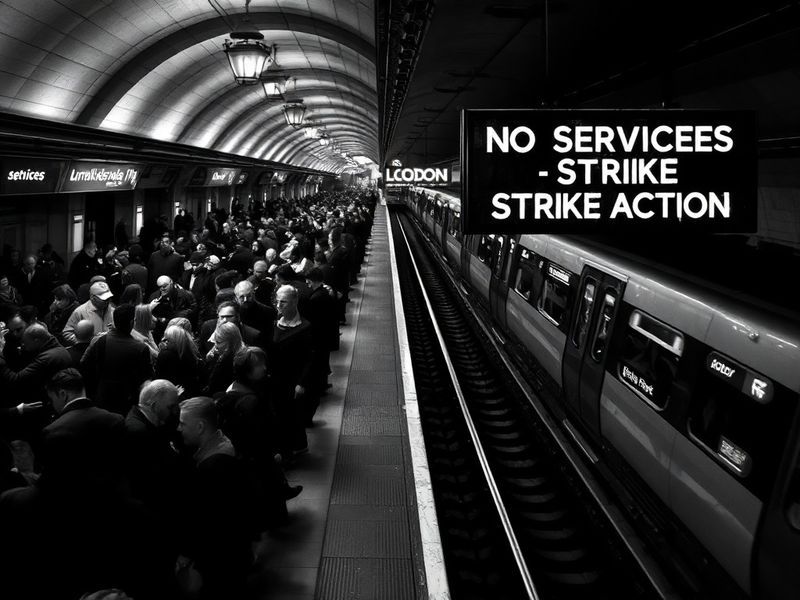
Tube Strikes 2026: London Braces for Major Transport Disruptions
“`html
Tube Strikes 2026: What Commuters Need to Know
Transport for London has confirmed a series of planned strikes for 2026, following months of negotiations between unions and management over pay, working conditions, and job security. The upcoming industrial action is expected to disrupt the daily commute for millions of Londoners, with potential ripple effects across the city’s economy. While strike dates haven’t been finalized yet, unions like the RMT and TSSA have signaled readiness to escalate action if their demands aren’t met.
The last major wave of Tube strikes in 2023 lasted for nearly two weeks, costing the capital an estimated £1.5 billion in lost productivity. With inflation still elevated and household budgets tight, another round of disruptions could place additional strain on workers who rely on public transport to get to their jobs. Businesses, particularly in central London, are already preparing contingency plans, from staggered start times to hybrid work policies.
Why are the strikes happening?
The primary catalyst for the 2026 strikes is the ongoing dispute over pay. Transport for London has offered an increase of 5% for 2026, but unions argue this falls short of keeping pace with inflation, which has eroded real wages by nearly 12% since 2020. Workers are also demanding better pension terms and guarantees against job cuts as the TfL transitions toward more automated systems.
Another sticking point is the implementation of new ticketing technology. The RMT has raised concerns that staff reductions tied to digital ticketing could compromise safety and accessibility, particularly for elderly and disabled passengers. A leaked internal memo from TfL suggested that up to 400 station staff roles could be affected by 2027, a figure unions have called alarming.
Negotiations have stalled repeatedly, with both sides blaming the other for intransigence. The mayor’s office has urged calm, emphasizing that both TfL and unions have a shared interest in avoiding prolonged disruption. However, with public patience already thin following years of service reductions, the stage is set for a high-stakes showdown.
Which lines are most at risk?
While all Tube lines could face partial closures during strike action, certain routes are expected to bear the brunt of the impact. The Central, Piccadilly, and Victoria lines are traditionally most affected due to their high passenger volumes and complex operational dependencies. Stations with fewer staff—such as those in outer London zones—may also experience longer service gaps.
According to TfL’s contingency plans, a 48-hour strike could reduce overall service to 20% of normal capacity. Key interchanges like King’s Cross St. Pancras and Canary Wharf would likely remain operational but with severe delays. Commuters who rely on these hubs may need to allow up to three times their usual travel time.
- Most affected lines: Central, Piccadilly, Victoria
- Least affected lines: Jubilee, Northern (due to newer infrastructure and staffing models)
- High-risk stations: Oxford Circus, Liverpool Street, Stratford
For real-time updates, commuters are advised to check Dave’s Locker Transport section, which provides live service alerts and alternative route suggestions during disruptions.
How London is preparing
In anticipation of the strikes, London’s business community has begun implementing contingency measures. Many large employers, including banks and law firms in the City, have already circulated hybrid work policies for strike days. Some companies are offering subsidies for taxi services or cycle-to-work schemes, while others are encouraging employees to adjust their hours to avoid peak disruption.
The London Chamber of Commerce has warned that prolonged strikes could push some businesses to reconsider their long-term presence in the capital. “London’s economy is built on reliable transport,” said a spokesperson. “If commuters can’t get to work consistently, we’re going to see investment slow down.”
Transport for London has also taken steps to mitigate the fallout. It has increased the number of standby staff available for emergency repairs and is exploring temporary bus bridging services on key routes. However, with TfL facing its own budget constraints, the scope of these measures remains limited.
Meanwhile, grassroots initiatives are emerging. Community groups have set up informal carpool networks, while local cafes and shops near major stations are preparing for an influx of stranded commuters seeking shelter or refreshments. These efforts underscore the resilience of London’s neighborhoods, even as tensions rise.
What commuters can do
With strike dates still uncertain, commuters are advised to plan ahead. TfL has launched a dedicated strike preparedness webpage, offering journey planners and advice on alternative modes of transport. Walking and cycling are being promoted as viable options, with Santander Cycles expanding its fleet ahead of expected demand spikes.
For those who must travel, off-peak travel is strongly recommended. Weekends and evenings typically see lower ridership, reducing crowding and wait times. Passengers should also consider using contactless payment methods, as ticket offices may be closed or understaffed during strike action.
- Check TfL’s strike webpage for real-time updates
- Download Citymapper or another transit app for alternative routes
- Consider flexible working hours or remote options if possible
- Join local commuter forums for shared advice and support
- Allow extra travel time—delays of up to 90 minutes are possible
For those seeking community support, Dave’s Locker’s Community section features forums where Londoners share tips, carpool offers, and morale-boosting stories during transit crises.
Looking ahead: Could this be avoided?
The path to resolution remains unclear. While unions have signaled openness to mediated talks, TfL insists it cannot meet their demands without risking service cuts elsewhere. The mayor’s office has floated the idea of a temporary government bailout to bridge the gap, but political will is divided.
Industry analysts suggest that London’s transport model may need a fundamental rethink. “We can’t keep patching a system that was designed for a different era,” said a transport policy expert at the LSE. “Automation is coming, but we need to ensure it doesn’t leave workers behind.”
One potential compromise could involve phased pay increases tied to productivity gains from new technology. Another is a joint task force to retrain staff for higher-skilled roles in the evolving transport ecosystem. Whatever the outcome, one thing is certain: the 2026 strikes are more than just a labor dispute—they’re a test of London’s ability to adapt in an era of rapid change.
As the countdown to potential strike dates begins, one thing is clear: London’s commuters, businesses, and policymakers are all in uncharted territory. The decisions made in the coming months will shape the city’s transport network—and its economic future—for years to come.