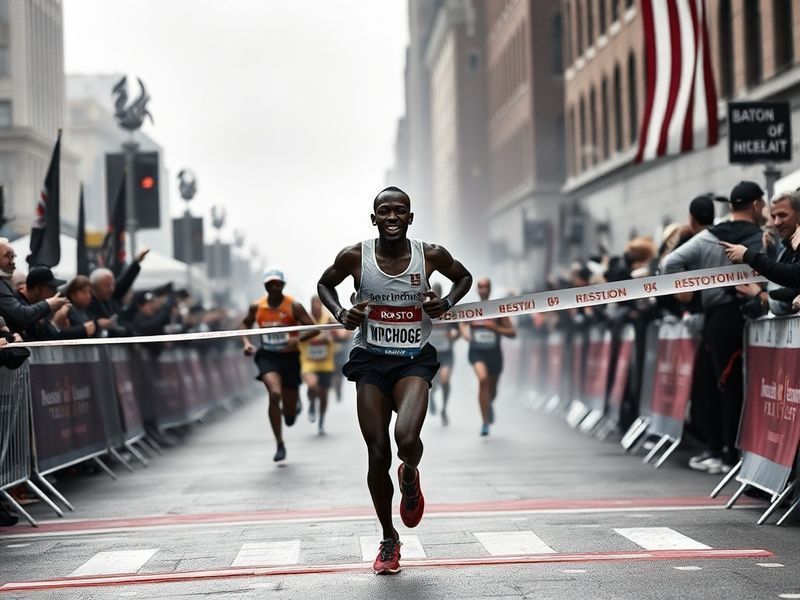
The Boston Marathon’s storied history is etched with moments of triumph, perseverance, and—most recently—record-breaking speed. In April 2024, Ethiopia’s Sisay Lemma erased the men’s course record with a time of 2:06:17, slicing nearly a minute off the previous mark set in 2022. For a race that has defined American distance running since 1897, such a performance isn’t just a personal victory; it’s a testament to evolving training, technology, and global competition.
The Boston Marathon isn’t just any race—it’s one of the most prestigious and grueling events in the world. Held annually on Patriots’ Day, the point-to-point course from Hopkinton to Boston features heartbreak hills, unpredictable New England weather, and a relentless crowd that fuels runners to their limits. Breaking a record here demands more than raw talent; it requires precision, endurance, and an intimate understanding of the course’s unique demands.
The Record-Breaking Run: What Made Sisay Lemma’s Performance Historic
Sisay Lemma’s 2:06:17 finish wasn’t just fast—it was a strategic masterclass. Unlike many record-setters who rely on a pack of pacers, Lemma broke away early, maintaining a relentless pace that left competitors scrambling. His final 10K was run in 28:45, a split that would be elite in most standalone races. What set this performance apart was Lemma’s ability to withstand the infamous Newton hills while preserving enough energy for a devastating kick in the final miles.
Analysts point to several factors behind Lemma’s success:
- Pacing Strategy: Lemma’s early surges defied conventional wisdom, which often favors a more conservative approach in Boston’s unpredictable conditions.
- Weather Conditions: Temperatures hovered around 50°F with minimal wind—ideal for record-breaking performances.
- Nutrition and Hydration: Lemma’s team fine-tuned his fueling strategy, a critical element in marathon success.
- Mental Resilience: The psychological toll of leading from the front requires an extraordinary mindset, especially in a race as emotionally charged as Boston.
Lemma’s victory also highlighted the growing dominance of East African runners in elite marathoning. Since 2010, athletes from Kenya and Ethiopia have claimed 14 of the last 15 Boston Marathon titles. This trend reflects broader shifts in global distance running, where altitude training, specialized coaching, and competitive depth have redefined what’s possible.
How Boston’s Course Influences Record Attempts
The Boston Marathon’s course is a paradox: it’s both a stage for record-breaking and a relentless gauntlet. The downhill start from Hopkinton to Wellesley College lures runners into a false sense of speed, while the Newton hills—especially Heartbreak Hill between miles 20 and 21—punish those who overstride or miscalculate their effort. For record-seekers, the key is managing these sections without sacrificing too much time.
Recent record holders have adopted nuanced approaches to tackle the course:
- Negative Splits: Breaking the race into segments, with the second half faster than the first, has become a hallmark of successful Boston record attempts.
- Pacemaking Strategy: While Lemma eschewed traditional pacers, others like Geoffrey Kirui (2017 winner) used a rotating lead pack to maintain pace through the hills.
- Weather Adaptation: Runners now study microclimate patterns, adjusting their gear and hydration based on wind forecasts and temperature projections.
The course’s net elevation drop of 459 feet also plays a role in record eligibility. World Athletics, the governing body for track and field, requires marathon courses to be measured for certification, and Boston’s slight downhill profile can shave seconds off a runner’s time—though the hills often negate any advantage gained early on.
The Broader Impact: What Record-Breaking Means for the Sport
Sisay Lemma’s record isn’t just a personal achievement; it’s a barometer for the sport’s evolution. As marathon times continue to drop, questions arise about the limits of human performance. Can the 2-hour marathon barrier be broken on a non-traditional course? How will advances in sports science—such as altitude training masks, carbon-plated shoes, and AI-driven training programs—reshape the future of racing?
For spectators, record-breaking performances make the Boston Marathon even more compelling. The race has always been defined by its underdog stories and dramatic finishes, but elite performances add another layer of spectacle. They remind us that while the Boston Marathon is a test of endurance, it’s also a stage for innovation and athleticism.
The ripple effects extend beyond the elite field. As amateur runners chase their own personal bests, they look to professionals for inspiration—and sometimes, even mimic their strategies. The proliferation of wearable tech, such as GPS watches and heart rate monitors, has democratized access to data that was once reserved for pros. This accessibility is driving a new generation of runners to push their limits, both in Boston and beyond.
What’s Next for Boston’s Records?
If history is any indication, the Boston Marathon record will continue to fall. The men’s record has been broken 12 times since 1969, with the most recent prior record (2:06:50) set by Evans Chebet in 2022. Women’s records have also seen dramatic improvements, with Ethiopia’s Worknesh Degefa clocking 2:14:52 in 2024—just 16 seconds off the world record.
Looking ahead, several factors could fuel the next wave of record-breaking performances:
- Technology: Carbon-plated shoes, which debuted in 2016, have already revolutionized marathon times. Future advancements in footwear and apparel could push athletes even further.
- Global Talent Pool: Countries like Eritrea, Uganda, and Morocco are producing elite runners at an unprecedented rate, increasing competition and raising the bar for all.
- Course Modifications: While the Boston course is unlikely to change, innovations in training—such as altitude tents and heat acclimation protocols—could give runners an edge.
- Sponsorship and Investment: As marathon running gains global popularity, more resources are flowing into elite programs, enabling athletes to focus exclusively on competition.
For now, Sisay Lemma’s record stands as a benchmark, but it won’t stand forever. The question isn’t if it will fall, but when and by whom. One thing is certain: the Boston Marathon will remain a proving ground for the world’s greatest runners, a stage where history is made one stride at a time.
For those inspired to chase their own marathon dreams, the Boston Marathon offers a unique blend of challenge and prestige. Whether you’re an elite athlete or a first-time qualifier, the race’s unforgettable atmosphere and storied history make it a bucket-list event. To learn more about training strategies, course tips, and the history of Boston, explore our Sports and Health categories for in-depth guides and expert advice.