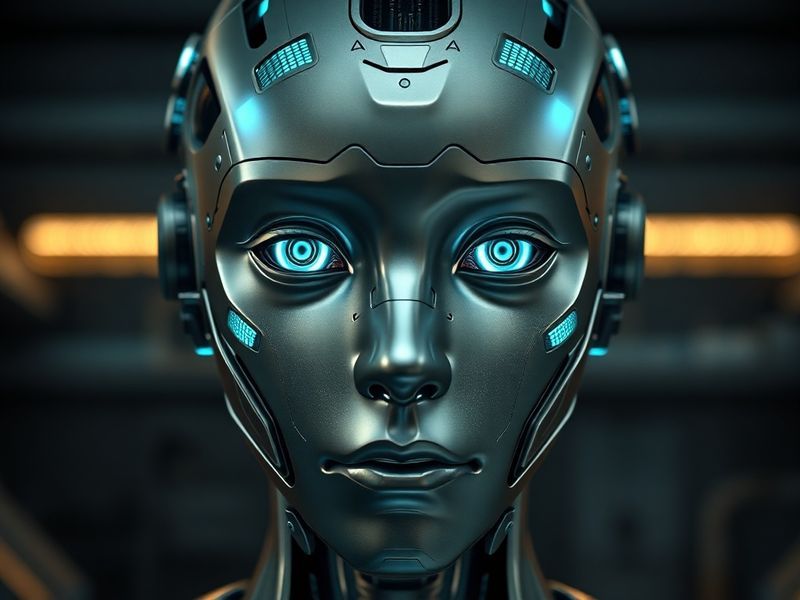
Claude AI: A New Era in Human-Machine Interaction
In the landscape of artificial intelligence, few names have risen as quietly yet profoundly as Claude. Developed by Anthropic, an AI safety and research company founded in 2021, Claude represents more than just another chatbot. It embodies a deliberate shift toward safer, more aligned, and human-centric AI systems. Since its public debut, Claude has quietly reshaped expectations for what conversational AI can achieve without compromising ethical boundaries.
The tool first entered the public consciousness through Anthropic’s partnership with companies like Notion, where it demonstrated capabilities that went beyond simple text generation. These integrations showed that Claude could assist with complex tasks—drafting documents, summarizing long texts, and even coding—while maintaining a level of coherence and safety that many users found refreshing. Unlike some predecessors, Claude was designed with constitutional AI principles, embedding guidelines that prioritize helpfulness, harmlessness, and honesty.
The Design Philosophy Behind Claude
At the heart of Claude’s development is a commitment to alignment. Anthropic’s team, led by former OpenAI researchers, sought to build an AI that could be trusted—not just performant. The name “Claude” itself is a nod to Claude Shannon, the father of information theory, symbolizing the fusion of technical precision with human-centered design.
Claude’s architecture is built on a transformer-based model, similar to other large language models, but with key differences. Anthropic trained it using a method called Constitutional AI, which involves fine-tuning the model to follow a set of ethical principles. These principles aren’t abstract; they’re embedded into the model’s decision-making process, helping it refuse harmful requests, avoid bias, and provide accurate information.
- Safety-first training: The model is trained to prioritize user well-being over engagement metrics.
- Transparency: It often explains its reasoning or limitations when answering complex questions.
- Contextual awareness: It maintains coherence over longer conversations than many competitors.
This approach has resonated globally, particularly in regions where AI regulation is evolving rapidly. The European Union’s AI Act, for instance, emphasizes high-risk AI systems—areas where ethical alignment is critical. Claude’s design aligns closely with such frameworks, making it a preferred choice for businesses and governments seeking compliance without sacrificing utility.
Global Adoption and Cultural Impact
While Silicon Valley often dominates the narrative around AI innovation, Claude’s influence has spread across continents. In Japan, companies have integrated it into customer service platforms, where its polite and non-confrontational tone aligns with local communication norms. In India, educational platforms use Claude to help students learn English while ensuring responses remain culturally sensitive and age-appropriate.
In Europe, particularly Germany and France, privacy concerns are paramount. Anthropic addressed this by ensuring Claude does not retain personal data across sessions without explicit consent. This has made it a viable option for institutions handling sensitive information, from healthcare providers to legal firms.
Culturally, Claude has also become a symbol of a new wave of AI—one that values trust over virality. In an era where some AI tools are criticized for generating misleading content or engaging in manipulative interactions, Claude’s refusal to comply with harmful requests has earned it a reputation as a “responsible” AI. This has led to partnerships with media organizations like the BBC and TechCrunch, where accuracy and tone are paramount.
Comparing Claude to Other AI Systems
When stacked against competitors like ChatGPT or Gemini, Claude’s distinctions become clear. Where others prioritize speed or versatility, Claude emphasizes consistency and control. It rarely hallucinates—providing incorrect or fabricated information—thanks to its training on curated, high-quality datasets and constitutional guardrails.
Performance benchmarks also highlight its strengths. In tests organized by Stanford and MIT, Claude scored higher on safety evaluations and ethical reasoning tasks. However, it occasionally lags in creative domains, such as generating fictional narratives or humor, where less constrained models may have an edge.
- Strengths:
- Lower risk of harmful outputs
- Better contextual understanding over long conversations
- Stronger alignment with regulatory standards
- Limitations:
- Less “creative” in open-ended storytelling
- Slower response times in highly complex queries
- Limited availability in some languages compared to competitors
These trade-offs reflect Anthropic’s mission: to build AI that serves humanity, not the other way around. It’s a philosophy that resonates deeply in regions where technology adoption is outpacing ethical frameworks, such as Southeast Asia and Latin America. In Brazil, for example, educators use Claude to teach critical thinking by having students analyze its responses for bias or inaccuracies—a form of AI literacy that’s becoming essential.
The Future of AI: Can Claude Lead the Way?
As AI becomes more integrated into daily life, the demand for trustworthy systems will only grow. Claude is well-positioned to meet that demand, but challenges remain. Scalability is one: while Anthropic has expanded access through APIs and partnerships, usage is still limited compared to more widely deployed models. Another is competition: tech giants with vast resources are investing heavily in AI safety, potentially narrowing Claude’s edge.
Yet, its greatest strength may lie in its philosophy. In a field often criticized for reckless innovation, Claude offers a counter-narrative: that AI can be powerful, useful, and safe—if designed with intention. This message has found receptive audiences from regulators in Brussels to activists in Nairobi, all of whom are calling for AI that serves the public good.
Looking ahead, Anthropic plans to release more advanced versions of Claude, with improved multimodal capabilities and deeper customization options. These updates could make it a cornerstone for industries like healthcare, where AI assistants must navigate complex ethical landscapes, or education, where personalized learning requires both intelligence and integrity.
The journey of Claude is still in its early chapters. But if the past few years have taught us anything, it’s that the future of AI won’t be defined by raw power alone. It will be defined by trust. And in that regard, Claude is quietly leading the way.