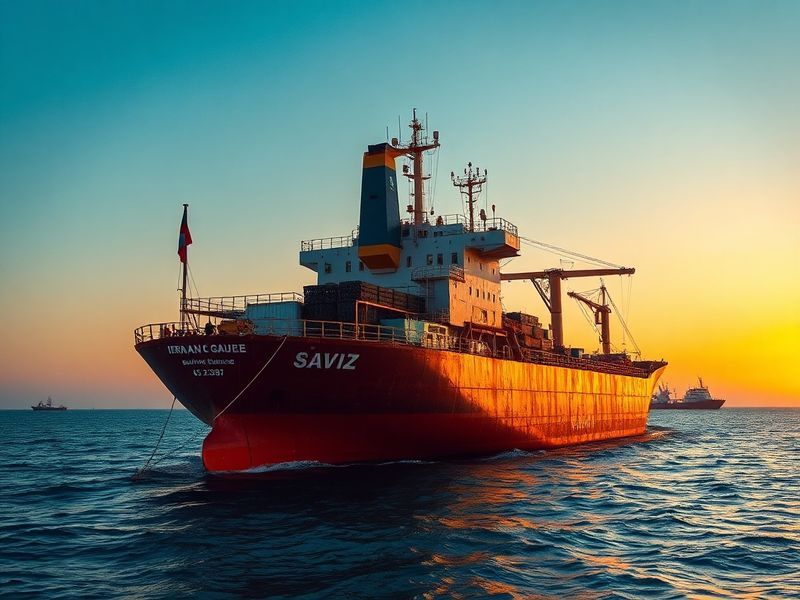
Iranian Ship MV Saviz: Cargo, Tensions, and Regional Impact Explained
“`html
Iranian Ship Navigates Complex Waters with Strategic Cargo
The recent voyage of an Iranian-flagged cargo vessel through the Strait of Hormuz has drawn international attention, not only for its cargo but for the geopolitical implications of its journey. The ship, identified as the MV Saviz, has become a focal point in discussions about regional security and maritime trade routes.
According to maritime tracking data, the MV Saviz departed from an Iranian port in early March, carrying what analysts describe as dual-use materials—items with both civilian and military applications. The vessel’s path through the strategically vital Strait of Hormuz, a chokepoint for global oil shipments, underscores the delicate balance of power in one of the world’s most contested maritime regions.
Cargo and Capabilities: What Was Onboard?
The MV Saviz has been monitored by Western intelligence agencies for years, primarily due to its suspected ties to Iran’s Islamic Revolutionary Guard Corps (IRGC). While the Iranian government has not disclosed the exact contents of the cargo, satellite imagery and reports from maritime tracking services suggest the vessel may have been transporting components related to radar systems, communications equipment, or even small arms.
A breakdown of the ship’s likely capabilities includes:
- Radar and Surveillance Systems: The MV Saviz has been linked to previous incidents involving the deployment of electronic warfare systems in the region.
- Communications Equipment: Reports indicate the vessel may carry advanced radio and satellite communication devices, potentially used for coordinating military operations.
- Small Arms and Ammunition: While not confirmed, the ship’s past voyages have raised concerns about the transportation of weapons to allied groups in the region.
Maritime experts note that dual-use cargo like this is not uncommon in the Gulf region, where commercial shipping often overlaps with military logistics. However, the MV Saviz‘s history of close encounters with naval forces—including a 2021 incident where it was reportedly targeted by Israeli strikes—adds a layer of tension to its current voyage.
Geopolitical Tensions and Regional Security
The Strait of Hormuz remains one of the most volatile maritime corridors in the world. Approximately 20% of the world’s oil passes through this narrow waterway, making it a critical artery for global energy supplies. Any disruption to shipping in the region can have immediate and far-reaching consequences.
Iran has long asserted its right to control the waters around its coast, citing historical and legal claims. However, the United States and its allies, including Gulf Cooperation Council (GCC) nations, view Iran’s actions as provocative and destabilizing. In recent years, tensions have escalated due to:
- Seizures and Detentions: Iran has detained several foreign vessels in the Gulf, including a British-flagged tanker in 2019 and a South Korean vessel in 2021, citing alleged violations of environmental or maritime laws.
- Cyber and Electronic Warfare: Reports from cybersecurity firms have highlighted Iranian-linked groups targeting maritime infrastructure in the region.
- Proxy Conflicts: The MV Saviz has been linked to the IRGC’s support for groups like the Houthis in Yemen, raising concerns about the weaponization of commercial shipping.
The voyage of the MV Saviz comes at a time when nuclear negotiations between Iran and world powers remain stalled. Analysts suggest that Iran may be using maritime activities as a form of leverage in these talks, signaling its ability to disrupt regional stability if its demands are not met.
For countries like Saudi Arabia and the United Arab Emirates, the presence of the MV Saviz in the Gulf is a reminder of the ongoing threat posed by Iran’s military and paramilitary forces. The UAE, in particular, has increased its naval patrols in the region, while Saudi Arabia has invested in missile defense systems to counter potential threats.
International Response and Maritime Law
The voyage of the MV Saviz has prompted reactions from governments and international organizations alike. The United States, which maintains a significant naval presence in the Gulf, has not directly commented on the ship’s current journey. However, U.S. officials have repeatedly warned Iran against actions that could escalate tensions in the region.
The International Maritime Organization (IMO), the UN agency responsible for regulating shipping, has called for restraint and adherence to international maritime laws. In a statement, the IMO emphasized the importance of ensuring the safety and security of commercial vessels in the Gulf, regardless of their origin or destination.
Legal experts point out that while Iran has the right to conduct maritime trade, the use of commercial vessels for military or paramilitary purposes may violate international conventions. The United Nations Convention on the Law of the Sea (UNCLOS) grants coastal states certain rights over their territorial waters but also imposes obligations to ensure the safety of navigation.
For shipping companies operating in the region, the presence of vessels like the MV Saviz adds a layer of risk. Insurance premiums for vessels transiting the Strait of Hormuz have risen in recent years, reflecting the heightened security concerns. Some companies have opted to reroute their ships around the Cape of Good Hope in Africa, adding significant time and cost to their voyages.
Looking Ahead: What’s Next for the MV Saviz?
The MV Saviz’s journey is far from over, and its final destination remains unclear. Some analysts speculate that it may be heading to Syria or another Iranian ally in the region, where its cargo could be offloaded for further distribution. Others suggest that the ship may be serving as a floating command center or logistics hub for IRGC operations.
Regardless of its ultimate purpose, the voyage of the MV Saviz highlights the complex interplay between commercial shipping and military strategy in the Gulf. As tensions in the region continue to simmer, the international community will be watching closely to see how this and other vessels navigate the delicate balance between trade and security.
For now, the MV Saviz sails on, a silent but potent symbol of the challenges facing maritime security in one of the world’s most critical waterways.
Those interested in tracking the ship’s movements can follow updates from maritime tracking services like MarineTraffic or VesselFinder. For more insights into regional security dynamics, explore our News and Analysis sections.