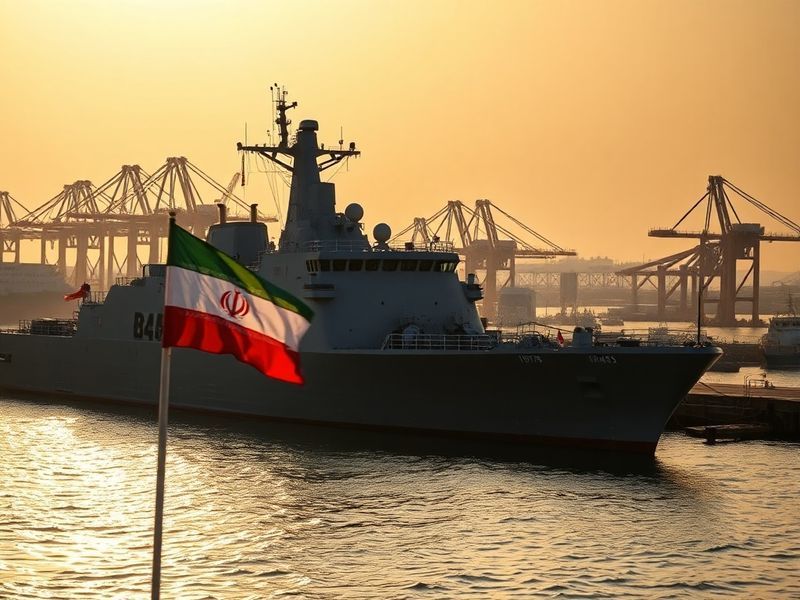
Iranian Ships: The Hidden Force in Global Maritime Trade
“`html
The Global Significance of the Iranian Ship in Modern Maritime Trade
Maritime trade has long been the lifeblood of global commerce, and ships from Iran have played a surprisingly pivotal role in this interconnected system. While often overshadowed by larger maritime powers, Iranian vessels serve as critical links in supply chains that stretch from the Persian Gulf to East Africa and Southeast Asia. Their presence reflects not just economic necessity but also the geopolitical chessboard that shapes modern shipping lanes.
The Iranian fleet, though modest in size compared to giants like China or Greece, operates with a resilience born from decades of sanctions, diplomatic isolation, and strategic necessity. These ships carry everything from oil and petrochemicals to consumer goods, ensuring that even under pressure, Iran remains a node in the world’s trade network. Their journeys are not just about cargo—they are statements of sovereignty, economic endurance, and the quiet defiance of a nation navigating complex international waters.
The Iranian Maritime Fleet: A Historical Perspective
Iran’s maritime history stretches back millennia, to the days when Persian sailors dominated the Indian Ocean trade routes. The modern Iranian fleet, however, traces its roots to the mid-20th century, when the Pahlavi dynasty invested in commercial shipping as part of its broader modernization efforts. By the 1970s, Iran’s national shipping company, IRISL Group, had established itself as a key player in regional trade, particularly in the Persian Gulf and the Red Sea.
The 1979 Islamic Revolution and the subsequent Iran-Iraq War (1980-1988) disrupted these ambitions. Sanctions imposed by the United States and its allies in the 1990s and 2000s further constrained Iran’s ability to expand its fleet. Yet, rather than crippling the industry, these pressures forced Iranian shipowners to innovate. Many turned to second-hand vessels, flagged their ships under open registries like Panama or Malta, and developed intricate networks of intermediaries to keep goods moving. Today, the Iranian fleet includes container ships, bulk carriers, and oil tankers, each navigating a labyrinth of international regulations.
Despite these challenges, Iran’s maritime sector has shown remarkable adaptability. The fleet now operates in some of the world’s most contested waters, including the Strait of Hormuz, where geopolitical tensions frequently threaten free passage. This resilience underscores a broader theme in Iranian trade: the ability to thrive despite adversity.
Key Routes and Strategic Importance
Iranian ships ply some of the world’s most critical maritime routes, connecting producers and consumers across three continents. Their most vital corridor is the Persian Gulf, where over a third of the world’s seaborne oil exports originate. Iranian tankers, despite sanctions, continue to transport crude oil to destinations like China, Syria, and Venezuela, often through complex barter agreements and shadow fleets that obscure ownership.
Beyond oil, Iranian ships are instrumental in moving goods between the Middle East and East Africa. Ports like Bandar Abbas and Chabahar serve as hubs for shipments bound for Kenya, Tanzania, and Mozambique, facilitating trade that bypasses traditional Western-dominated routes. This has particular significance for landlocked countries like Uganda and Rwanda, which rely on Iranian vessels to access global markets.
Listed below are some of the primary routes served by Iranian ships:
- Persian Gulf to East Asia: Primarily oil and petrochemicals to China, India, and South Korea.
- Persian Gulf to East Africa: Consumer goods, construction materials, and agricultural products to Kenya and Tanzania.
- Red Sea to Southern Europe: Limited but strategic shipments of Iranian-manufactured goods to Italy and Greece.
- Indian Ocean to Southeast Asia: Textiles and manufactured goods to Indonesia and Malaysia.
These routes are not just economic lifelines; they are also geopolitical tools. By maintaining a presence in these waters, Iran asserts its influence in regions where Western powers have historically dominated. For smaller nations in East Africa and South Asia, Iranian ships offer an alternative to the monopolistic practices of larger maritime conglomerates, providing competitive rates and flexible terms.
Challenges and Adaptations in a Sanctioned Environment
Operating under sanctions has forced Iranian shipowners to become experts in evasion, subterfuge, and rapid adaptation. One of the most common strategies is the use of shadow fleets—older vessels that are difficult to track and often reflagged under the names of shell companies. These ships frequently change their Automatic Identification System (AIS) transponders to obscure their movements, making them harder for international observers to monitor.
Another tactic involves the use of third-country intermediaries. Iranian oil, for example, is often sold to brokers in the United Arab Emirates or Malaysia, who then resell it to end buyers. This convoluted supply chain allows Iranian ships to deliver cargo without ever technically being owned or operated by Iranian entities, thereby skirting sanctions.
Despite these measures, the risks remain substantial. The United States has imposed secondary sanctions on entities involved in facilitating Iranian trade, and international insurers often refuse to cover ships suspected of carrying sanctioned goods. This has led to a rise in self-insurance schemes and the use of underwriters from countries less inclined to enforce Western sanctions, such as Russia or China.
Iranian shipowners have also invested in domestic industries to reduce reliance on foreign components. Shipyards in cities like Bandar Abbas and Bushehr now build and repair vessels, while local companies produce everything from navigation equipment to marine coatings. This self-sufficiency has been a double-edged sword: it ensures survival but also limits the fleet’s ability to modernize at the pace of global competitors.
The Cultural and Economic Impact of Iranian Ships
The story of Iranian ships extends beyond trade and geopolitics; it is also a cultural narrative. For many Iranians, the maritime sector represents a point of pride—a symbol of resilience in the face of adversity. Stories of sailors navigating treacherous waters, outsmarting sanctions, and delivering goods against all odds are woven into the national consciousness. These tales are celebrated in Persian literature and cinema, where the sea often serves as a metaphor for both danger and opportunity.
Economically, the shipping industry is a vital employer in Iran, providing jobs for tens of thousands of seafarers, dockworkers, and logistics professionals. Ports like Bandar Abbas are bustling hubs of activity, where cranes load and unload cargo around the clock. The industry also supports ancillary sectors, including shipbuilding, insurance, and legal services, creating a ripple effect that sustains local economies.
Moreover, Iranian ships play a subtle but important role in shaping cultural exchanges. The movement of goods often leads to the exchange of ideas, cuisines, and traditions. For example, Iranian traders have introduced Persian carpets, saffron, and handicrafts to markets in East Africa and Southeast Asia, while bringing back spices, fabrics, and culinary techniques from their travels. These exchanges, though small in scale, contribute to the cultural tapestry of the regions connected by Iranian ships.
For global observers, the story of Iranian ships is a reminder of the interconnectedness of the modern world. Even in an era of sanctions and isolation, trade finds a way. It underscores the fact that maritime routes are not just pathways for goods—they are arteries of globalization, carrying with them the hopes, struggles, and ingenuity of the people who operate them.
As geopolitical tensions continue to shape the future of global trade, Iranian ships will remain a fascinating case study in adaptation and survival. Their journeys across the world’s oceans are more than just commercial endeavors; they are testaments to the enduring power of human ingenuity in the face of adversity.