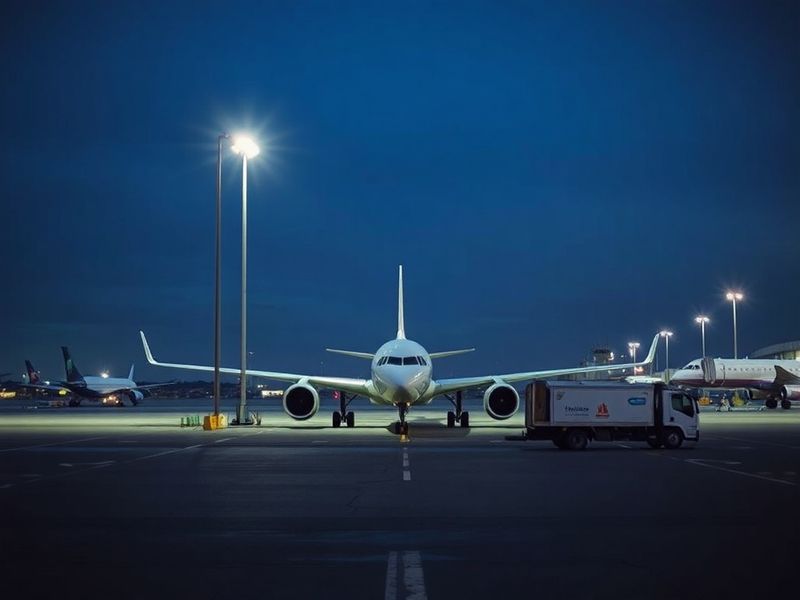
Jet Fuel Shortage Threatens Global Travel and Shipping
“`html
Jet Fuel Shortage Disrupts Global Travel and Shipping
The aviation and shipping industries are facing an unexpected challenge: a jet fuel shortage that threatens to disrupt global travel and cargo operations. While the world has grown accustomed to supply chain disruptions in recent years, this particular shortage has emerged as a critical issue with far-reaching consequences.
Unlike the semiconductor shortages that plagued the automotive industry, jet fuel scarcity directly impacts the movement of people and goods across continents. Airlines are already warning of potential flight cancellations, while freight companies anticipate delays in transporting essential goods. The situation underscores the fragility of global supply chains and the vulnerability of industries heavily reliant on a single resource.
The Root Causes Behind the Shortage
Several factors have converged to create this shortage, each contributing to the perfect storm currently unfolding in the energy sector. The most immediate cause is the reduction in refining capacity for jet fuel. Many refineries have shifted focus from producing jet fuel to diesel and gasoline, which yield higher profit margins. This strategic pivot has left the aviation industry scrambling for alternatives.
Geopolitical tensions have also played a role. The war in Ukraine disrupted traditional supply routes, cutting off a significant source of jet fuel for European airlines. Meanwhile, sanctions on Russian oil have further tightened the global market, leaving refiners with fewer options to meet demand.
Environmental regulations have added another layer of complexity. Stricter emissions standards have forced refineries to invest in costly upgrades, reducing their ability to produce jet fuel efficiently. As a result, the supply of jet fuel has dwindled, while demand has surged with the rebound in post-pandemic travel.
- Reduced refining capacity for jet fuel
- Geopolitical disruptions, including the Ukraine war
- Environmental regulations stifling production
- Post-pandemic travel rebound increasing demand
Impact on Airlines: Fewer Flights, Higher Costs
The most visible impact of the jet fuel shortage is on airlines, which are now facing a stark reality: fewer flights and higher operating costs. Major carriers like Delta and United have already announced plans to reduce their schedules in the coming months, citing fuel availability as a primary concern. Smaller regional airlines are particularly vulnerable, as they lack the financial cushion to absorb sudden spikes in fuel prices.
Ticket prices are expected to rise as airlines pass on the increased cost of jet fuel to consumers. This could dampen the enthusiasm for summer travel, which was already anticipated to be robust. Travelers may find themselves paying premium prices for last-minute bookings or being forced to alter their plans altogether.
Airlines are also exploring alternative strategies to mitigate the shortage. Some are turning to sustainable aviation fuels (SAFs), though these remain expensive and in short supply. Others are negotiating long-term contracts with refiners to secure their fuel needs, but such agreements come at a steep cost. The industry is caught between a rock and a hard place, with no easy solutions in sight.
Global Shipping Struggles with Rising Costs
The shipping industry is not immune to the jet fuel shortage, as it too relies on a closely related resource: marine fuel. While jet fuel and marine fuel are distinct products, they are both derived from the same refining processes, and the shortage has driven up prices across the board. Shipping companies are now facing higher operational costs, which could lead to delays and increased prices for consumers.
The impact on global trade could be significant. Delays in shipping goods from Asia to Europe or North America could exacerbate existing supply chain bottlenecks, further straining an already fragile system. Retailers may struggle to stock shelves, and manufacturers could face delays in receiving raw materials. The ripple effects of the jet fuel shortage are likely to be felt far beyond the aviation industry.
To cope, shipping companies are exploring ways to reduce fuel consumption, such as slower steaming and route optimization. Some are also investing in alternative fuels, though these options remain limited in availability and scalability. The industry is at a crossroads, forced to adapt to a new reality where fuel scarcity is the norm rather than the exception.
Long-Term Solutions and Industry Adaptation
The jet fuel shortage is not a temporary blip but a symptom of deeper structural issues in the energy and transportation sectors. Addressing it will require a multi-faceted approach, involving both short-term fixes and long-term strategies.
One potential solution is the expansion of refining capacity dedicated to jet fuel. Governments and private companies could collaborate to incentivize refineries to prioritize jet fuel production, either through subsidies or tax breaks. This would require significant investment but could help stabilize the market in the long run.
Another avenue is the acceleration of sustainable aviation fuels. While SAFs are currently expensive, advancements in technology and economies of scale could drive down costs over time. Airlines and shipping companies could also explore partnerships with biofuel producers to secure a stable supply of alternative fuels.
The crisis also highlights the need for diversification in the energy sector. Relying too heavily on a single source of fuel—whether it’s oil, natural gas, or even renewable energy—leaves industries vulnerable to disruptions. A more balanced approach, incorporating a mix of energy sources, could provide greater resilience against future shortages.
Finally, the jet fuel shortage serves as a wake-up call for industries to rethink their dependence on fossil fuels. The push toward electrification in aviation and shipping is gaining momentum, though it remains years away from widespread adoption. In the meantime, companies must adapt to a world where fuel scarcity is a persistent challenge.
Conclusion: Navigating Uncertainty in a Fuel-Constrained World
The jet fuel shortage is more than just a temporary disruption; it is a harbinger of the challenges that lie ahead as the world grapples with energy transitions and geopolitical instability. Airlines, shipping companies, and consumers alike must brace for a period of uncertainty, where higher costs and reduced services become the new normal.
For now, the best course of action is to remain adaptable. Airlines may need to trim their schedules, shipping companies could pass on costs to consumers, and travelers might have to adjust their plans. Yet, this crisis also presents an opportunity for industries to innovate and explore sustainable alternatives that could reduce their reliance on finite resources.
The road ahead is fraught with challenges, but it is also paved with possibilities. By addressing the root causes of the jet fuel shortage and investing in long-term solutions, industries can emerge stronger and more resilient. The question is not whether the world will adapt, but how quickly it can do so.
For now, the skies remain open, but the fuel that powers them is in short supply. The question is not if the shortage will end, but when—and at what cost.