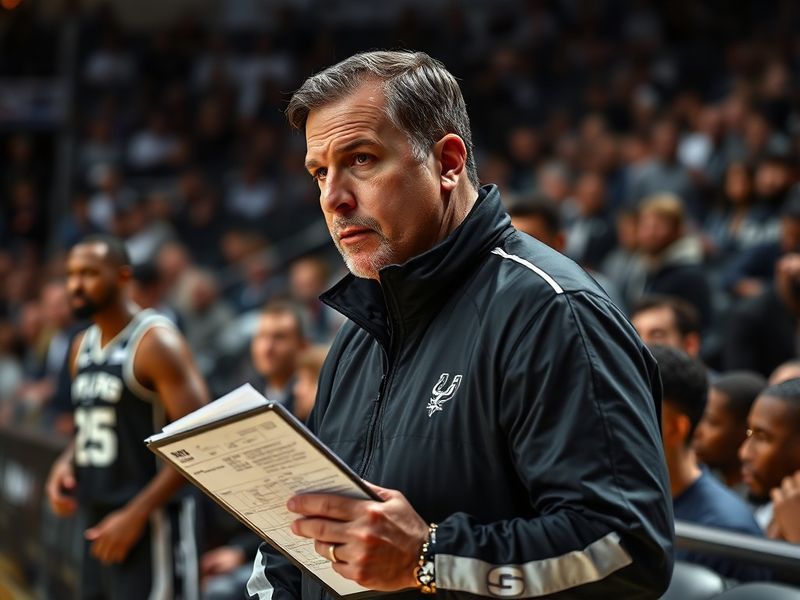
The role of a head coach in professional sports extends far beyond tactical decisions. For the San Antonio Spurs, the head coach serves as the linchpin of a franchise built on discipline, development, and sustained excellence. Over the years, the Spurs have demonstrated how strong leadership behind the bench can shape a team’s identity, culture, and success.
Recent seasons have brought renewed scrutiny to the Spurs’ coaching staff as the organization navigates a pivotal transition. With a roster blending seasoned veterans and emerging talent, the head coach’s ability to foster growth and cohesion has never been more critical. This article explores the impact of the Spurs’ head coach, the qualities that define their role, and what the future may hold for the franchise under new leadership.
The Spurs’ Coaching Philosophy: Tradition Meets Adaptation
The Spurs’ reputation for excellence is rooted in a coaching philosophy that prioritizes fundamentals, teamwork, and player development. This approach has yielded five NBA championships and a model franchise widely studied in sports management circles. The head coach embodies these values, translating them into on-court strategy and off-court culture.
Under Gregg Popovich, who led the Spurs for 25 seasons, the franchise became synonymous with stability and professionalism. Popovich’s tenure underscored the importance of longevity and institutional knowledge in coaching. His ability to adapt—whether integrating young talent or adjusting to rule changes—set a standard for leadership in the NBA.
As the Spurs enter a new era without Popovich, the head coach’s role has evolved. The current leader must honor the franchise’s traditions while embracing innovation. This balance is essential for maintaining the Spurs’ competitive edge in a league that increasingly values analytics and versatility.
Key Qualities of an Effective Spurs Head Coach
Not every coach can thrive in San Antonio’s environment. The ideal candidate must possess a combination of technical skill, interpersonal strength, and adaptability. Below are the qualities that define success in the Spurs’ head coaching role:
- Player Development Expertise: The Spurs have long prioritized player growth, particularly for young athletes. A head coach must excel at refining skills, building confidence, and preparing prospects for professional challenges.
- Cultural Stewardship: Maintaining the franchise’s identity requires a leader who can instill values like accountability, humility, and selflessness in the locker room.
- Strategic Flexibility: The NBA evolves rapidly, with new strategies and rule changes emerging regularly. A head coach must adjust schemes while preserving the team’s core principles.
- Strong Communication: Whether addressing the media, motivating players, or collaborating with staff, clear and consistent communication is vital.
- Long-Term Vision: The Spurs’ success has always been measured in decades, not seasons. A head coach must plan for sustained competitiveness, even amid transitional periods.
The Transition Era: What’s Next for the Spurs?
The departure of a legend like Popovich naturally raises questions about the Spurs’ future. While the franchise has a history of smooth transitions—most notably with the hire of Mike Budenholzer in 2013—the current environment presents unique challenges. The roster features a mix of aging stars and unproven talent, demanding a coach who can navigate uncertainty without losing sight of the Spurs’ identity.
Recent coaching hires in the NBA highlight the importance of cultural fit. The Spurs’ next head coach must resonate with the organization’s values while bringing fresh perspectives. This could mean promoting from within, as the Spurs have done with assistant coaches like Becky Hammon (who became the first full-time female head coach in NBA history during her interim tenure), or pursuing an external hire with a proven track record.
Regardless of the path, the Spurs’ leadership must prioritize stability. The head coach will play a pivotal role in shaping the franchise’s next chapter, whether by grooming young talent for future contention or laying the groundwork for sustained competitiveness.
Broader Implications for the NBA
The Spurs’ coaching decisions extend beyond San Antonio’s borders. The franchise serves as a case study in how organizations can balance tradition with progress. In an era where coaching turnover is common, the Spurs’ approach to leadership offers lessons for other teams.
Moreover, the Spurs’ emphasis on development reflects a broader trend in the NBA. Teams increasingly rely on homegrown talent, and the head coach’s role in nurturing that talent has never been more significant. The Spurs’ ability to transition from one era to the next without losing competitiveness underscores the value of institutional knowledge and a clear organizational vision.
For aspiring coaches, the Spurs’ model provides a blueprint for success. It demonstrates that technical skill alone is insufficient; true leadership requires adaptability, empathy, and a commitment to the long-term health of the franchise.
Conclusion: The Spurs’ Head Coach as Architect of the Future
The San Antonio Spurs’ head coach is more than a tactician—they are the architect of the franchise’s future. In a league defined by constant change, the Spurs’ ability to adapt while preserving their core identity hinges on the leadership behind the bench. As the organization navigates this transitional period, the head coach’s decisions will shape the team’s trajectory for years to come.
For fans and analysts alike, the Spurs’ coaching story is a reminder of the human element in sports. Behind every championship, every playoff run, and every rebuild stands a leader who molds a group of individuals into a cohesive unit. The Spurs’ next head coach will inherit a legacy of excellence—and the challenge of writing the next chapter in one of the NBA’s most storied franchises.
To explore more about the Spurs’ history and coaching strategies, visit our News and Analysis sections for in-depth coverage of the team’s evolving narrative.