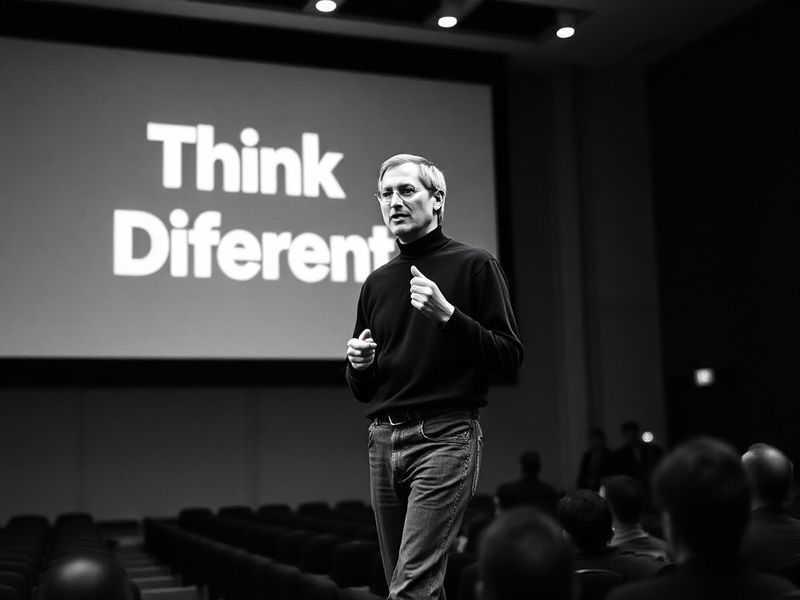
Steve Jobs: How One Man Changed Technology Forever
“`html
Steve Jobs: The Man Who Redefined Technology and Business
Steve Jobs remains one of the most influential figures in modern technology and business. His vision transformed not just Apple but entire industries, from personal computing to music distribution. More than a CEO or inventor, Jobs was a cultural architect whose ideas about design, simplicity, and user experience continue to shape how we interact with technology today.
The Early Years: Vision and Obsession
Born in 1955 and adopted by Paul and Clara Jobs, Steve showed an early fascination with electronics and engineering. His childhood in Mountain View, California—later dubbed Silicon Valley—exposed him to the emerging world of technology. By his teens, Jobs had befriended Steve Wozniak, a brilliant engineer with a passion for building computers. Their collaboration would soon change the world.
In 1976, Jobs, Wozniak, and Ronald Wayne founded Apple Computer in Jobs’ parents’ garage. The Apple I and later the Apple II became early successes, but it was the Macintosh in 1984 that introduced a graphical user interface to the masses. Jobs’ obsession with design and usability was evident from the start. He believed technology should be accessible, intuitive, and beautiful—not just functional.
The Apple Years: Innovation Meets Philosophy
Jobs’ leadership style was unconventional. He demanded perfection, often pushing teams to their limits. His famous reality distortion field—a mix of charisma, persuasion, and sheer will—inspired loyalty but also frustration. Yet, his vision was undeniable. Under his guidance, Apple released products that weren’t just tools but cultural statements: the iMac, iPod, iPhone, and iPad.
Each of these products followed a core philosophy: simplicity, elegance, and integration. The iPod didn’t just play music—it made digital music mainstream. The iPhone didn’t just combine a phone and computer—it redefined what a phone could be. Jobs understood that technology wasn’t just about specs; it was about emotion and experience.
His return to Apple in 1997 after a 12-year exile marked the beginning of the company’s most transformative era. Under Jobs’ leadership, Apple became the world’s most valuable company, proving that innovation could drive both profit and cultural impact.
Key Principles That Defined Jobs’ Leadership
- Focus on the user experience: Jobs believed products should be intuitive and emotionally resonant. He famously said, “Design is not just what it looks like and feels like. Design is how it works.”
- Simplicity over complexity: Apple’s products stripped away unnecessary features, making them accessible to everyone. The iPhone’s single home button is a prime example.
- Vertical integration: Apple controlled everything from hardware to software to retail, ensuring a seamless experience. The Apple Store wasn’t just a retail space—it was a brand statement.
- Think different: Jobs’ 1997 ad campaign wasn’t just a slogan—it was a mantra. He encouraged creativity that challenged the status quo.
The Broader Impact: Beyond Apple
Jobs’ influence extended far beyond Apple. His approach to business and design reshaped entire industries. The iPod and iTunes revolutionized music distribution, forcing record labels to adapt to digital sales. The App Store created a new economy for developers, giving rise to millions of jobs and innovations. Even industries like film and publishing felt his impact, with Pixar (which Jobs acquired in 1986) redefining animation.
His emphasis on design also influenced fields outside technology. From furniture to fashion, Jobs’ belief that form and function should coexist became a guiding principle. Companies like Tesla, with its focus on sleek electric vehicles, and even fashion brands like J.Crew, have cited Jobs’ principles as inspiration.
The Legacy: A Lasting Blueprint
Steve Jobs passed away in 2011, but his legacy endures. His principles continue to guide Apple under Tim Cook, as well as countless other companies. His emphasis on design thinking has become a cornerstone of modern business education. The Stanford commencement speech he delivered in 2005, where he urged graduates to “stay hungry, stay foolish,” remains one of the most quoted speeches in history.
Jobs’ life also offers a lesson in perseverance. His early dismissal from Apple in 1985 didn’t break him—it fueled his next ventures, including NeXT and Pixar. His comeback in 1997 proved that failure could be a stepping stone to greater success.
Today, as technology becomes increasingly integrated into our lives, Jobs’ ideas about simplicity, design, and user experience are more relevant than ever. His vision wasn’t just about selling products—it was about shaping the future.
For those interested in exploring more about technology’s impact on culture and business, check out Technology and Analysis on Dave’s Locker.
A Final Thought
Steve Jobs wasn’t just a businessman or inventor—he was a visionary who believed technology could change the world. His life reminds us that innovation isn’t just about what’s possible; it’s about what’s desirable. In a time when technology often feels overwhelming, Jobs’ focus on simplicity and humanity offers a guiding light.