US Navy Seizes Iranian Arms Ship in Strait of Hormuz: What Happened
“`html
US Navy Seizes Iranian Vessel in Strategic Strait of Hormuz Move
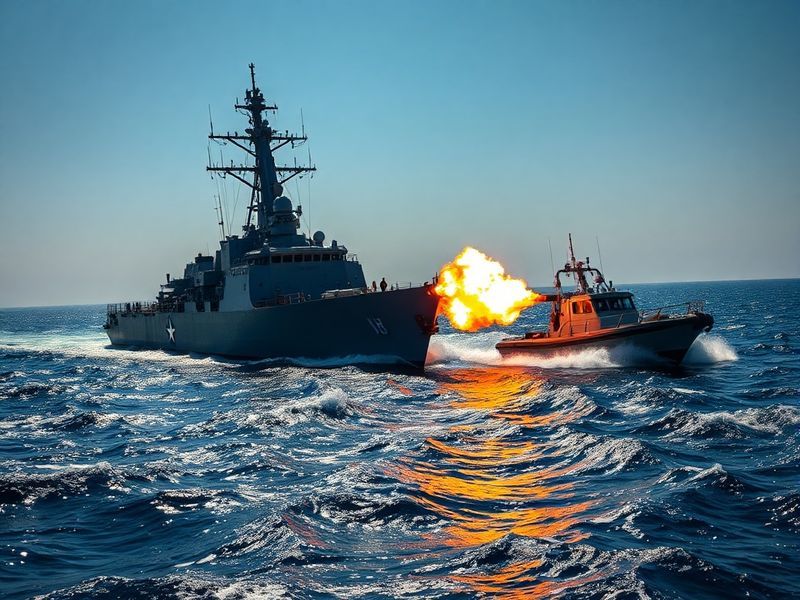
The U.S. Navy has intercepted and seized an Iranian-flagged vessel in the Strait of Hormuz, a critical chokepoint for global oil shipments. The operation, conducted by the guided-missile destroyer USS Carney, took place on Wednesday morning, according to multiple defense officials who spoke on condition of anonymity.
The vessel, identified as the Adrian Darya 1, was boarded by a team of Navy SEALs following intelligence suggesting it was transporting illicit weapons. The ship was previously known as the Grace 1 and had been detained by British Royal Marines in Gibraltar in July 2019 on suspicion of violating European Union sanctions against Syria. After a lengthy legal battle, it was released and continued operating under a new name.
Operation Details and Military Response
The seizure occurred approximately 20 nautical miles off the coast of Iran, within international waters. The U.S. Fifth Fleet confirmed the operation, stating that the vessel was carrying advanced missile components and drone parts destined for Iranian-backed proxy groups in the region. A spokesperson for the Fifth Fleet emphasized that the boarding was conducted in accordance with international law and maritime conventions.
According to a senior defense official, the operation was planned over several weeks with coordination between the Navy, intelligence agencies, and regional allies. The USS Carney, part of the Eisenhower Carrier Strike Group, was positioned in the area following increased reports of suspicious maritime activity. The boarding team executed the operation with minimal resistance, securing the vessel without incident.
The seized cargo included 17 missiles and multiple drone components, along with communication equipment consistent with Iranian military specifications. Sources indicate the materials were likely bound for Houthi rebels in Yemen, who have intensified attacks on commercial shipping and Saudi Arabian infrastructure in recent months.
Regional Tensions and Geopolitical Implications
This incident comes at a time of heightened tensions in the Persian Gulf, where maritime security has become a flashpoint between Iran and Western powers. The Strait of Hormuz, through which roughly 20% of the world’s oil passes, remains one of the most volatile maritime corridors. Iran has repeatedly threatened to disrupt shipping in the area in response to U.S. sanctions and its support for Israel.
The seizure follows a series of confrontations, including drone strikes on commercial vessels and the downing of an American surveillance drone in June 2019. Iran has denied involvement in such attacks but has frequently accused the U.S. and its allies of provocative actions in the region.
Analysts suggest this operation may signal a shift in U.S. strategy toward more proactive interdiction efforts. “This is not just about deterrence anymore,” said Dr. Aniseh Bassiri Tabrizi, a senior research fellow at the Royal United Services Institute. “The U.S. is now taking direct action to disrupt Iranian arms shipments before they reach conflict zones.”
International reactions have been mixed. The United Kingdom and Israel have expressed support for the U.S. action, while Iran’s Foreign Ministry condemned it as a “provocative and illegal” move that violates international law. Russia and China have both called for restraint, urging dialogue over military escalation.
Potential Escalation Paths
While the seizure itself was conducted without violence, the broader implications could lead to several possible outcomes:
- Retaliatory Actions by Iran: Iran may choose to increase harassment of commercial vessels or conduct cyberattacks on U.S. military systems.
- Diplomatic Fallout: The incident could derail ongoing negotiations regarding the revival of the 2015 nuclear deal, which has stalled in recent months.
- Allied Support: The U.S. may seek to strengthen maritime coalitions, such as the International Maritime Security Construct, to enhance regional stability.
- Legal Challenges: Iran could file complaints with the United Nations or International Maritime Organization, arguing the seizure violated sovereign immunity.
Historical Context and Broader Patterns
Maritime interdiction is not new in the Persian Gulf. During the Iran-Iraq War (1980–1988), both sides targeted oil tankers, leading to Operation Earnest Will—the U.S. response that included reflagging Kuwaiti tankers and escorting them through the Gulf. More recently, the U.S. has conducted operations under the framework of maritime security initiatives aimed at curbing Iranian smuggling.
The Adrian Darya 1 has been a recurring figure in these tensions. After its release from Gibraltar in August 2019, it was sanctioned by the U.S. Treasury for transporting oil to Syria. Satellite tracking later showed it operating in the Mediterranean and Red Sea before moving toward the Gulf of Aden.
“This vessel is emblematic of Iran’s ‘grey zone’ strategy,” said Behnam Ben Taleblu, a senior fellow at the Foundation for Defense of Democracies. “It uses civilian ships to ferry military equipment, making interdiction legally and politically complex.”
The U.S. has increasingly focused on disrupting these networks. In 2022, the Navy seized several vessels in the Arabian Sea carrying Iranian-made ballistic missiles destined for Yemen. Those shipments were linked to the same proxy groups now likely involved in the latest case.
Humanitarian and Economic Considerations
Beyond the geopolitical dimensions, the seizure raises concerns about the impact on civilian shipping. The Strait of Hormuz remains a vital route for global energy supplies. Any disruption could lead to spikes in oil prices, affecting economies worldwide.
The crew of the Adrian Darya 1—all Iranian nationals—have been detained and are being held aboard the USS Carney. While the U.S. has stated it will treat them in accordance with the Geneva Conventions, their status remains uncertain. Human rights organizations have already called for transparency regarding their treatment and access to legal counsel.
Commercial shipping companies are monitoring the situation closely. “We are in constant communication with naval coalitions in the region,” said a spokesperson for Maersk Line. “Our priority is the safety of our crews and vessels. We urge all parties to avoid actions that could escalate tensions.”
Economically, the broader region remains vulnerable. Iran’s currency, the rial, has plummeted in recent months due to sanctions and inflation. The seizure of the vessel—even if justified under international law—could further strain Iran’s already fragile economy and fuel domestic discontent.
Looking Ahead: What Comes Next?
The next 72 hours will be critical in determining the trajectory of this incident. Several factors will influence the outcome:
- Iran’s Response: Will it escalate with direct military action, or pursue diplomatic channels?
- U.S. Coordination: Will the Biden administration seek to de-escalate or use the incident to push for stronger regional alliances?
- International Mediation: Could a neutral party, such as Oman or Qatar, facilitate talks to prevent further escalation?
- Legal Proceedings: How will the U.S. handle the judicial process for the vessel and its cargo? Will it pursue sanctions, forfeiture, or return the ship to Iran?
One thing is clear: the Strait of Hormuz remains a powder keg, and this operation has only added fuel to the fire. The international community will be watching closely as events unfold.
For now, the USS Carney remains on station, and the Fifth Fleet has increased aerial surveillance in the area. The region’s fragile stability hangs in the balance.
Conclusion: A Delicate Balance of Power and Principle
The seizure of the Adrian Darya 1 underscores the complex interplay between military action, international law, and regional security. While the U.S. asserts its right to interdict vessels carrying weapons in international waters, Iran views such actions as provocative and illegal.
This incident is unlikely to resolve the broader conflict between the U.S. and Iran, but it does highlight the growing willingness of Western powers to challenge Iran’s maritime smuggling networks. The operation sends a clear message: the U.S. is prepared to enforce its red lines, even if it means direct confrontation.
As tensions simmer, one question looms large: Will this action deter future arms shipments, or will it embolden Iran to escalate its asymmetric tactics? The answer may well determine the future of stability in one of the world’s most strategically vital regions.
For now, the world watches and waits.
Follow ongoing developments in our News section for real-time updates and expert analysis.