Wizz Air: How Europe’s Budget Airline Changed Global Travel
“`html
Wizz Air: Europe’s Budget Airline Disrupting Global Travel
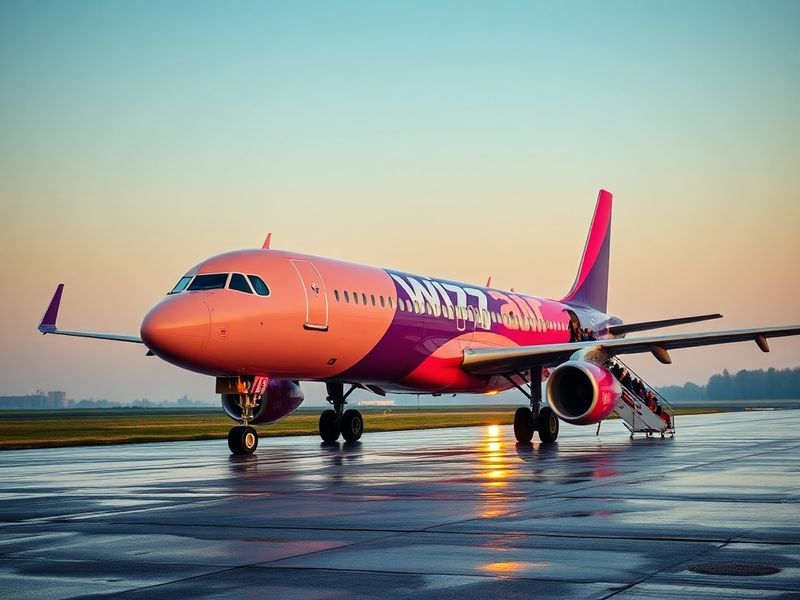
Wizz Air has quietly transformed from a regional upstart into one of Europe’s most ambitious airlines. Founded in 2003 by Hungarian entrepreneur József Váradi, the carrier emerged at a time when low-cost travel was reshaping how Europeans moved between cities. Two decades later, Wizz Air operates more than 700 routes across 50 countries, connecting destinations from Reykjavik to Riyadh with a fleet of nearly 200 Airbus A320-family aircraft.
The airline’s growth reflects broader shifts in global aviation. As traditional carriers focused on premium services, Wizz Air exploited a gap in the market by prioritizing affordability without sacrificing reliability. Its business model hinges on high aircraft utilization, secondary airports, and ancillary revenue—strategies that have made air travel accessible to millions who previously saw it as a luxury.
How Wizz Air Built a Dominant Position in European Budget Travel
Wizz Air’s rise began with a clear mission: to make flying affordable for Central and Eastern Europeans. While legacy carriers like Lufthansa and Air France dominated Western Europe’s skies, Wizz Air filled a void by offering flights from cities such as Budapest, Warsaw, and Bucharest at prices that undercut competitors by 30-50%. This approach resonated in regions where disposable income was lower but demand for travel was high.
The airline’s early success stemmed from its ability to leverage secondary airports. Instead of competing for slots at congested hubs like London Heathrow or Paris Charles de Gaulle, Wizz Air targeted smaller airports like London Luton or Paris Beauvais. These locations often had lower fees, faster turnaround times, and growing passenger bases—especially among budget-conscious travelers and migrant communities.
- Ancillary Revenue Streams: Wizz Air monetizes almost every aspect of the journey, from seat selection to in-flight meals. Baggage fees alone generate hundreds of millions annually.
- Fleet Efficiency: The airline operates a single-type fleet (Airbus A320s and A321s), simplifying maintenance and reducing costs.
- Digital-First Approach: Its mobile app and website are optimized for direct bookings, cutting out third-party commissions.
- Expansion Beyond Europe: Recent years have seen Wizz Air enter markets like the Middle East and North Africa, where demand for budget travel is surging.
The Cultural Impact of Budget Airlines on European Mobility
Wizz Air’s influence extends beyond economics—it has reshaped how Europeans perceive distance and opportunity. For many in Eastern Europe, the airline has made migration, study abroad, and tourism feasible in ways that were unimaginable before. A student from Sofia can now fly to Barcelona for the price of a train ticket to another Bulgarian city, while a Polish family can vacation in Portugal without mortgaging their home.
This democratization of travel has had subtle but profound effects on European identity. Young professionals now move freely between countries for work, while retirees explore new cultures without breaking the bank. Wizz Air has effectively turned Europe into a single, interconnected space where economic and social barriers to mobility are lower than ever.
Yet the airline’s growth hasn’t been without controversy. Critics argue that secondary airports can be inconvenient for travelers, and the airline’s focus on cost-cutting has led to complaints about service quality. Some European regulators have also scrutinized Wizz Air’s labor practices, particularly in relation to cabin crew contracts in certain countries.
Wizz Air’s Global Ambitions and the Future of Budget Aviation
In recent years, Wizz Air has set its sights beyond Europe. The airline now operates flights to destinations as far-flung as Dubai, Abu Dhabi, and Singapore, positioning itself as a bridge between Europe and emerging markets. This expansion reflects a broader trend in aviation: as incomes rise in regions like the Middle East and Southeast Asia, demand for affordable international travel is growing rapidly.
Wizz Air’s global strategy includes partnerships with local airlines and tourism boards. For example, its collaboration with travel agencies in the Gulf has helped it tap into the region’s large expatriate communities. Meanwhile, in Africa, Wizz Air is exploring routes that could connect cities like Lagos and Nairobi with European hubs, capitalizing on the continent’s burgeoning middle class.
The airline’s long-term vision is ambitious: to become the world’s leading ultra-low-cost carrier, with a fleet of over 500 aircraft by 2030. This would make it a direct competitor to giants like Ryanair and easyJet, as well as state-backed carriers in the Middle East and China. To achieve this, Wizz Air is investing heavily in new aircraft, digital infrastructure, and route expansion.
However, global expansion comes with risks. Currency fluctuations, geopolitical tensions, and rising fuel costs could all impact profitability. The airline’s reliance on ancillary revenue also makes it vulnerable to economic downturns, as travelers may cut back on extras like priority boarding or in-flight meals.
What’s Next for Wizz Air and the Budget Travel Industry?
Wizz Air’s journey offers lessons for the broader aviation industry. Its success demonstrates that even in a mature market like Europe, there is still room for innovation and disruption. By focusing on efficiency, cost control, and customer accessibility, the airline has redefined what it means to fly affordably.
Looking ahead, the biggest challenge for Wizz Air may be balancing growth with sustainability. The aviation industry is under increasing pressure to reduce its carbon footprint, and budget airlines—often criticized for their environmental impact—are particularly vulnerable to regulatory scrutiny. Wizz Air has committed to carbon offsetting and aims to operate a fleet of more sustainable aircraft in the coming decades, but the transition will require significant investment.
For travelers, Wizz Air’s story is a reminder that air travel doesn’t have to be expensive. Whether it’s a last-minute trip to Milan or a year abroad in Lisbon, the airline has made it possible to explore the world without emptying your bank account. As it continues to expand, Wizz Air is not just shaping the future of budget aviation—it’s redefining how we connect across continents.
For those interested in the broader trends in travel and aviation, our travel section offers deeper insights into how the industry is evolving.