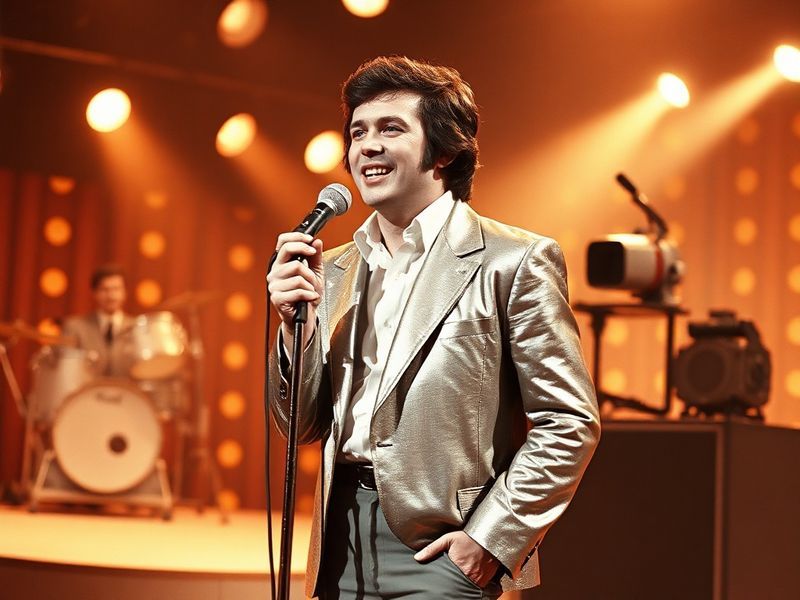
Alan Osmond’s name doesn’t immediately register with most casual music fans today, yet his influence shaped one of the most commercially successful groups of the 1970s. As the older brother of the Osmonds’ vocal powerhouse Donny, Alan quietly orchestrated the family’s rise from Utah church choir singers to international pop sensations. His role extended far beyond sibling support—he was the group’s musical director, vocal arranger, and behind-the-scenes strategist whose creative decisions defined their sound.
Born on June 22, 1949, in Ogden, Utah, Alan Ray Osmond grew up in a large family deeply rooted in music. The Osmonds were a household name in their community long before they became a household name worldwide, thanks to their father George’s insistence on daily rehearsals and performance discipline. Alan, the eldest of nine children, absorbed these lessons early. By his teens, he was not only singing but also arranging harmonies, teaching younger brothers like Merrill, Jay, and Jimmy how to blend their voices into the tight, soaring vocal sound that would later become the Osmonds’ signature.
The Architect Behind the Osmonds’ Sound
While Donny Osmond became the most visible face of the group, Alan’s contributions were foundational. He served as the Osmonds’ primary vocal arranger, crafting the intricate harmonies that distinguished their recordings from other pop acts of the era. His work on hits like “One Bad Apple” and “Down by the Lazy River” demonstrated an ear for melody and structure that balanced catchiness with sophistication. The layered vocals on these tracks weren’t accidental—they were meticulously planned, with Alan often singing high tenor alongside his brothers to create the group’s signature falsetto-rich sound.
Alan also played a pivotal role in the Osmonds’ stage presence. He choreographed their early performances, blending synchronized dance moves with vocal precision. This fusion of music and movement became a hallmark of their act, setting them apart from other pop groups that relied solely on singing. His direction helped transform the Osmonds from a regional act into a polished touring machine capable of captivating audiences across America and beyond.
Beyond his musical contributions, Alan was instrumental in shaping the Osmonds’ public image. He understood the importance of visual branding in an era when television appearances were as crucial as radio play. Under his guidance, the group developed a clean-cut, family-friendly persona that appealed to a broad audience, especially parents concerned about the rebelliousness of other 1970s acts. This image, carefully cultivated by Alan and the Osmonds’ management team, allowed the group to maintain mainstream acceptance during a decade marked by cultural upheaval.
A Family Business Built on Discipline
The Osmonds’ success wasn’t accidental—it was the result of a business model as disciplined as it was creative. Alan was at the center of this operation. While his father George managed the business side, Alan oversaw the artistic development of the group. This division of labor allowed the Osmonds to scale their ambitions without losing creative cohesion. Alan’s insistence on regular rehearsals, vocal training, and professionalism ensured that the group could deliver consistent performances even as they expanded into new ventures, such as solo projects for individual members.
Alan’s leadership extended to the group’s expansion into television. In 1972, the Osmonds starred in The Osmonds, a variety show that aired on ABC. Alan served as a creative consultant, helping to shape the show’s format and musical direction. The series blended comedy sketches, musical performances, and family-friendly storytelling—all elements that reflected Alan’s vision for the Osmonds’ brand. Though the show only lasted one season, it reinforced the group’s image as wholesome entertainers and opened doors for further opportunities.
Alan’s role within the family dynamic was complex. As the eldest son, he carried the weight of responsibility not just as a performer but as a mentor to his younger brothers. This position sometimes led to tension, particularly as individual members sought greater creative freedom. For instance, Donny Osmond’s solo career began to eclipse the group’s in the mid-1970s, a shift that required Alan to navigate delicate negotiations between artistic ambition and family loyalty. These challenges tested his leadership but ultimately demonstrated his adaptability as both a brother and a businessman.
The Unsung Legacy of a Pop Pioneer
Despite his pivotal role in the Osmonds’ success, Alan Osmond remains an underappreciated figure in pop music history. While his brothers Donny and Marie became household names, Alan preferred to stay behind the scenes, focusing on the group’s long-term viability rather than personal fame. This self-effacing approach has led to his contributions being overlooked by casual observers, though industry insiders recognize his importance. In interviews, former collaborators often describe Alan as the “glue” that held the Osmonds together during their most turbulent years.
Alan’s influence extended beyond the Osmonds when he co-founded the Osmond Entertainment Group, a production company that managed not only the Osmonds but also other artists. This venture allowed him to apply his business acumen to nurturing new talent, further cementing his legacy as a behind-the-scenes powerhouse. His work in this capacity demonstrated his ability to balance artistic integrity with commercial success—a rare combination in the entertainment industry.
Today, Alan Osmond’s contributions are most visible in the Osmonds’ enduring catalog. Songs like “Love Me for a Reason,” co-written by Alan, remain staples of 1970s nostalgia and continue to receive airplay on classic hits stations. The group’s vocal arrangements, which Alan helped design, are studied by aspiring musicians who seek to replicate the Osmonds’ signature sound. Though Alan rarely sought the spotlight, his fingerprints are all over one of the most successful pop acts of the 20th century.
Lessons from Alan Osmond’s Career
Alan Osmond’s career offers several insights for aspiring artists and entrepreneurs. First, his emphasis on discipline and preparation underscores the importance of mastering fundamentals before chasing fame. The Osmonds’ rigorous rehearsal schedule wasn’t glamorous, but it was essential to their longevity. Second, Alan’s ability to balance artistic vision with business savvy highlights the need for artists to understand the industry they operate in. He didn’t just sing—he built a brand.
Finally, Alan’s willingness to share the spotlight with his brothers demonstrates the power of collaboration. In an industry often defined by individual egos, the Osmonds thrived because each member understood their role and contributed to the group’s success. This lesson is particularly relevant today, as modern boy bands and pop groups grapple with the challenges of balancing individual ambition with collective identity.
Where Is Alan Osmond Now?
After stepping back from the spotlight in the late 1980s, Alan Osmond largely retired from the entertainment industry. He focused on his family and personal faith, living quietly in Utah. Though he occasionally made public appearances, he avoided the kind of media attention that had once surrounded the Osmonds. His decision to step away reflected a desire for normalcy after decades of relentless work, yet it also left a void in the pop music landscape that has yet to be filled.
Alan’s legacy, however, endures. The Osmonds continue to tour, with younger generations of the family carrying on the tradition. While Donny and Marie remain the most recognizable faces, Alan’s influence is woven into every performance. For those who study the group’s history, his contributions serve as a reminder of the often-overlooked figures who shape cultural phenomena from behind the scenes.
In recent years, there has been a growing appreciation for the architects of pop music’s golden eras. Alan Osmond’s story fits squarely into this narrative. He wasn’t just a brother in a famous family—he was a visionary whose work helped define an era of music that still resonates today. As the Osmonds’ catalog finds new audiences on streaming platforms, Alan’s role in shaping their sound ensures that his legacy will endure for generations to come.
For fans interested in exploring the Osmonds’ music further, our 1970s pop category features deep dives into the era’s most influential acts. To understand how vocal groups like the Osmonds influenced modern boy bands, visit our boy bands section.
The story of Alan Osmond is a testament to the power of quiet leadership in the entertainment industry. While his brothers took the bows, Alan built the foundation that made their success possible. In doing so, he proved that behind every great pop act is an unsung hero whose vision shapes the music we love.