King Charles III: His Reign, Challenges, and the Future of the Monarchy
“`html
King Charles III: A Reign Marked by Tradition and Modern Challenges
Charles III ascended to the British throne at the age of 73, becoming the oldest monarch to take the crown in British history. His coronation in May 2023 marked a pivotal moment not just for the United Kingdom, but for the global Commonwealth. The transition from Queen Elizabeth II to King Charles III brought with it a mix of reverence for tradition and curiosity about how the monarchy would adapt to the 21st century.
From Prince to Monarch: A Lifetime of Preparation
Charles Philip Arthur George was born on November 14, 1948, the eldest child of then-Princess Elizabeth and Prince Philip. He was just three years old when his mother became queen, setting the stage for a life defined by duty and public service. His education included rigorous academic training at Gordonstoun School, followed by a stint in the Royal Navy, where he served as a helicopter pilot. Later, he earned a Bachelor of Arts degree from Trinity College, Cambridge, a rare achievement for a future monarch at the time.
Charles’s early life was also marked by personal challenges. His parents’ marriage faced public scrutiny, and his own relationship with Diana Spencer, whom he married in 1981, became a subject of intense media fascination. The couple’s divorce in 1996 and Diana’s tragic death the following year cast a long shadow over Charles’s public image. Yet, these experiences also shaped his approach to monarchy—one that emphasized empathy and connection with the public.
As Prince of Wales, Charles became known for his advocacy on environmental issues, architecture, and social justice. His 1970 book, A Perspective on the Environment, showcased his long-standing interest in sustainability long before it became a mainstream concern. He also established the Prince’s Trust in 1976, a charity dedicated to helping disadvantaged young people, which has since supported over a million individuals.
The Coronation: A Blend of Ritual and Relevance
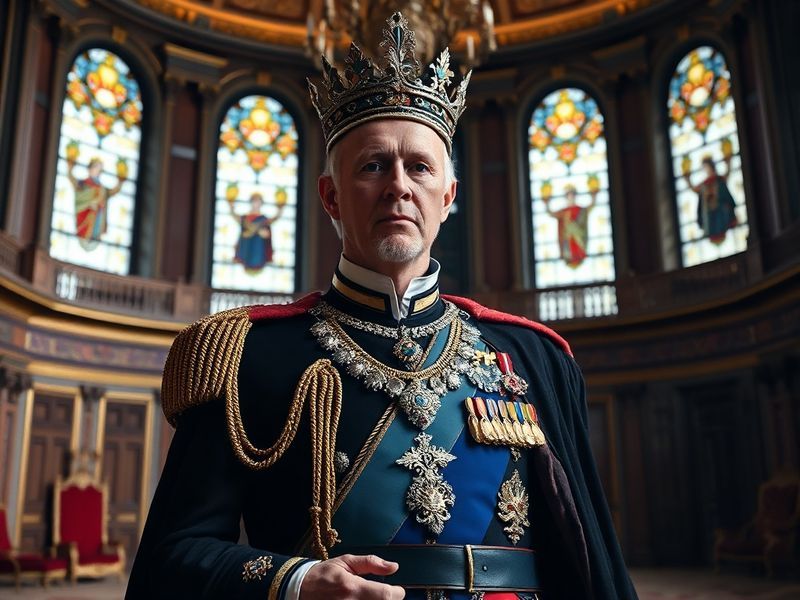
The coronation of Charles III on May 6, 2023, was a spectacle steeped in centuries of tradition, yet it also reflected efforts to modernize the monarchy. Unlike the coronation of his mother in 1953, which was broadcast live on television for the first time, Charles’s coronation was streamed globally in high definition, reaching millions of viewers across digital platforms. The ceremony itself retained many historical elements—the anointing, the investiture with regalia, and the crowning—but it also incorporated new touches, such as a more inclusive guest list that represented Britain’s diverse religious and cultural communities.
One of the most notable changes was the reduced scale of the event. While Queen Elizabeth II’s coronation lasted nearly five hours, Charles’s ceremony was condensed to just two hours. The decision to shorten the event was widely seen as an acknowledgment of contemporary expectations, balancing grandeur with accessibility. The use of the Coronation Chair, which dates back to 1308, served as a tangible link to the past, while the inclusion of modern music and readings highlighted the monarchy’s evolving role.
The coronation also sparked discussions about the monarchy’s place in modern Britain. Polls conducted before the event revealed mixed feelings among the public, with some expressing support for the institution and others questioning its relevance in an era of declining deference to authority. Charles’s personal popularity remained high, particularly among younger generations who viewed him as a more relatable figure compared to his predecessors. His willingness to engage with issues such as climate change and mental health resonated with many, particularly in the wake of the COVID-19 pandemic.
Challenges and Controversies: Navigating a New Era
No royal reign is without its controversies, and Charles III’s monarchy has faced several notable challenges. One of the most persistent issues has been the monarchy’s relationship with wealth and privilege. The 2022 death of Queen Elizabeth II brought renewed scrutiny to the Crown Estate, the royal family’s vast property portfolio, which generates billions in revenue annually. While the monarchy’s finances are publicly disclosed, debates continue about the ethical implications of a hereditary institution controlling such vast resources.
Charles has also faced criticism for his involvement in political matters, a practice that has long been a point of contention for the monarchy. In 2021, the Guardian revealed that Charles had lobbied government ministers on issues ranging from architecture to farming, raising questions about the boundaries between royal duty and political interference. The monarchy’s official stance is that the sovereign remains politically neutral, and Charles has since pledged to adhere to this principle more strictly.
Another area of contention has been the monarchy’s role in the Commonwealth. Charles has sought to position himself as a unifying figure, particularly in the wake of the death of Queen Elizabeth II, who was a symbolic anchor for the organization. However, the future of the Commonwealth remains uncertain, with some member nations, such as Barbados, choosing to become republics. Charles’s visits to these nations have been carefully orchestrated to emphasize continuity and respect for local sovereignty, but the underlying tensions persist.
Despite these challenges, Charles has maintained a steady public presence. His annual Christmas broadcasts, which began in 1957 when he was just 12 years old, have evolved into platforms for addressing contemporary issues. In his 2023 address, he reflected on the importance of unity and resilience, themes that have resonated in a time of global uncertainty.
The Monarchy’s Future: What Lies Ahead for Charles III
The reign of Charles III is likely to be defined by his ability to balance tradition with adaptation. One of his most significant contributions could be his role in redefining the monarchy’s relationship with younger generations. His son, Prince William, and William’s wife, Catherine, have already taken on more public-facing roles, signaling a gradual transition of duties. Charles’s commitment to environmental causes also positions him as a figure who can bridge generational divides, particularly among those concerned about climate change.
Looking ahead, several key moments will shape the trajectory of his reign. The upcoming coronation of his wife, Camilla, as Queen Consort in 2023 was a symbolic step toward normalizing her role within the monarchy. Additionally, Charles’s health has been a topic of discussion, particularly after he was hospitalized in 2023 for an undisclosed condition. While he has since recovered, the question of longevity looms large, given his age and the physical demands of the role.
The monarchy’s future will also depend on its ability to remain relevant in an increasingly polarized world. Charles has taken steps to modernize the institution, such as reducing the number of working royals and increasing transparency in financial dealings. However, the monarchy’s survival ultimately hinges on public support, which remains fragile in an era of declining trust in traditional institutions.
For now, Charles III continues to embody the duality of his role—simultaneously a living symbol of history and a figure navigating the complexities of the present. His reign may well be remembered not just for the pageantry of his coronation, but for his efforts to ensure the monarchy’s place in a rapidly changing world.