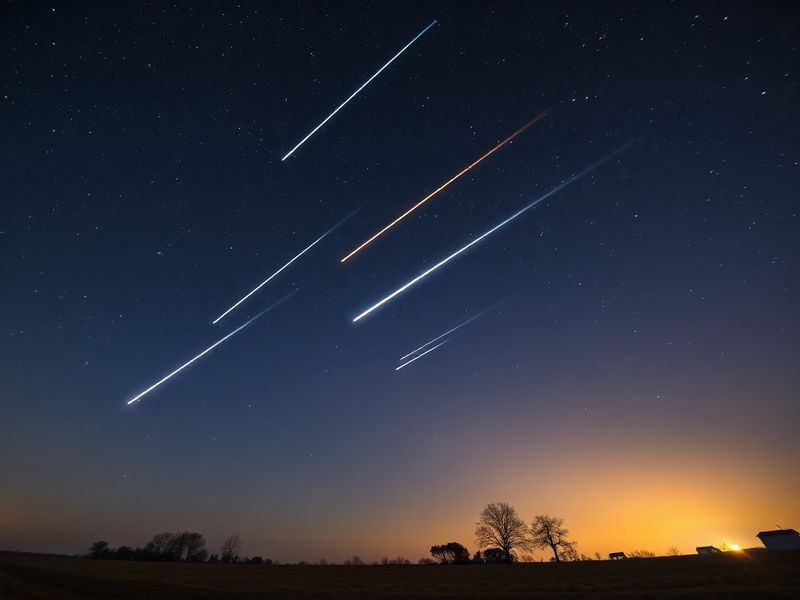
Lyrid Meteor Shower Tonight: A Global Guide to Tonight’s Celestial Display
The Lyrid meteor shower reaches its peak tonight, offering skywatchers around the world a chance to witness one of the oldest recorded meteor showers. Known for its fast and bright meteors, the Lyrids have been observed for over 2,700 years, with Chinese records dating back to 687 BCE. Unlike more recent meteor showers tied to modern discoveries, the Lyrids have a history as enduring as the stars themselves.
Visibility depends on location, weather, and light pollution. While the Lyrids are visible from both hemispheres, those in the Northern Hemisphere will have the best views. Urban areas with bright streetlights and buildings may obscure the show, so finding a dark sky site is key. In rural areas, the difference is stark—the Milky Way becomes visible, and the meteors appear more dramatic against the backdrop of a truly dark sky.
What Makes the Lyrids Unique?
The Lyrids originate from debris left behind by Comet Thatcher, a long-period comet that orbits the sun once every 415 years. When Earth passes through this debris trail each April, the particles burn up in our atmosphere, creating streaks of light. Unlike the famous Perseids or Geminids, the Lyrids are known for their unpredictability—while they typically produce 10 to 20 meteors per hour, they can occasionally surge to 100 or more.
Historically, the Lyrids have surprised observers. In 1803, a journalist in Richmond, Virginia, reported a meteor shower so intense it was mistaken for a fire. In 1982, American skywatchers saw an outburst of nearly 100 meteors per hour. These sporadic surges make every Lyrid peak a moment of quiet anticipation.
How to Watch the Lyrid Meteor Shower Tonight
Timing is everything. The Lyrids peak in the hours before dawn, typically between 2 a.m. and 4 a.m. local time, regardless of your location. The radiant—the point in the sky where meteors appear to originate—is near the constellation Lyra, but you don’t need to find Lyra to see the meteors. They can appear anywhere in the sky.
Here’s a step-by-step guide to maximize your experience:
- Check the weather. Clear skies are essential. Use tools like timeanddate.com to see cloud cover forecasts for your area.
- Escape light pollution. Use the International Dark-Sky Association’s map to locate certified dark sky parks or simply drive 30 minutes outside your city.
- Give your eyes time to adjust. It takes about 20–30 minutes for night vision to fully develop. Avoid looking at your phone or any bright lights.
- Dress warmly and get comfortable. Even in spring, nighttime temperatures can drop. Bring a blanket, reclining chair, or sleeping bag.
- Be patient. Meteors often come in clusters, with lulls in between. Bring a thermos of hot coffee or tea to stay alert.
Photographers hoping to capture the Lyrids should use a tripod, wide-angle lens, and a long exposure (15–30 seconds). Set the ISO to 1600–3200 and use a remote shutter release to avoid vibrations. Apps like PhotoPills or Stellarium can help plan your shots by simulating the night sky.
The Cultural Significance of the Lyrids
The Lyrids have woven themselves into human storytelling across cultures. In ancient Greece, they were linked to Orpheus, the legendary musician whose lyre was placed in the sky after his death. The shower’s appearance in April aligns with spring festivals in many cultures, symbolizing renewal and the return of light.
In China, records from the Han Dynasty describe the Lyrids as “stars that fell like rain,” linking them to omens and celestial portents. Meanwhile, in medieval Europe, some believed the meteors carried the souls of the departed. These interpretations reflect humanity’s long-standing fascination with the transient beauty of the night sky.
Today, the Lyrids remain a bridge between ancient wonder and modern science. Amateur astronomers contribute data to organizations like the American Meteor Society, helping refine predictions for future showers. Social media amplifies the experience, with livestreams and shared photos connecting observers worldwide in real time.
Why It Matters Now
In an age of digital saturation, events like the Lyrids offer a rare opportunity to disconnect and reconnect with the natural world. Light pollution is increasing globally, with some estimates suggesting 80% of the world’s population lives under skies polluted by artificial light. The Lyrids remind us that darkness is not absence—it is a canvas.
They also highlight the fragility of our night skies. Efforts to reduce light pollution, such as switching to warm LED bulbs and supporting dark sky initiatives, are gaining momentum. Events like the Lyrids serve as a call to action, urging communities to preserve the night for future generations.
For those unable to watch in person, organizations like NASA and the European Space Agency often host livestreams. These broadcasts not only share the spectacle but also educate viewers about the science behind meteor showers and the importance of space debris tracking.
As the Lyrids grace the night sky tonight, they carry with them millennia of human curiosity. Whether you’re a seasoned astronomer or a first-time stargazer, the experience is the same: a moment of awe, a reminder of our place in the universe. Find a dark spot, look up, and let the stars tell their story.