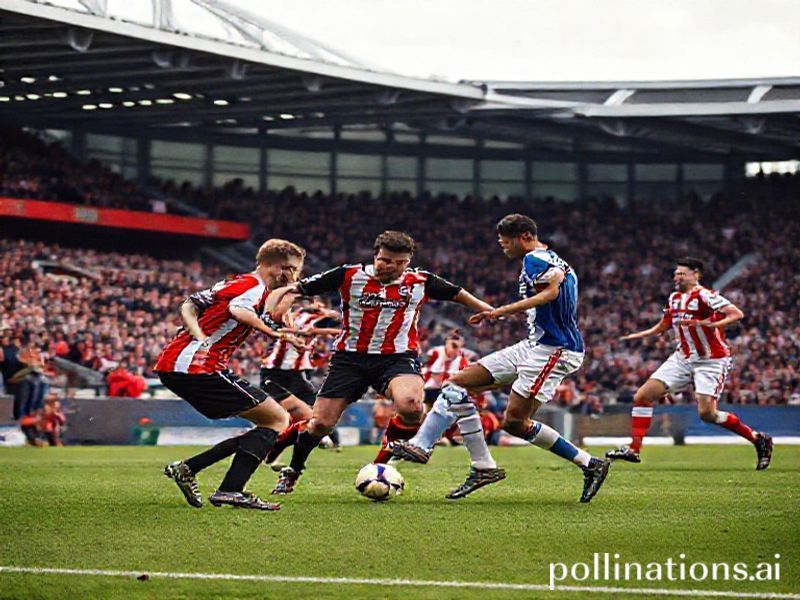
The phrase “man on fire” has long transcended its literal meaning to describe an athlete—or any competitor—who enters a state of unstoppable momentum. In sports, this phenomenon is both a spectacle and a psychological enigma. It’s not just about skill; it’s about focus, adrenaline, and an almost supernatural ability to rise to the occasion when it matters most. But what exactly fuels this state, and why do some athletes achieve it while others fall short under pressure?
To understand the “man on fire” phenomenon, we must first examine the psychological and physiological factors at play. Athletes who enter this state often report a heightened sense of awareness, where time seems to slow down and every movement feels effortless. This is no accident—it’s the result of years of training, mental conditioning, and the ability to harness pressure rather than crumble under it.
The Science Behind the Flame
Research into peak performance psychology suggests that the “man on fire” state is closely linked to the flow state, a concept popularized by psychologist Mihaly Csikszentmihalyi. In a flow state, an individual becomes fully immersed in an activity, losing track of time and feeling a deep sense of fulfillment. For athletes, this translates into exceptional performance.
Several key factors contribute to this state:
- Mental Focus: The ability to block out distractions and concentrate solely on the task at hand. This often involves visualization techniques, where athletes mentally rehearse their performance before stepping onto the field or court.
- Adrenaline and Cortisol: The body’s natural response to stress can be harnessed to enhance performance. While too much cortisol can impair judgment, the right balance can sharpen reflexes and increase energy levels.
- Confidence: Belief in one’s ability to succeed is crucial. Athletes who trust their training and instincts are more likely to enter a flow state when it counts.
- Environmental Triggers: Crowd noise, competitive pressure, or even the stakes of the game can act as catalysts, pushing athletes into a heightened state of awareness.
One of the most famous examples of this phenomenon is Michael Jordan’s “Flu Game” during the 1997 NBA Finals. Despite being severely ill, Jordan delivered a 38-point performance, showcasing how mental fortitude can override physical limitations. His ability to focus amidst chaos is a testament to the power of the “man on fire” state.
The Role of Pressure in Sports
Pressure is the crucible in which the “man on fire” phenomenon is forged. It’s not just about performing well; it’s about performing when the stakes are highest. This is where the difference between good athletes and legends is most evident.
Consider the case of Tom Brady, who has often been described as being “on fire” during critical moments in his career. His ability to deliver in the fourth quarter—when the pressure is most intense—has earned him the nickname “Mr. Fourth Quarter.” Brady’s success isn’t just a result of physical talent; it’s a product of his mental resilience and his capacity to thrive under pressure.
But what happens when the pressure becomes too much? Not every athlete can handle the heat. The collapse of a once-promising career under pressure is a stark reminder of how fragile this state can be. For every athlete who rises to the occasion, there’s another who succumbs to the weight of expectations. This duality is what makes the “man on fire” phenomenon so fascinating—and so unpredictable.
Broader Implications Beyond Sports
The concept of the “man on fire” extends far beyond the realm of sports. It’s a metaphor for any individual or team that achieves extraordinary success in high-pressure situations. In business, for example, entrepreneurs often describe a similar state when launching a startup or closing a crucial deal. The ability to maintain focus and perform under pressure can mean the difference between success and failure.
In the military, soldiers are trained to enter a combat mindset where fear and hesitation are replaced by decisive action. This mental state is akin to the “man on fire” phenomenon, where the individual’s performance is elevated by the intensity of the situation. Similarly, in the arts, musicians and actors often describe a state of flow where their performance transcends their usual capabilities.
The broader lesson here is that pressure, when managed correctly, can be a powerful catalyst for success. The key is to cultivate the mental and emotional tools necessary to harness that pressure rather than be overwhelmed by it. This is where training, experience, and mindset intersect to create the conditions for greatness.
Can the “Man on Fire” State Be Learned?
The million-dollar question is whether the “man on fire” state can be taught—or if it’s an innate talent reserved for the few. The answer lies somewhere in between. While some athletes may have a natural predisposition to enter this state, it’s also a skill that can be developed through practice and mental conditioning.
Here are some strategies that athletes and performers use to cultivate this state:
- Mental Rehearsal: Visualizing success before the event can prime the mind and body for peak performance. This technique is widely used in sports psychology and has been shown to enhance performance.
- Breathing Techniques: Controlling breath can regulate the body’s stress response, helping athletes stay calm and focused. Techniques like the Wim Hof Method or box breathing are popular among high performers.
- Positive Self-Talk: Replacing negative thoughts with affirmations can build confidence and reduce anxiety. Athletes often use mantras or key phrases to stay grounded in high-pressure situations.
- Embracing Failure: Understanding that failure is a part of the process can reduce the fear of making mistakes. This mindset allows athletes to take risks and perform without hesitation.
- Controlled Exposure to Pressure: Gradually increasing the stakes in training can help athletes become comfortable with pressure. Simulated game scenarios or mock performances can prepare them for real-life situations.
For those who study peak performance, the “man on fire” state is less about magic and more about preparation. It’s the culmination of countless hours of work, mental discipline, and an unwavering belief in one’s ability to succeed. Whether in sports, business, or the arts, the ability to perform under pressure is a skill that can be honed over time.
Conclusion: The Flame That Inspires
The “man on fire” phenomenon is more than just a catchy phrase—it’s a testament to the power of the human mind and spirit. It’s a reminder that greatness is not just about talent; it’s about the ability to rise to the occasion when it matters most. For athletes, this state is the difference between good and legendary. For the rest of us, it’s a lesson in resilience, focus, and the power of mental conditioning.
As we watch athletes push the boundaries of what’s possible, we’re not just witnessing physical feats—we’re seeing the culmination of years of preparation, mental fortitude, and the ability to harness pressure. The “man on fire” state is a fleeting moment of brilliance, but it’s one that inspires us all to strive for our own version of greatness.
For those looking to explore the intersection of sports and mental performance further, check out Trending and Analysis for more insights into the world of high-stakes competition.