Few figures in modern history have left a mark as profound as Nelson Mandela. His life’s work transcended borders, uniting people across races, nations, and generations. Mandela’s journey from prisoner to president reshaped South Africa and offered the world a blueprint for reconciliation. His story remains a testament to the power of perseverance and moral clarity in the face of oppression.
Born in 1918 in the small village of Mvezo, Mandela grew up in a society deeply divided by racial segregation. The apartheid system, which institutionalized white minority rule, shaped his early years and fueled his commitment to justice. By the 1940s, he had joined the African National Congress (ANC), emerging as a key leader in the fight against systemic inequality. His activism led to imprisonment for 27 years, yet his resolve never wavered. Mandela’s release in 1990 marked the beginning of a new chapter—not just for South Africa, but for the global struggle against injustice.
The Fight Against Apartheid: A Global Movement
The struggle against apartheid was not confined to South Africa. Internationally, Mandela’s cause galvanized activists, governments, and ordinary citizens. Countries imposed economic sanctions, cultural boycotts, and diplomatic isolation on the apartheid regime. Artists like Paul Simon, who collaborated with South African musicians on his 1986 album Graceland, used their platforms to challenge the status quo. Meanwhile, universities and corporations divested from South Africa, applying financial pressure where political change lagged.
Mandela’s imprisonment became a symbol of global resistance. The 1980s saw widespread protests, with slogans like “Free Nelson Mandela” echoing from college campuses to concert stages. His name became synonymous with the fight for human rights, transcending his personal story to represent a collective demand for dignity. Even after his release, the international community played a crucial role in ensuring the peaceful transition to democracy in South Africa.
The Role of International Solidarity
Support for Mandela’s movement took many forms:
- Economic Sanctions: Over 100 countries imposed trade restrictions, crippling the apartheid economy.
- Cultural Boycotts: Artists and athletes refused to perform or compete in South Africa, isolating the regime culturally.
- Diplomatic Pressure: The United Nations and African Union condemned apartheid, with many nations breaking ties with Pretoria.
- Public Advocacy: Protests, petitions, and media campaigns kept global attention focused on Mandela’s plight.
From Prison to Presidency: The Power of Forgiveness
Mandela’s release from Victor Verster Prison in 1990 was a moment of triumph, but his greatest challenge lay ahead. South Africa stood on the brink of civil war. White supremacists and militant Black groups alike threatened to derail the fragile peace process. Yet Mandela’s leadership defied expectations. Rather than seeking vengeance, he championed reconciliation, famously declaring, “As I walked out the door toward the gate that would lead to my freedom, I knew if I didn’t leave my bitterness and hatred behind, I’d still be in prison.”
His presidency (1994–1999) was defined by efforts to dismantle apartheid’s legacy. The Truth and Reconciliation Commission (TRC), led by Archbishop Desmond Tutu, became a model for transitional justice. Victims and perpetrators faced each other in hearings, where the goal was not punishment but understanding. This approach prevented a cycle of retribution, though it remains controversial. Mandela’s government also implemented policies to address economic inequality, though critics argue progress was uneven.
A Global Icon of Peace and Leadership
Beyond South Africa, Mandela’s influence extended into global diplomacy. He mediated conflicts in Burundi and the Democratic Republic of Congo, proving his commitment to peace extended beyond his homeland. His ability to bridge divides earned him respect worldwide. In 1993, he and F.W. de Klerk, the last apartheid-era president, were jointly awarded the Nobel Peace Prize for their work in dismantling racial segregation.
Mandela’s legacy also shaped how the world views leadership. His humility, warmth, and moral authority contrasted sharply with the often divisive politics of his successors. Whether addressing the United Nations or playing with children, he embodied a leadership style rooted in empathy and integrity. His famous 2005 speech at London’s Live 8 concert, where he called for action on global poverty, underscored his belief that true leadership serves humanity.
Lessons from Mandela’s Leadership
Mandela’s approach offers timeless lessons:
- Principle Over Expediency: He refused to compromise on justice, even when it meant prolonged suffering.
- Forgiveness as Strength: His willingness to reconcile with former oppressors prevented further bloodshed.
- Vision Beyond Victory: He focused not just on defeating apartheid, but on building an inclusive future.
- Global Solidarity Matters: International pressure played a pivotal role in ending apartheid.
A Legacy That Endures
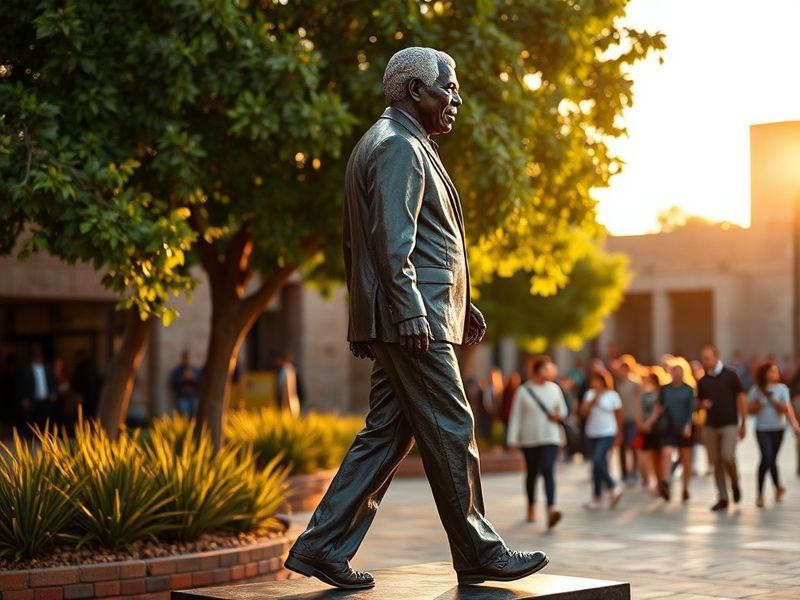
Mandela passed away in 2013, but his impact persists. His birthday, July 18, is celebrated as Mandela Day, a global call to service. Statues, streets, and institutions worldwide bear his name. Yet his legacy is not without critique. Some argue that post-apartheid South Africa has failed to fully address economic disparities. Others point to the rise of corruption and inequality as betrayals of his vision. Still, Mandela’s greatest achievement remains his ability to inspire hope amid despair.
In an era of rising nationalism and division, Mandela’s life reminds us that reconciliation is possible—even in the most fractured societies. His story is not just one of overcoming oppression, but of reimagining what a just society could look like. For future generations, Mandela’s life challenges them to ask: What injustices will they confront? And how will they choose to lead?
The world is a different place because of Nelson Mandela. His legacy challenges us to confront our own biases, to seek common ground, and to lead with courage. In the words of the man himself, “It always seems impossible until it’s done.”