PSNI: History, Challenges, and the Future of Policing in Northern Ireland
“`html
Police Service of Northern Ireland: Navigating a Complex Legacy
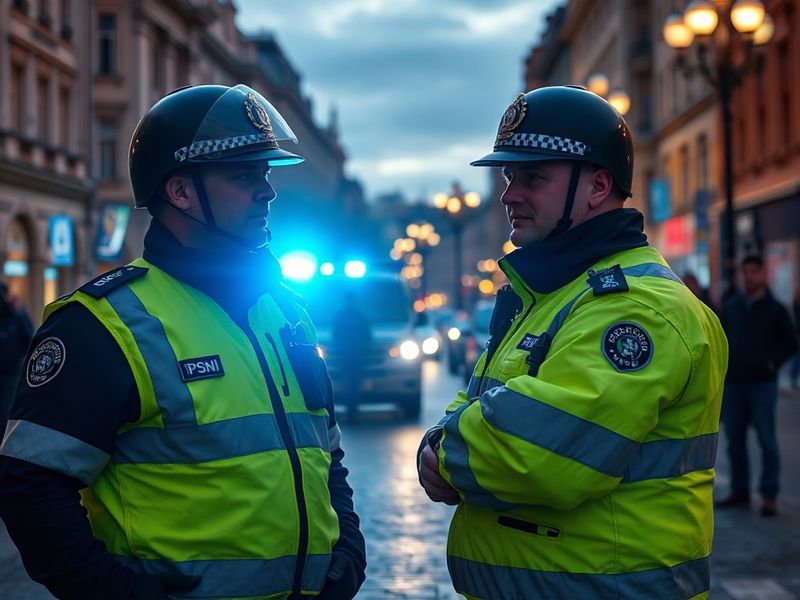
The Police Service of Northern Ireland (PSNI) stands as one of the most scrutinized and transformed law enforcement agencies in the United Kingdom. Born from decades of conflict, its history reflects the broader struggles of a region transitioning from violence to relative peace. Unlike other UK police forces, the PSNI carries the weight of political expectations, community trust, and the delicate balance between security and civil liberties.
The Origins and Evolution of the PSNI
The PSNI replaced the Royal Ulster Constabulary (RUC) in 2001 as part of the Good Friday Agreement’s commitment to reform policing in Northern Ireland. The RUC, which operated during the height of The Troubles, had been criticized for its perceived bias and heavy-handed tactics. The transition was not merely a rebranding exercise; it required fundamental changes in recruitment, training, and community engagement.
A key aspect of this reform was the 50/50 recruitment policy, which ensured equal proportions of Catholic and Protestant officers—a deliberate effort to address historical imbalances. While this policy has increased diversity within the force, it has also sparked debates about meritocracy and the long-term sustainability of such measures. Today, the PSNI is a more representative force, but the shadow of its past continues to influence public perception.
Key Milestones in PSNI’s History
- 2001: PSNI officially replaces the RUC, marking a new era in policing.
- 2007: The force undergoes further reforms under the Police (Northern Ireland) Act, consolidating its community policing model.
- 2016: Austerity cuts reduce officer numbers, raising concerns about response times and frontline services.
- 2020: The PSNI faces scrutiny over its handling of Brexit-related protests and the policing of contentious parades.
Challenges Facing the PSNI Today
The PSNI operates in a uniquely complex environment. Beyond the usual demands of law enforcement, it must navigate political tensions, sectarian divides, and the lingering effects of historical grievances. One of the most pressing challenges is the threat from dissident republican groups, which continue to target officers in sporadic attacks. These incidents serve as a stark reminder that the peace process, while largely successful, is not irreversible.
Another significant challenge is public trust. Surveys indicate that trust in the PSNI varies widely across communities. While Catholic representation has improved, some nationalist communities remain skeptical of the force’s impartiality. Conversely, unionist communities often view the PSNI as a necessary but imperfect institution. This divide underscores the difficulty of building a police service that is universally accepted in a divided society.
Resource constraints also pose a threat to the PSNI’s effectiveness. Budget cuts over the past decade have forced the force to reduce officer numbers and scale back non-essential services. This has led to concerns about response times, investigative capacity, and the ability to address emerging crime trends, such as cybercrime and drug-related offenses.
The Broader Implications of Policing in Northern Ireland
The PSNI’s experiences offer valuable lessons for other post-conflict societies. Its emphasis on community policing, for instance, has been studied by international observers as a model for reconciliation. However, the force’s struggles with recruitment, trust, and resource allocation highlight the broader challenges of institutional reform in fractured societies.
One area where the PSNI has made notable progress is in its handling of public order policing. During contentious events such as parades or protests, the force has increasingly adopted de-escalation tactics, reducing the likelihood of violent confrontations. This shift reflects a growing recognition that policing in Northern Ireland must prioritize dialogue over confrontation—a lesson that could apply to other regions grappling with sectarian or political divides.
Yet, the PSNI’s future remains uncertain. As Northern Ireland continues to evolve politically, particularly in the wake of Brexit, the force may face new pressures. The potential reunification of Ireland, for example, could necessitate further reforms to align the PSNI with a new constitutional reality. Such scenarios underscore the need for the PSNI to remain adaptable and forward-thinking.
What’s Next for the PSNI?
The PSNI’s path forward will depend on its ability to address its most pressing challenges while maintaining the trust of all communities. One critical step is ensuring that recruitment policies continue to reflect the diversity of Northern Irish society. While the 50/50 policy has been effective in increasing Catholic representation, it may need to evolve to meet the changing demographics of the region.
Another priority is addressing the legacy of the past. The PSNI is still grappling with how to handle historical investigations, particularly those related to its predecessor, the RUC. Balancing the demands of justice with the realities of policing a post-conflict society is a delicate task—one that will require careful navigation in the years ahead.
Finally, the PSNI must confront the practical realities of modern policing. Rising crime rates, particularly in urban areas, demand innovative solutions. The force’s ability to adapt to these challenges while maintaining its community-focused approach will be key to its long-term success.
For those interested in the intersection of law enforcement and societal change, the PSNI offers a compelling case study. Its journey from conflict to relative stability is a testament to the power of institutional reform—but also a reminder of the fragility of peace.
To explore more about policing and its broader societal impacts, visit our News and Analysis sections for further insights.