Queen Elizabeth II’s 70-Year Reign: A Legacy of Tradition and Adaptation
“`html
Queen Elizabeth II: The Reign That Defined a Modern Monarchy
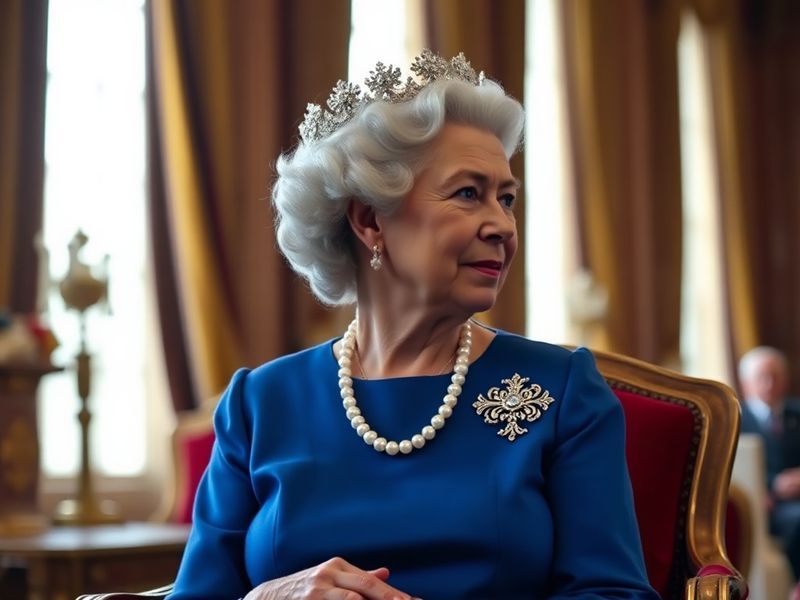
For 70 years, Queen Elizabeth II stood as the unifying symbol of the United Kingdom and the Commonwealth. Her reign, which began in 1952, spanned post-war recovery, technological revolutions, and profound social change. More than a constitutional figurehead, she adapted the monarchy to survive—and even thrive—in an era where traditional institutions faced skepticism. Her presence was constant, her dedication unwavering, and her influence far-reaching, even as the world around her transformed at an unprecedented pace.
The Early Years: From Princess to Queen
Elizabeth Alexandra Mary Windsor was born on April 21, 1926, to the Duke and Duchess of York—later King George VI and Queen Elizabeth the Queen Mother. As a young princess, her life was shaped by duty and discretion. She spent much of her childhood sheltered from public view, educated at home alongside her younger sister, Margaret. The outbreak of World War II marked a turning point. At just 13, she delivered her first radio broadcast, reassuring children evacuated from London. By 18, she joined the Auxiliary Territorial Service, training as a mechanic and truck driver—a decision that foreshadowed her lifelong commitment to service.
The death of her father in February 1952 thrust her onto the throne unexpectedly. She was 25 years old, married to Prince Philip for less than a year, and pregnant with her second child. The coronation, held on June 2, 1953, was the first to be televised, broadcasting the monarchy into living rooms across Britain and the Commonwealth. It was a calculated move toward transparency in an institution often shrouded in secrecy.
A Lifetime of Service: Diplomacy, Tradition, and Change
Elizabeth II’s reign was marked by a delicate balance between upholding tradition and embracing modernity. She met with 13 U.S. presidents, 14 British prime ministers, and nearly every major world leader of her time. Her annual Christmas broadcasts became a national ritual, offering personal reflections during moments of crisis and celebration alike. In 1977, her Silver Jubilee was met with widespread enthusiasm, a rare moment of national unity in an era of economic struggle.
Yet her ability to evolve was just as critical. In 1992, amid a wave of republican sentiment following the collapse of her children’s marriages and a devastating fire at Windsor Castle, she began paying income tax for the first time. She also opened Buckingham Palace to public tours, generating revenue to repair fire damage. These decisions were pragmatic, even necessary, but they also signaled a willingness to adapt.
Her diplomatic finesse was equally notable. She played a subtle but significant role in easing tensions during the Cold War, hosting state visits from Soviet leaders like Nikita Khrushchev. Her 2011 state visit to Ireland—a country still scarred by British colonial history—was a masterclass in reconciliation. It was the first time a British monarch visited the Republic of Ireland since its independence in 1922, and it opened a new chapter in Anglo-Irish relations.
Key Milestones in a Seven-Decade Reign
Her life and reign were punctuated by historic moments. Consider this timeline of pivotal events:
- 1956: The Suez Crisis tests British influence and the monarchy’s neutrality.
- 1965: Winston Churchill dies; the Queen attends his funeral, reinforcing the monarchy’s continuity with Britain’s past.
- 1981: The royal wedding of Prince Charles and Lady Diana Spencer captivates a global audience, drawing unprecedented media attention.
- 1992: The “Annus Horribilis” sees fires, divorces, and public criticism, forcing the Queen to reassess the monarchy’s role.
- 2002: The Golden Jubilee celebrations showcase the monarchy’s enduring popularity despite modern scrutiny.
- 2012: The Diamond Jubilee and London Olympics reinforce the Queen’s status as a global icon.
- 2020: During the COVID-19 pandemic, her televised address—only the fifth in her reign—unites the nation in isolation.
The Monarchy in the 21st Century: A Legacy of Stability
Elizabeth II’s greatest achievement may have been ensuring the survival of the monarchy in an age of declining deference. While republics rose across Europe, and populist movements questioned traditional power structures, the British monarchy remained intact. Polls consistently showed that a majority of Britons supported its continuation, with the Queen as its central pillar.
Her longevity was a form of soft power. She became a living link to history, a constant presence amid rapid change. When she celebrated her Platinum Jubilee in 2022, marking 70 years on the throne, the celebrations were muted by the Queen’s declining health—but the symbolism was undeniable. Even in her final years, she remained a stabilizing force, a reminder of continuity in an era of fragmentation.
Yet her death in September 2022 also exposed generational divides. While older Britons mourned a beloved figure, younger generations questioned the relevance of a hereditary monarchy in a modern democracy. The monarchy’s future now depends on how well it adapts to these critiques, with King Charles III inheriting both the crown and the challenges of a rapidly changing society.
Beyond the Crown: The Human Side of a Global Icon
Elizabeth II was often portrayed as a figure of unshakable formality, yet those who knew her described her as possessing a sharp wit and a dry sense of humor. She enjoyed horse racing, corgis, and the works of Sir Walter Scott. She reportedly read voraciously, from history to detective novels, and kept a close eye on the Commonwealth’s affairs. Her Christmas puddings were a family tradition, and she was known to send handwritten notes to staff, thanking them for their service.
Her personal resilience was tested repeatedly. The deaths of her mother, father, sister, and husband—Prince Philip, in 2021—were met with stoic dignity. Her famous line, “Grief is the price we pay for love,” offered a rare glimpse into her emotional depth during a private moment of reflection.
She also navigated family scandals with remarkable restraint. The breakdown of Prince Andrew’s marriage, his association with Jeffrey Epstein, and Prince Harry and Meghan Markle’s decision to step back from royal duties all played out under the global media spotlight. Yet the Queen remained publicly neutral, allowing the institution to absorb the blows without fracturing.
A Lasting Influence on Culture and Society
Elizabeth II’s impact extended beyond politics and diplomacy. She shaped cultural norms, from the popularity of royal weddings to the fashion choices of brides worldwide. Her annual Christmas broadcasts influenced storytelling in media, blending personal reflection with national identity. Even the phrase “London Bridge is down,” which signaled her death, entered public consciousness as a metaphor for institutional transition.
Her legacy is not just one of duty, but of evolution. She modernized the monarchy without dismantling it, preserved tradition without resisting change, and remained a steady hand through decades of upheaval. In an era where institutions are often distrusted, her life offered a counterpoint: that longevity, service, and quiet dignity still matter.
As the world moves forward, her reign will be studied not just as a historical record, but as a case study in how institutions survive by adapting. Whether the monarchy can replicate her balance of tradition and transformation remains an open question—but her life set a standard that future generations will measure themselves against.
Her final resting place in Windsor’s King George VI Memorial Chapel is a quiet reminder. Not of power, but of presence. Not of control, but of constancy. In a world of fleeting trends and rapid change, she was the exception that proved consistency could still command respect.
For those interested in exploring how modern institutions balance tradition and change, visit our Analysis section, where we examine the broader implications of leadership in evolving societies. For a deeper look at how royal legacies shape global perceptions, explore our Culture category.