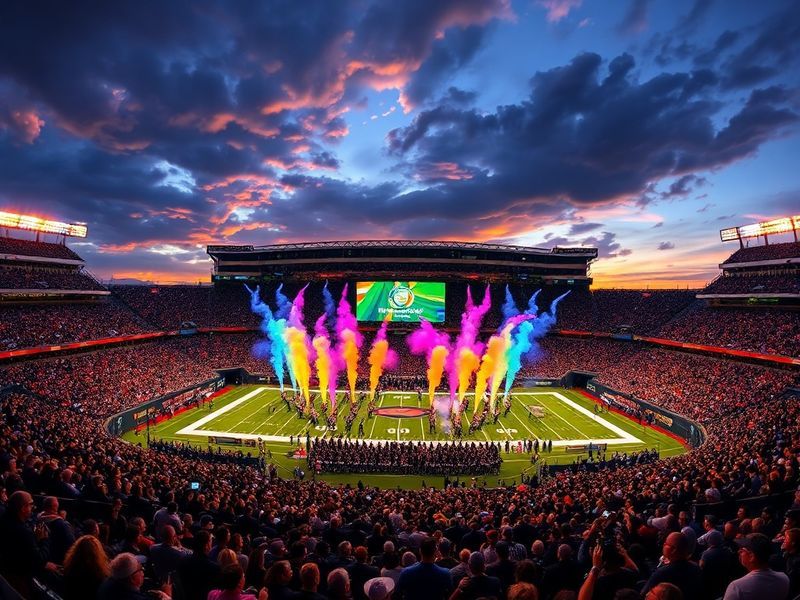
The halftime show has become one of the most anticipated elements of major sporting events, particularly the Super Bowl. What began as a brief intermission for players to rest and spectators to grab snacks has transformed into a multimedia extravaganza watched by millions worldwide. The evolution of these performances reflects broader changes in entertainment, technology, and audience expectations.
The Super Bowl halftime show, in particular, has grown from modest beginnings in the 1960s—featuring marching bands and drill teams—to today’s high-budget productions with A-list performers, elaborate choreography, and pyrotechnics. This shift mirrors the increasing commercialization of sports and the growing intersection between athletics and entertainment.
The Origins: Military Bands and Marching Traditions
In the early days of American football, halftime shows were functional rather than flashy. During the late 19th and early 20th centuries, college football games often featured military bands performing patriotic tunes between quarters. These performances were rooted in tradition, with bands from service academies like West Point and Annapolis leading the way.
By the 1940s and 1950s, marching bands had become a staple of high school and college halftime shows. Performances were drill-based, with formations spelling out words or creating geometric patterns. The University of Michigan’s marching band famously became known for its intricate shows, setting a standard for creativity and precision.
Television broadcasts in the 1950s and 1960s exposed these halftime traditions to a wider audience. As the Super Bowl gained prominence, the NFL recognized the opportunity to turn halftime into a spectacle. In 1967, the first nationally televised Super Bowl halftime show featured the University of Arizona and Grambling State University bands, marking the beginning of a new era.
The Super Bowl Shift: From Bands to Blockbuster Performances
The turning point for Super Bowl halftime shows came in 1991, when the NFL partnered with Pepsi to produce a more dynamic performance. Up to that point, halftime shows were often local or regional affairs with limited production value. The 1991 show featured New Kids on the Block, a pop group at the height of their fame, alongside dancers and a pyrotechnic finale.
This collaboration signaled a shift toward recruiting major pop stars to headline the show. Gone were the days of marching bands alone. The NFL sought acts that could draw massive television ratings, and pop, rock, and hip-hop artists became the new norm. Performers like Michael Jackson (1993), Diana Ross (1996), and Prince (2007) elevated the halftime show to must-see entertainment.
The 2002 performance by U2, just months after the 9/11 attacks, became one of the most memorable in history. The band played atop a tilted stage resembling a cross, with the names of fallen firefighters and police officers displayed on a video screen. That show demonstrated the halftime slot’s potential to transcend entertainment and become a moment of national unity.
Key Moments in Super Bowl Halftime History
- 1967: University marching bands dominate the first televised halftime show.
- 1991: New Kids on the Block headline the first star-driven performance with Pepsi sponsorship.
- 1993: Michael Jackson’s performance draws record ratings and cements the halftime show’s importance.
- 2004: Janet Jackson’s wardrobe malfunction causes a media frenzy and prompts tighter broadcast controls.
- 2015: Katy Perry’s performance with Missy Elliott and Lenny Kravitz becomes one of the most-watched in history.
- 2020: Shakira and Jennifer Lopez’s Latin-infused show celebrates diversity and cultural fusion.
- 2024: Usher delivers a high-energy performance featuring Ludacris, Lil Jon, and Jermaine Dupri.
Behind the Scenes: The Production Machine
Producing a Super Bowl halftime show is a year-long process that involves coordination between performers, the NFL, broadcasters, and sponsors. Once an artist is selected, production teams begin planning months in advance. Choreography, set design, costume fittings, and rehearsals take place in secret locations to avoid leaks.
The logistics are staggering. A typical halftime show involves over 100 dancers, musicians, and crew members. Rehearsals begin in Los Angeles or another major city, followed by a week of on-site rehearsals in the host stadium. The performance itself is a carefully timed sequence, with each segment—from the opening song to the finale—mapped out to the second.
Security is another major concern. Performers are sequestered in secure areas before and after the show to prevent unauthorized interactions. The NFL works closely with law enforcement and the Secret Service, especially when high-profile figures are involved.
Technical requirements are equally demanding. The halftime stage is a custom-built platform with LED screens, pyrotechnics, and sound systems capable of projecting crystal-clear audio to 70,000 live spectators and over 100 million television viewers. Broadcasters like CBS, FOX, and NBC invest heavily in camera setups, including aerial drones and cable cams, to capture every detail.
The Cultural Impact: More Than Just a Show
The halftime show has evolved into a platform that reflects and shapes cultural conversations. Performances often incorporate themes of unity, celebration, and social progress. For example, the 2020 show by Shakira and Jennifer Lopez included tributes to Latin culture, immigration, and women’s empowerment.
Yet, the halftime slot has also sparked controversy. The Janet Jackson incident in 2004 led to stricter FCC regulations and a temporary shift toward “safer” acts. Some critics argue that the NFL’s selection process favors artists who align with conservative values, while others praise the league for featuring diverse voices.
The halftime show has also become a proving ground for emerging artists. Performers like Bruno Mars (2014) and The Weeknd (2021) used the platform to reintroduce themselves to mainstream audiences. For established stars, it offers a chance to connect with fans in a way that traditional concerts cannot.
Beyond the Super Bowl, halftime shows at college football games and other major events continue to evolve. The College Football Playoff semifinals and the Rose Parade have featured innovative performances blending technology and tradition. Even high school bands now incorporate LED equipment and digital choreography into their shows.
What’s Next for Halftime Shows?
The future of halftime shows will likely be shaped by advancements in technology and changing audience expectations. Virtual reality (VR) and augmented reality (AR) could soon allow viewers at home to experience the performance from the perspective of the lead singer or dancer. Imagine donning a VR headset and feeling like you’re on stage with Beyoncé or Coldplay.
Artificial intelligence may also play a role in personalizing halftime experiences. Fans might soon use apps to select camera angles, vote on setlist changes, or even influence the performance in real time. The NFL has already experimented with interactive elements during regular-season games, and halftime could be next.
As for the performances themselves, sustainability is becoming a priority. The NFL has pledged to reduce the environmental impact of the Super Bowl, and halftime shows are part of that effort. Expect to see more eco-friendly staging, energy-efficient lighting, and partnerships with green initiatives in the coming years.
The halftime show’s journey from a simple break to a global spectacle is a testament to the power of live entertainment. Whether it’s a marching band spelling out “USA” or Rihanna performing with a hologram of herself, these moments captivate audiences and create lasting memories. As long as sports and entertainment continue to collide, the halftime show will remain a highlight worth watching.
For more on the intersection of sports and entertainment, visit our Entertainment and Sports categories.