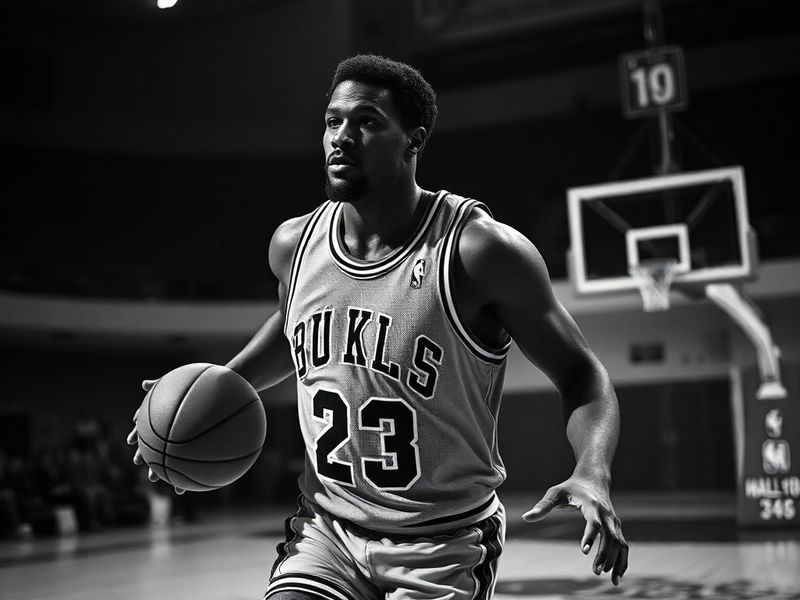
David Robinson is far more than a former professional basketball player. Known as “The Admiral” for his naval background, Robinson left an indelible mark on sports, philanthropy, and global culture during his career and beyond. His influence transcends basketball courts, reaching communities through education, architecture, and social responsibility.
Born in 1965 in Key West, Florida, Robinson’s journey began in a family of military service. His father, a naval officer, instilled discipline and leadership—traits that shaped Robinson’s approach to life and basketball. After excelling at the U.S. Naval Academy, where he was a standout player, Robinson was selected first overall in the 1987 NBA Draft by the San Antonio Spurs. His rookie season in 1989–90 earned him Rookie of the Year honors, but it was the following years that cemented his legacy.
The Rise of a Global Sports Icon
Robinson’s career spanned 14 seasons, all with the Spurs, where he became one of the most dominant centers in NBA history. Standing at 7’1″, he combined elite athleticism with unparalleled basketball IQ. His 1993–94 season remains one of the greatest individual campaigns ever, as he averaged 29.8 points, 10.7 rebounds, and 4.6 blocks per game—earning him the NBA Most Valuable Player award.
Beyond statistics, Robinson’s leadership defined an era. He formed a legendary duo with Tim Duncan, forming the backbone of the Spurs’ dynasty that won championships in 1999, 2003, and 2005. Their partnership became a model of teamwork and selflessness in professional sports. Robinson’s impact was recognized globally, as he became a cultural figure not just in the U.S., but in Europe, Asia, and Africa, where basketball was growing rapidly.
The NBA’s global expansion in the 1990s and early 2000s benefited from stars like Robinson. His clean image and professionalism made him a respected ambassador of the game. International fans admired his sportsmanship, and his rivalry with Hakeem Olajuwon in the mid-90s drew global attention to the NBA’s international appeal.
Philanthropy and the Carver Academy: Building Futures
Robinson’s most enduring legacy lies in his commitment to education and community development. In 1991, he and his wife founded the David Robinson Foundation, which later evolved into the Admiral Center. Through the foundation, Robinson has invested in youth programs, education, and affordable housing. One of his most notable contributions is the Carver Academy, a private school in San Antonio dedicated to underserved children. The school emphasizes academic excellence, character development, and leadership—principles Robinson held dear throughout his life.
In 2012, the Carver Academy merged with the IDEA Public Schools network, becoming IDEA Carver College Prep. This move expanded its reach, allowing thousands of students access to a rigorous college-preparatory education. Robinson’s focus on education reflects a global trend: using sport as a vehicle for social mobility and empowerment. Similar initiatives exist worldwide, from Brazil’s “Escola de Futebol” programs to South Africa’s “Basketball for Peace” projects, which leverage basketball to uplift disadvantaged youth.
Robinson’s philanthropic philosophy is rooted in accountability and sustainability. Unlike short-term charity, he emphasizes long-term impact. The Admiral Center, for instance, supports scalable solutions in education and housing, ensuring communities grow beyond temporary fixes. His approach resonates in global development circles, where sustainability is increasingly prioritized over one-off donations.
Architecture and Innovation: The City Base Project
A lesser-known aspect of Robinson’s career is his foray into real estate and urban development. In 2005, he co-founded The Admiral Center with business partner Daniel Bassichis. The organization focuses on transforming underserved neighborhoods through mixed-income housing, retail, and community spaces. One of their signature projects is the City Base development in San Antonio, which transformed a former military base into a vibrant mixed-use community.
The City Base project exemplifies Robinson’s holistic approach to community building. It includes affordable housing, commercial spaces, parks, and educational facilities—all designed to foster economic and social vitality. This model mirrors global urban renewal efforts in cities like Barcelona’s 22@ district or Medellín’s library-parks in Colombia, where architecture and public space are used to rebuild communities.
Robinson’s work in real estate demonstrates how athletes can leverage their platforms beyond sports. His ability to merge athletic discipline with business acumen offers a blueprint for athlete-led social enterprises worldwide. Organizations like the NBA Cares program have adopted similar models, using basketball infrastructure to promote community development in underserved regions.
Global Influence and Cultural Legacy
Robinson’s impact extends beyond the U.S. and the NBA. In Africa, for example, his foundation has supported basketball academies in countries like Nigeria and Senegal, where the sport is a growing cultural force. His involvement in the NBA’s Basketball Without Borders program, which promotes youth development globally, has helped shape the next generation of international players.
Culturally, Robinson represents a bridge between athleticism and intellectualism. He earned a degree in mathematics from the Naval Academy, a rarity among pro athletes. His intellect and articulate public speaking set him apart in an era where athletes were often judged solely on performance. This blend of brains and brawn challenged stereotypes and inspired young people to pursue excellence in all fields.
Robinson’s global influence is also reflected in his role as a cultural ambassador. He has been a guest speaker at universities worldwide, including Oxford and Harvard, where he discussed leadership, discipline, and social responsibility. His speeches often emphasize the importance of integrity, a message that resonates deeply in an era where public figures face scrutiny over authenticity.
Key Contributions to Global Basketball Culture
- Education Advocacy: Pioneered athlete-led education initiatives through the Carver Academy and IDEA Public Schools.
- Urban Development: Championed mixed-income housing projects that revitalize underserved neighborhoods.
- Global Basketball Programs: Supported international youth basketball development through NBA and foundation initiatives.
- Cultural Diplomacy: Used his platform as a respected figure to promote values of discipline, integrity, and community service globally.
Robinson’s career offers a case study in how athletes can transcend sports to create lasting social change. His combination of athletic excellence, intellectual rigor, and philanthropic vision positions him as a role model not just in the U.S., but in countries where basketball is becoming a vehicle for social progress.
A Lasting Legacy
David Robinson retired from the NBA in 2003, but his influence continues to grow. He was inducted into the Naismith Memorial Basketball Hall of Fame in 2009, cementing his place among the game’s all-time greats. However, his post-basketball career may ultimately prove more significant than his playing days.
The Admiral Center has expanded its work, partnering with global organizations to address housing insecurity and education gaps. Robinson remains active in public speaking, using his platform to advocate for systemic change. His life story—from naval officer to NBA champion to philanthropist—serves as a reminder that success is not measured solely by accolades, but by the lives touched and communities transformed.
In an era where athletes are increasingly expected to be more than just entertainers, David Robinson stands as a model of purpose-driven leadership. His legacy challenges the next generation of stars to think beyond the court, using their influence to build a better world. Whether through education, architecture, or advocacy, Robinson’s impact is a testament to the power of vision and commitment.
As basketball continues to grow globally, figures like Robinson will remain essential in shaping its cultural and social dimensions. His story is not just one of athletic achievement, but of using sport as a force for good—a lesson that resonates far beyond the boundaries of the game.