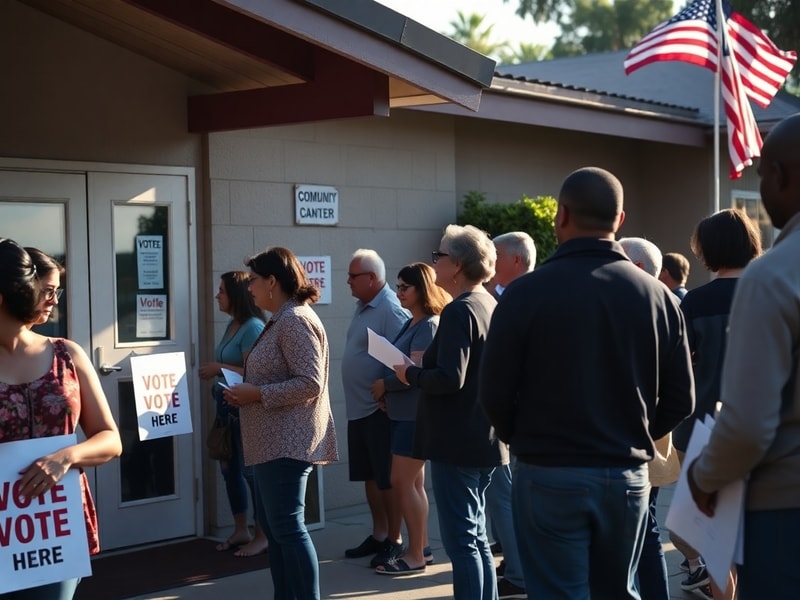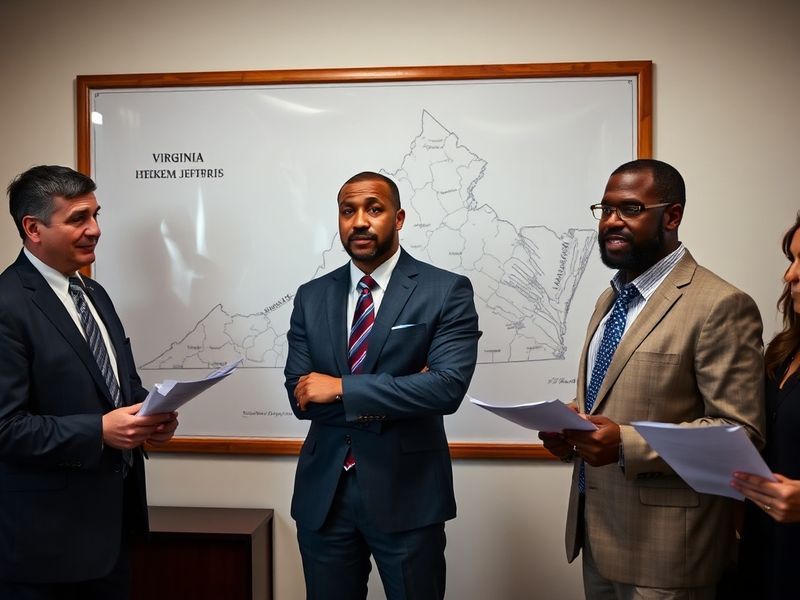
New York Congressman Hakeem Jeffries has remained notably quiet as Virginia’s redistricting battle plays out, a rare moment of restraint from a politician known for his vocal advocacy. The silence isn’t accidental—it reflects a calculated political calculus that could reshape the balance of power in Congress. Virginia’s redistricting process, which determines the boundaries of its 11 congressional districts, has become a flashpoint for partisan battles, with Democrats and Republicans each seeking advantages that could influence the next decade of elections.
The Virginia Redistricting Landscape: Why It Matters
Virginia’s redistricting process gained national attention after the 2020 Census revealed shifts in population that made the state’s electoral map outdated. The Virginia Redistricting Commission, a bipartisan body charged with redrawing district lines, has faced intense pressure from both parties to create maps that favor their political agendas. The stakes are high: Virginia’s 11 congressional districts could determine which party controls the House of Representatives in key midterm elections.
For Democrats, the goal is to protect incumbents and flip competitive seats. For Republicans, the aim is to consolidate gains and minimize Democratic opportunities. The process has been contentious, with accusations of gerrymandering flying from both sides. The Virginia Supreme Court’s involvement in breaking deadlocks has added another layer of complexity, ensuring that the final maps will be subject to judicial review.
Key Players and Their Influence
The redistricting process in Virginia involves a mix of elected officials, commission members, and advocacy groups. The Virginia Redistricting Commission, composed of eight legislative members and eight citizen members, has been the primary body responsible for drawing the maps. However, the commission’s work has been overshadowed by partisan infighting and legal challenges.
- Governor Glenn Youngkin has taken a hands-off approach, allowing the commission to operate independently while positioning himself as a moderating force in the state’s politics.
- State Senator Mamie Locke, a Democrat, has been a vocal advocate for fair redistricting, pushing for maps that reflect the state’s growing diversity.
- House Speaker Todd Gilbert has been a key Republican voice in the process, advocating for maps that protect GOP incumbents.
- Outside groups like the Virginia League of Conservation Voters have filed lawsuits challenging the legality of proposed maps, arguing that they dilute minority voting power.
Hakeem Jeffries’ Calculated Silence: A Strategic Move?
Jeffries, the first Black House Minority Leader in U.S. history, has built his political career on advocacy for voting rights and fair representation. Yet, when it comes to Virginia’s redistricting, he has largely stayed out of the conversation. This silence could be interpreted in several ways:
- Strategic Patience: Jeffries may be waiting to see how the redistricting process plays out before taking a public stance. By avoiding early involvement, he preserves his ability to weigh in later, when the political consequences are clearer.
- National Focus: As a leader in the House Democratic Caucus, Jeffries is prioritizing national issues like inflation, abortion rights, and foreign policy. Virginia’s redistricting, while important, may not be a priority for his broader agenda.
- Internal Party Dynamics: Jeffries may be avoiding a public stance to prevent alienating factions within his own party. Virginia’s redistricting involves complex alliances, and taking a side too early could fracture support.
- Legal and Ethical Considerations: Given the legal challenges surrounding Virginia’s maps, Jeffries may be avoiding public statements that could be seen as interfering with ongoing litigation or the judicial process.
Whatever the reason, Jeffries’ silence stands in contrast to his usual outspoken style. It suggests a recognition that Virginia’s redistricting is a high-stakes game where every move could have long-term consequences.
Broader Implications: What Virginia’s Redistricting Means for the Nation
Virginia’s redistricting battle is more than a state-level political squabble—it’s a microcosm of the larger fight for control of the U.S. House of Representatives. The outcome of Virginia’s redistricting could influence the balance of power in Congress for the next decade, shaping everything from policy priorities to legislative agendas.
For Democrats, the goal is to protect incumbents like Rep. Abigail Spanberger and flip competitive seats like Virginia’s 2nd District, currently held by Republican Rep. Jen Kiggans. For Republicans, the aim is to solidify their hold on districts like Virginia’s 7th, represented by Rep. Abigail Spanberger, and minimize Democratic opportunities in suburban areas.
The implications extend beyond Virginia. If Democrats can secure favorable maps in key states like Virginia, they could gain the upper hand in the 2024 elections. Conversely, if Republicans succeed in entrenching their advantage, they may be able to maintain control of the House despite shifting demographics and voter preferences.
The Role of Race and Representation
Virginia’s redistricting process has also highlighted the role of race in electoral politics. The state’s growing Black and Latino populations have made fair representation a critical issue. Advocacy groups have argued that some proposed maps dilute minority voting power, violating the Voting Rights Act. The Virginia Redistricting Commission’s work has been scrutinized for its impact on communities of color, particularly in districts like Virginia’s 3rd, represented by Rep. Robert Scott, and Virginia’s 4th, represented by Rep. Donald McEachin.
The outcome of these legal and political battles could set a precedent for how redistricting is conducted in other states, particularly those with histories of racial discrimination. The U.S. Department of Justice has already signaled its willingness to intervene in cases where maps are found to violate federal law, adding another layer of complexity to the process.
What’s Next for Virginia and Hakeem Jeffries?
As Virginia’s redistricting process continues, the stakes will only grow higher. The Virginia Supreme Court’s final approval of the maps will likely trigger a wave of legal challenges, setting the stage for years of litigation. Meanwhile, Hakeem Jeffries will need to decide whether to wade into the fray or maintain his distance.
One thing is clear: Jeffries’ silence won’t last forever. As the 2024 elections approach, the pressure on national Democratic leaders to weigh in on state-level redistricting battles will only intensify. Whether he chooses to take a public stance or continue his strategic silence, the outcome of Virginia’s redistricting will have ripple effects far beyond the state’s borders.
For now, all eyes are on Richmond, where the future of Virginia’s congressional delegation—and the balance of power in Congress—hangs in the balance.
For more analysis on redistricting and its national implications, visit Dave’s Locker Politics or explore the broader discussions on Dave’s Locker News.