Keir Starmer’s PMQs: How the PM Handles Westminster’s Weekly Grill
“`html
Prime Minister’s Questions: The Weekly Clash That Defines Westminster
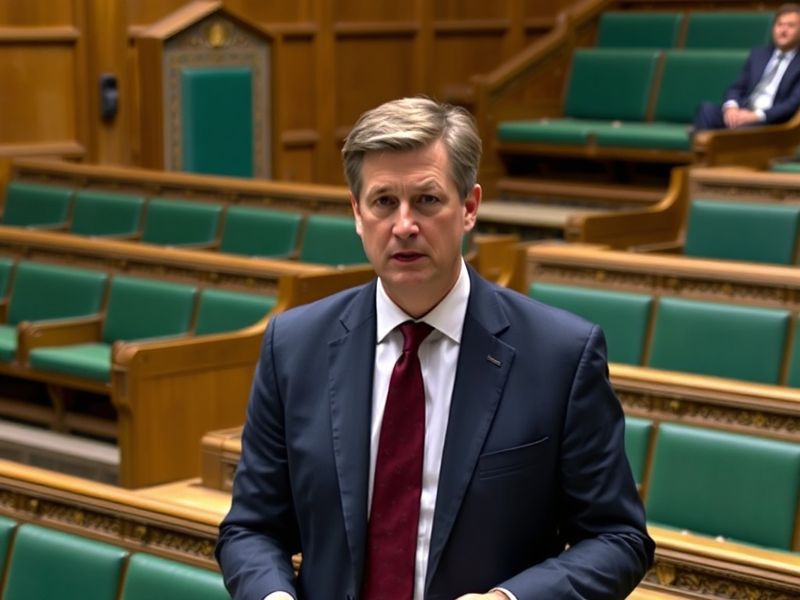
Prime Minister’s Questions (PMQs) remains one of the most closely watched rituals in British politics. Every Wednesday at noon, the Prime Minister faces a half-hour of rapid-fire interrogation from the Leader of the Opposition in the House of Commons. For Keir Starmer, who became Prime Minister in July 2024, these sessions are not just a constitutional obligation—they are a high-wire act of political communication, strategy, and survival.
Since taking office, Starmer has used PMQs to project authority while fending off attacks from both the Conservative opposition and his own backbenchers. The format is unforgiving: 30 minutes, six questions each from the Leader of the Opposition and from backbenchers, and a relentless spotlight on performance. A weak answer can embolden rivals. A sharp retort can shift the news cycle. And a misstep can cost weeks of political capital.
The Evolution of PMQs Under Starmer
When Starmer entered Downing Street, he inherited a Commons chamber still scarred by the turbulence of the Boris Johnson and Liz Truss eras. Trust in politics was low, and public patience for Westminster theatrics was thinner than ever. His approach to PMQs has reflected a deliberate shift toward pragmatism over populism. Gone are the partisan soundbites that dominated the Johnson years. In their place is a more measured, policy-focused style—though not without moments of sharpness when the moment demands it.
Starmer’s early PMQs performances were marked by a focus on stability. He avoided the gimmicks that had characterised his predecessors, instead leaning on data, policy detail, and a calm demeanour. This was partly strategic: after 14 years of Conservative rule, many voters craved a government that felt competent rather than combative. Yet strategy alone does not win PMQs. It’s the ability to pivot from defence to attack in a single breath that often decides who leaves the chamber looking stronger.
How Starmer Handles the Opposition’s Fire
The Leader of the Opposition at PMQs is not just a critic—they are the Prime Minister’s most immediate electoral rival. For Starmer, that role is currently filled by Conservative leader Kemi Badenoch, who has used PMQs to portray the government as weak on crime, slow on economic growth, and out of touch with working families.
Starmer’s responses have relied on a mix of deflection, prepared statistics, and strategic concessions. When Badenoch accused his government of failing to deliver on its promises, Starmer often pointed to inherited crises—from inflation to NHS backlogs—as reasons for early caution. This framing has allowed him to avoid direct accountability while positioning himself as the steady hand in turbulent times.
But this approach has its critics, even within his own party. Some Labour MPs argue that Starmer’s PMQs performances lack the emotional punch needed to energise the base. Others counter that in an era of deep political fatigue, sobriety is a virtue. The truth likely lies somewhere in between: Starmer’s PMQs style is less about theatrics and more about control. He rarely loses his temper, rarely overpromises, and almost always ends the session with a rehearsed line about “getting on with the job.”
The Role of Backbenchers in PMQs
While the Leader of the Opposition commands most of the headlines, backbench MPs play a crucial role in shaping PMQs. Their questions can expose weaknesses, amplify scandals, or shift the narrative entirely. For Starmer, backbenchers from both sides of the House have served as both allies and potential liabilities.
On the Labour side, backbenchers have used their slots to press Starmer on issues like public sector pay, the cost of living, and the government’s stance on Gaza. These moments test party discipline. When Labour MPs deviate from the approved script, they risk undermining the Prime Minister’s authority. Starmer’s team has worked hard to keep rebellions to a minimum, often by allowing MPs to air grievances in less high-profile forums.
Meanwhile, Conservative backbenchers have used PMQs to highlight local issues—from potholes to school closures—posing questions that are hard for Starmer to dismiss without appearing dismissive. These questions, while less ideological, can be just as damaging to public perception, especially when they tap into everyday frustrations.
The unpredictability of backbenchers makes PMQs one of the few remaining moments in British politics where spontaneity still matters. A well-timed question can force a Prime Minister onto the back foot. A poorly answered one can haunt them for weeks.
Starmer’s PMQs: Strengths and Weaknesses
Analysts have identified several recurring patterns in Starmer’s PMQs performances. On the positive side:
- Controlled tone: Starmer rarely rises to bait, maintaining a calm demeanour even under sustained attack.
- Prepared data: He often counters opposition claims with specific statistics, lending his arguments an air of authority.
- Message discipline: His team ensures he repeats key themes—stability, competence, delivery—consistently across sessions.
But there are weaknesses too:
- Lack of inspiration: Critics argue his answers can feel formulaic, lacking the rhetorical flourish that wins over undecided voters.
- Defensive posture: He frequently spends more time explaining past decisions than outlining bold new visions, which can make PMQs feel reactive rather than proactive.
- Limited emotional connection: While competence is valued, politics often rewards passion—and Starmer’s measured style sometimes struggles to convey it.
These dynamics matter because PMQs is more than a weekly showdown. It’s a barometer of leadership. When Starmer first entered Parliament in 2015, he was seen as a dry, procedural figure. Today, he is the Prime Minister. PMQs has been central to that transformation—not because it has made him a crowd-pleaser, but because it has made him credible.
The Future of PMQs in British Politics
As Starmer’s premiership progresses, PMQs will remain a critical test of his leadership. With a slim parliamentary majority and high public expectations, every Wednesday at noon carries weight. The format itself is unlikely to change—it is, after all, a centuries-old tradition—but its role in the political ecosystem is evolving.
Social media has amplified the reach of PMQs highlights, turning a half-hour Commons session into viral clips shared across platforms. This has forced politicians to consider not just how they perform in the chamber, but how their words will be clipped, memed, and dissected online. Starmer’s team has adapted by focusing on soundbite-ready lines, even as he maintains his preference for substance over spectacle.
Looking ahead, the real challenge for Starmer may not be surviving PMQs, but redefining what leadership looks like in them. The British public is tired of chaos, but it is also hungry for inspiration. Can a Prime Minister win PMQs by being competent alone? Or will the format eventually demand a return to the kind of rhetorical fireworks that once defined Westminster drama?
For now, Keir Starmer’s approach works. It keeps the opposition off balance, reassures the markets, and avoids the kind of missteps that could derail a fragile government. But as the honeymoon period fades, the pressure to deliver will grow—and PMQs will be where that pressure is most visibly applied.
Whatever happens next, one thing is certain: in the theatre of British politics, PMQs remains the one act that no Prime Minister can afford to miss.
For more analysis on political leadership and Westminster dynamics, visit our Politics section.
To explore how parliamentary traditions shape modern governance, read our feature on Political Analysis.