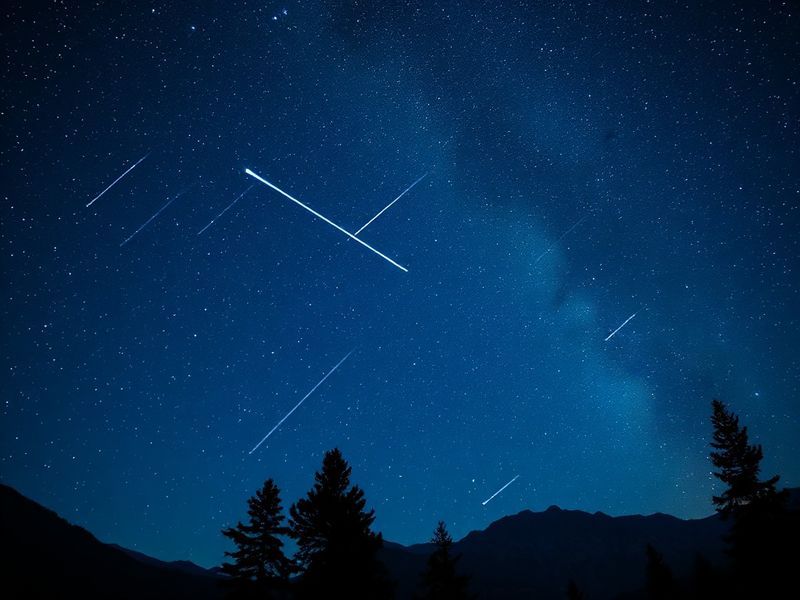
Lyrid Meteor Shower: How to Watch the Ancient Sky Show
“`html
The Lyrid Meteors: A Celestial Show Worth Watching
The night sky has long served as a canvas for some of nature’s most breathtaking displays. Among these, meteor showers stand out for their fleeting yet mesmerizing beauty. The Lyrid meteors, an annual event, offer stargazers a chance to witness one of the oldest recorded meteor showers in history.
Unlike the more intense Perseids or Geminids, the Lyrids may not dazzle with sheer volume. Instead, they captivate with consistency and a touch of historical significance. For those willing to venture outside on a clear night, the Lyrids provide a quiet but remarkable spectacle.
The Origins and History of the Lyrid Meteors
The Lyrid meteor shower traces its roots to Comet Thatcher, a long-period comet that orbits the sun once every 415 years. Discovered in 1861 by astronomer A.E. Thatcher, this comet leaves behind a trail of debris as it passes through the inner solar system. When Earth intersects this debris field each April, the particles burn up in our atmosphere, creating the streaks of light we recognize as meteors.
The Lyrids have been observed for over 2,700 years, making them one of the earliest documented meteor showers. Ancient Chinese records from 687 BCE describe the event as “stars fell like rain,” highlighting humanity’s enduring fascination with celestial phenomena. Unlike some meteor showers tied to more recent discoveries, the Lyrids carry a legacy that spans millennia.
This historical depth adds a layer of intrigue for modern observers. While we understand the science behind the Lyrids, their ancient roots remind us that we are part of a much larger cosmic story. The same shower that inspired awe in ancient civilizations continues to light up our skies today.
What to Expect During the Lyrid Meteor Shower
The Lyrids typically peak around April 21-22, though they remain active in varying degrees for about a week before and after. Under ideal conditions—clear skies, minimal light pollution, and a moonless night—observers can expect to see between 10 to 20 meteors per hour. While this may seem modest compared to other showers, the Lyrids often produce bright, fast-moving meteors with occasional fireballs that leave lingering trails.
For those eager to witness the Lyrids, preparation is key. Unlike lunar eclipses or planetary alignments, meteor showers do not require specialized equipment. A comfortable reclining chair, a blanket, and a dark location away from city lights suffice. Patience is essential, as meteors often appear in clusters followed by lulls. The best viewing times are typically after midnight and before dawn, when the radiant point in the constellation Lyra is highest in the sky.
It’s worth noting that the Lyrids are known for their unpredictability. While most years offer a modest display, there have been instances of outbursts with rates exceeding 100 meteors per hour. The most recent significant outburst occurred in 1982, when observers in the western United States reported rates of nearly 100 meteors in just 15 minutes. Such surprises keep the Lyrids unpredictable and exciting.
Key Tips for Observing the Lyrid Meteor Shower
- Find a dark sky location: Light pollution can drastically reduce visibility, so seek out areas designated as Dark Sky Parks or simply drive away from urban centers.
- Check the weather forecast: Cloud cover can obscure the shower entirely, so plan accordingly and have a backup date in mind.
- Allow your eyes to adjust: It takes about 20-30 minutes for your eyes to adapt to the darkness, so avoid looking at bright screens or flashlights.
- Dress warmly: Even spring nights can grow chilly, especially in rural areas. Layered clothing ensures comfort during long observation periods.
- Be patient and persistent: Meteor showers are not continuous displays; bursts of activity may be followed by long stretches of calm.
The Broader Implications of Meteor Showers
Beyond their visual appeal, meteor showers like the Lyrids offer valuable insights into the dynamics of our solar system. Each streak of light represents a piece of cosmic history, a remnant of comets that have journeyed for centuries. By studying these meteors, astronomers can glean information about the composition and behavior of comets, as well as the conditions of the early solar system.
Meteor showers also serve as a reminder of Earth’s place in the universe. In an age dominated by digital distractions, events like the Lyrids encourage us to disconnect and reconnect with the natural world. They remind us that we are not separate from the cosmos but an integral part of it, sharing the same sky as our ancestors.
Moreover, meteor showers foster scientific curiosity and education. They provide amateur astronomers and students with accessible opportunities to engage with astronomy. Organizations like NASA and the International Meteor Organization (IMO) often share real-time data and encourage public participation in meteor counts, turning casual observers into citizen scientists.
Why the Lyrids Matter in 2024 and Beyond
As we look ahead, the Lyrids remain a reliable fixture in the annual celestial calendar. While they may not dominate headlines like total solar eclipses or comet flybys, their consistency makes them a dependable event for both seasoned astronomers and curious newcomers. In an era where rapid technological advancements often overshadow natural phenomena, the Lyrids offer a moment of reflection and wonder.
For those interested in diving deeper into astronomy or other cosmic events, resources like Dave’s Locker Science section provide curated content on space exploration, celestial events, and scientific discoveries. Similarly, the Entertainment section occasionally features articles on how astronomy intersects with pop culture, literature, and art.
The Lyrids may be fleeting, but their impact lingers. They remind us that the universe is not a distant abstraction but a dynamic, ever-changing presence that we can witness firsthand. Whether you’re an avid stargazer or someone looking for a reason to step outside, the Lyrid meteor shower offers a simple yet profound connection to the cosmos.
So, mark your calendars for the next peak, find a dark spot, and prepare to be humbled by the vastness above. The Lyrids are more than just streaks of light—they are a testament to the enduring dance between Earth and the cosmos.