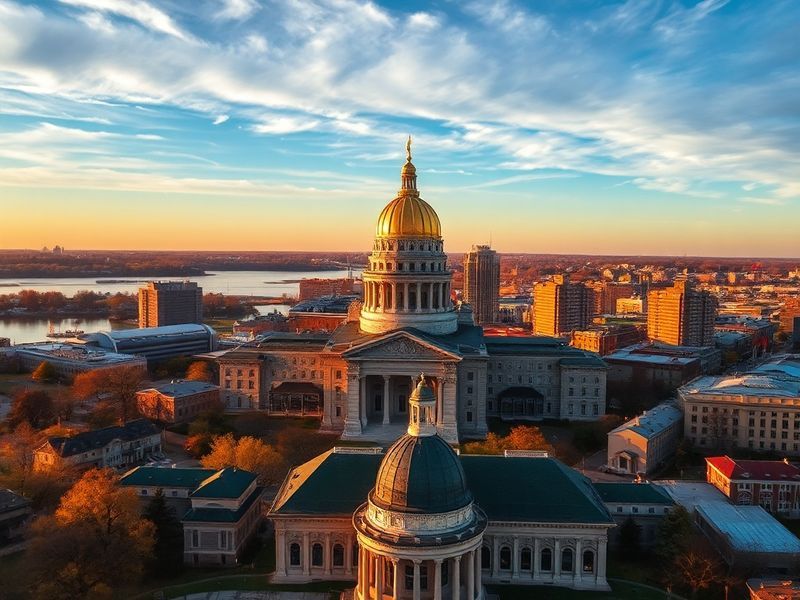
Madison, Wisconsin, doesn’t just serve as the state’s political hub—it’s a city where midwestern charm meets progressive innovation. Nestled between two glacial lakes, the city balances the weight of government functions with a thriving cultural scene that punches far above its population size. While Milwaukee often steals headlines as the state’s largest city, Madison quietly operates as Wisconsin’s true intellectual and administrative center.
The Political Heart of Wisconsin
As the capital since 1838, Madison houses the Wisconsin State Capitol, an architectural marvel topped with a gleaming copper dome. The building’s 284-foot height makes it one of the tallest capitols in the nation, a subtle reminder of the city’s outsized influence. The capitol grounds host daily tours where visitors can observe the legislative process in action, from committee hearings to floor debates.
The city’s political identity extends beyond government buildings. Madison has long been a laboratory for progressive policies, from its early adoption of public sector unions to its current status as a sanctuary city. The University of Wisconsin-Madison’s influence amplifies this dynamic, creating a unique ecosystem where academic research directly informs state policy. This relationship manifests in initiatives ranging from environmental sustainability programs to cutting-edge healthcare research.
Key Political Institutions in Madison
- Wisconsin State Capitol: Houses the governor’s office and state legislature, with free public tours available year-round
- University of Wisconsin-Madison: A major research university whose faculty frequently advise state agencies
- Wisconsin Supreme Court: Located in the capitol complex, shaping legal precedents that affect the entire state
- Dane County Regional Airport: The primary air hub serving state officials and connecting Madison to national travel networks
More Than Just Politics: Madison’s Cultural Renaissance
Madison’s cultural scene defies expectations for a mid-sized Midwestern city. The Overture Center for the Arts serves as the downtown nexus for theater, music, and visual arts, hosting everything from the Madison Symphony Orchestra to experimental indie performances. The city’s music scene has produced nationally recognized acts like Journey and the Violent Femmes, while its food culture blends farm-to-table freshness with international influences.
The Dane County Farmers’ Market, operating on the capitol square since 1972, stands as the nation’s largest producer-only farmers’ market. This weekly gathering draws thousands who come for locally grown produce, artisanal cheeses, and the chance to rub shoulders with state legislators and university professors alike. The market’s success reflects Madison’s broader commitment to sustainable living and community engagement.
Madison’s Cultural Landmarks
- Memorial Union Terrace: A lakeside gathering spot on Lake Mendota, famous for its sunset views and “Friday Night Fish Fries”
- Madison Art Center: Now part of the Overture Center, this institution has nurtured local artists for decades
- Henry Vilas Zoo: A free-admission zoo that has operated since 1911, offering conservation education
- State Street: The pedestrian thoroughfare connecting the UW campus to the capitol, lined with shops and restaurants
The Economic Engine Behind the Scenes
While tourism and government services form visible parts of Madison’s economy, the city’s true strength lies in its diversified employment base. The healthcare sector has grown significantly, with organizations like Epic Systems—headquartered in nearby Verona—providing thousands of high-paying jobs. Epic’s presence has transformed Madison into a national leader in health information technology, with the company’s campus employing over 10,000 people.
The university remains the largest single employer, with nearly 25,000 faculty and staff supporting both education and research missions. This academic-industrial complex has spawned numerous startups, particularly in biotechnology and clean energy. Madison’s economy has proven remarkably resilient, avoiding the boom-bust cycles that have affected other Midwestern cities dependent on manufacturing.
The city’s approach to economic development emphasizes quality of life as a recruitment tool. Madison consistently ranks among the nation’s most livable cities, thanks to its combination of urban amenities and natural beauty. This reputation helps attract both young professionals and established companies looking to relocate.
Madison in the Broader Context: Why This City Matters
Madison’s story offers important lessons for understanding the evolving role of state capitals in America’s political landscape. Unlike many capitals that exist primarily to serve government functions, Madison demonstrates how a capital city can simultaneously be a major cultural and economic center. This multifaceted identity creates a virtuous cycle where government investment in infrastructure and education benefits the broader community.
The city’s progressive politics often make it a target for national attention, particularly during election cycles. However, this focus sometimes obscures Madison’s more significant contributions to governance innovation. The state’s open records laws, pioneered in Madison, have become models for transparency nationwide. Similarly, the university’s cooperative extension programs have brought academic research directly to Wisconsin’s rural communities.
Environmental sustainability represents another area where Madison leads by example. The city’s Climate Protection Action Committee, established in 2006, has reduced municipal greenhouse gas emissions by 40% while maintaining economic growth. Initiatives like the Madison Gas & Electric renewable energy program have made the city a leader in Midwestern clean energy adoption.
What Sets Madison Apart
- Government-education synergy: The university’s research directly informs state policy decisions
- Progressive policy experimentation: From healthcare to environmental initiatives, Madison often leads Wisconsin’s policy innovations
- Cultural vitality: Despite its relatively small size, the city boasts a disproportionately rich arts and music scene
- Economic diversification: Not dependent on any single industry, the local economy is highly resilient
- Community engagement: Residents actively participate in local governance and civic initiatives
Conclusion: Beyond the Stereotypes
Madison’s reputation as a sleepy government town couldn’t be further from reality. This city of approximately 270,000 people demonstrates how state capitals can serve multiple purposes simultaneously—administrative, cultural, educational, and economic. Its success challenges the notion that political centers must be either dull bureaucratic hubs or isolated college towns.
For visitors, Madison offers unexpected depth beyond the capitol building. The city’s bike trails, craft breweries, and neighborhood festivals reveal a community that values both its heritage and its future. For residents, it provides a rare combination of urban amenities and natural beauty, all within a manageable scale that fosters genuine community connections.
As Wisconsin continues to evolve, Madison’s ability to balance competing priorities—growth with sustainability, tradition with innovation, government with grassroots activism—will determine its continued success. In an era when many American cities struggle with identity crises, Madison has quietly built a model for what a thriving capital city can be.
For those willing to look beyond the stereotypes, Madison reveals itself as a city that punches well above its weight, offering lessons in governance, culture, and community that extend far beyond Wisconsin’s borders. Explore more travel destinations that showcase America’s unexpected cultural gems.