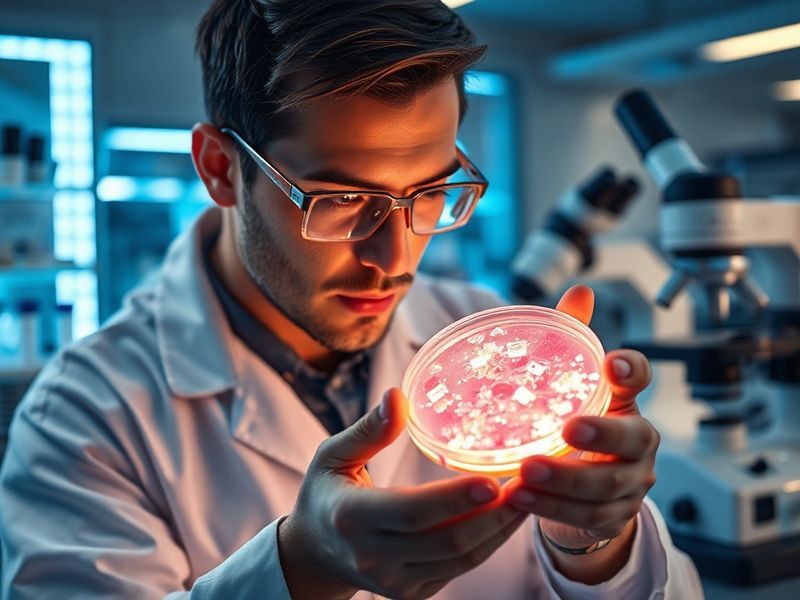
The image of the scientist has long been frozen in the public imagination as a bespectacled figure in a white coat, hunched over a bubbling flask or scribbling equations on a chalkboard. While this stereotype still holds some truth, the reality of what scientists do—and how they do it—has transformed dramatically in the 21st century. From the rise of interdisciplinary research to the blurring lines between science and public policy, the modern scientist operates in a landscape that is far more complex and interconnected than ever before.
What hasn’t changed, however, is the fundamental mission of science: to explore, explain, and improve the world around us. Whether uncovering the secrets of the universe, developing life-saving medical treatments, or addressing the urgent challenges of climate change, scientists remain at the forefront of human progress. The tools and methods may evolve, but the core ethos persists—a relentless pursuit of knowledge, tempered by curiosity and rigor.
The Diverse Fields Shaping Modern Science
Science is no longer confined to the traditional disciplines of physics, chemistry, and biology. The boundaries between fields have dissolved, giving rise to a new era of interdisciplinary collaboration. For instance, bioinformatics combines biology with computer science to decode genetic data, while materials science merges physics and engineering to create revolutionary materials like graphene. These hybrid fields are not just academic exercises; they are driving innovations that reshape industries and improve lives.
Consider the field of synthetic biology, where scientists engineer living organisms to perform specific tasks, such as producing biofuels or breaking down environmental pollutants. This work sits at the intersection of biology, chemistry, and engineering, requiring experts to speak multiple scientific languages. Similarly, quantum computing, once a theoretical curiosity, now involves physicists, computer scientists, and mathematicians working together to unlock its potential.
The diversity of modern science extends beyond disciplines. Scientists today come from varied backgrounds, bringing different perspectives that enrich research. Programs aimed at increasing diversity in STEM (Science, Technology, Engineering, and Mathematics) are not just about equity—they are about improving the quality of science itself. A team with diverse experiences is more likely to challenge assumptions and generate innovative solutions.
Key Interdisciplinary Fields Today
- Neuroscience and AI: Researchers in these fields collaborate to develop brain-inspired computing systems and AI models that mimic human cognition.
- Climate Science and Policy: Climate scientists work alongside economists, policymakers, and social scientists to design effective strategies for mitigating climate change.
- Genomics and Ethics: Geneticists partner with ethicists and legal experts to navigate the moral complexities of gene editing and personalized medicine.
- Robotics and Healthcare: Engineers and medical professionals team up to create robotic prosthetics and AI-driven diagnostic tools.
The Scientist as Communicator and Advocate
Long gone are the days when scientists could retreat to their labs, leaving communication to journalists and policymakers. In an era of misinformation and politicized science, the ability to convey complex ideas clearly and compellingly has become a critical skill for researchers. Scientists are now expected to engage with the public, whether through social media, public lectures, or direct collaboration with media outlets.
This shift has given rise to a new breed of scientist-communicators who prioritize outreach alongside research. Take Dr. Neil deGrasse Tyson, whose work in popularizing astrophysics has made him a household name. Or Dr. Jane Goodall, whose decades of chimpanzee research are matched by her advocacy for wildlife conservation. These scientists understand that their discoveries have little impact if they remain confined to academic journals.
The COVID-19 pandemic underscored the vital role of scientists as public communicators. Epidemiologists like Dr. Anthony Fauci became household names, translating dense data into understandable advice for millions. Their ability to convey uncertainty while maintaining public trust was a masterclass in science communication. Yet, this visibility also exposed scientists to intense scrutiny, highlighting the challenges of navigating public perception.
The Challenges of Science Communication
- Simplifying Without Distorting: Striking the balance between accessibility and accuracy is a constant challenge. Oversimplification can lead to misinformation, while excessive detail may alienate audiences.
- Combating Misinformation: Scientists must not only share their findings but also counter false narratives that spread rapidly online.
- Engaging Skeptical Audiences: Polarized debates around topics like vaccines or climate change require scientists to tailor their messaging to different audiences.
- Time Constraints: The demands of research often leave little time for outreach, creating a tension between advancing science and sharing it with the world.
For those interested in exploring how science intersects with public policy, our analysis section offers deeper insights into how research shapes—and is shaped by—society.
The Ethical Dilemmas Facing Modern Scientists
With great power comes great responsibility, and nowhere is this truer than in science. The rapid pace of technological advancement has outpaced the development of ethical frameworks, leaving scientists to grapple with profound moral questions. Gene editing, artificial intelligence, and geoengineering are just a few areas where the potential benefits are matched by significant risks.
Take CRISPR gene editing, for example. This revolutionary tool allows scientists to precisely edit DNA, offering cures for genetic disorders and the potential to eliminate hereditary diseases. Yet, it also raises ethical concerns about “designer babies” and the unintended consequences of altering human genetics. The scientific community has responded by establishing guidelines and ethical review boards, but the debate is far from settled.
Artificial intelligence presents another ethical frontier. As AI systems become more advanced, questions arise about accountability, bias, and the potential for misuse. Can an AI make ethical decisions? Who is responsible when an autonomous system causes harm? These questions are not just philosophical—they have real-world implications for how AI is developed and deployed.
The scientific community has taken steps to address these challenges. Organizations like the World Science Forum and the AAAS (American Association for the Advancement of Science) host regular discussions on ethical issues in science. Journals such as Nature and Science now require authors to address ethical considerations in their research. Yet, the pace of innovation often outstrips the ability to establish robust ethical guidelines, leaving scientists to navigate these waters alone.
Emerging Ethical Challenges in Science
- AI and Decision-Making: Can machines be programmed to make ethical choices? Who is liable for an AI’s actions?
- Climate Engineering: Techniques like solar radiation management could slow global warming but may have unpredictable environmental consequences.
- Neurotechnology and Privacy: Brain-computer interfaces promise medical breakthroughs but also raise concerns about mental privacy and data security.
- Data Ownership: As research relies increasingly on big data, questions arise about who owns genetic or health data and how it should be used.
The Future of Science: Collaboration and Global Challenges
The challenges facing humanity today—climate change, pandemics, food security—are too vast for any single country or discipline to tackle alone. This has led to a surge in international collaboration, with scientists working across borders to address global issues. The Large Hadron Collider at CERN, for instance, is a testament to what can be achieved when nations unite around a shared scientific goal.
Climate science is another area where collaboration is essential. The Intergovernmental Panel on Climate Change (IPCC) brings together thousands of scientists from around the world to assess the state of climate science and its political and economic impacts. Their reports are not just academic documents; they are tools used by policymakers to shape global climate agreements.
Yet, international collaboration is not without its challenges. Geopolitical tensions, funding disparities, and data-sharing restrictions can hinder progress. The COVID-19 pandemic highlighted both the power and the fragility of global scientific cooperation. While researchers worldwide collaborated to develop vaccines at unprecedented speed, vaccine nationalism and hoarding threatened to undermine these efforts.
The future of science will likely be defined by even greater collaboration, driven by the need to solve complex global problems. Initiatives like the Human Genome Project and the International Space Station have shown what is possible when nations and disciplines come together. As science becomes more interconnected, the role of the scientist will evolve from individual researcher to global collaborator.
How Collaboration is Shaping the Future of Science
- Open Science Initiatives: Platforms like arXiv and GitHub allow scientists to share data and research in real time, accelerating discovery.
- Global Research Networks: Organizations like CERN and the Square Kilometre Array bring together scientists from dozens of countries to tackle grand challenges.
- Citizen Science: Projects like Zooniverse engage non-scientists in data collection and analysis, expanding the reach of research.
- Public-Private Partnerships: Collaborations between governments, universities, and corporations are driving innovations like mRNA vaccines and renewable energy technologies.
For those interested in how global trends are influencing scientific research, our trending section provides up-to-date coverage of the latest developments in science and beyond.
Conclusion: The Scientist of Tomorrow
The scientist of the 21st century is a multifaceted figure: a researcher, a communicator, an ethicist, and a global collaborator. The tools of the trade may have changed, but the mission remains the same—to push the boundaries of human knowledge and improve the world. As science continues to evolve, so too will the role of the scientist, demanding adaptability, creativity, and a commitment to both discovery and responsibility.
The challenges ahead are daunting, but history has shown that science is equal to the task