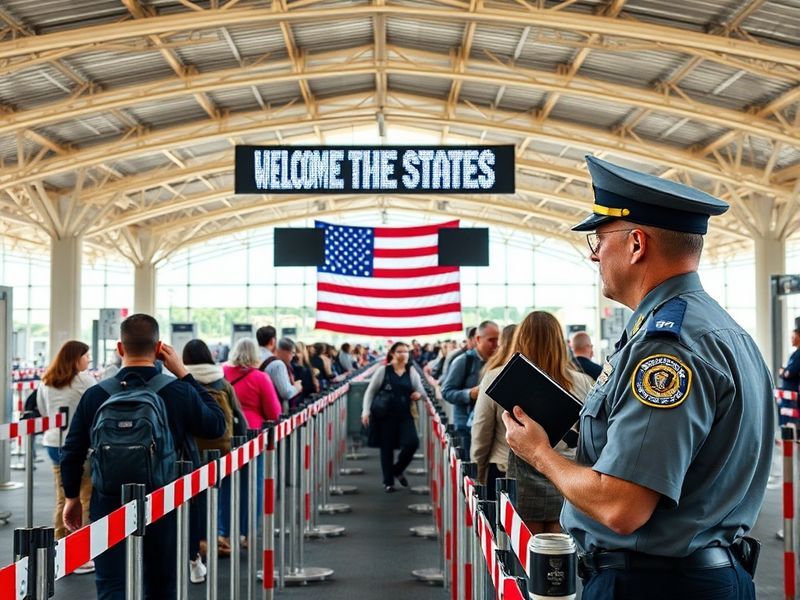
Since its establishment in 2003 as part of the Department of Homeland Security, U.S. Customs and Border Protection (CBP) has evolved into one of the world’s most complex border management agencies. With over 60,000 employees and a budget exceeding $17 billion, CBP operates at more than 300 ports of entry, including land borders, airports, and maritime facilities. Its dual mandate—to facilitate lawful trade and travel while preventing illegal entry—places it at the nexus of global commerce, migration, and national security.
This role becomes especially significant when viewed through a global lens. As supply chains stretch across continents and migration flows respond to economic disparities and conflict, border agencies like CBP are not just enforcers of national law—they are gatekeepers of the international order. The United States, as a top destination for goods, capital, and people, relies on CBP to manage this flow with precision, transparency, and adaptability.
The Structure and Responsibilities of CBP
CBP’s structure reflects its multifaceted mission. It is organized into several key operational components:
- Office of Field Operations (OFO): Manages inspections at ports of entry, processing over 400 million travelers annually and $3.1 trillion in imported goods.
- Border Patrol (USBP): Patrols 6,000 miles of international borders with Canada and Mexico, targeting illegal entries and smuggling.
- Air and Marine Operations (AMO): Provides air and maritime surveillance to detect and interdict threats before they reach U.S. shores.
- Trade and Travel Facilitation: Administers programs like the Global Entry and Automated Commercial Environment (ACE) to expedite legitimate movement.
- Intellectual Property Rights (IPR): Works to prevent counterfeit goods from entering the supply chain, protecting both consumers and industries.
Each component plays a distinct role, yet they are unified by a shared intelligence-driven approach. CBP leverages advanced technologies such as facial recognition, radiation portal monitors, and AI-enhanced risk assessment tools to identify threats without disrupting legitimate commerce. This balance is critical, especially in a world where global trade accounts for nearly 30% of U.S. GDP.
The agency also collaborates closely with international partners, including customs authorities in the European Union, Canada, and Mexico, under initiatives like the CBP-International Joint Border Security Program. These partnerships reflect a broader shift toward coordinated border governance—a recognition that security and mobility must be managed collectively across borders.
The Human Dimension: Migration, Culture, and Policy
Beyond its operational role, CBP is deeply embedded in the human experience of migration. The U.S.-Mexico border, in particular, has become a cultural and political flashpoint, symbolizing both opportunity and division. The agency’s interaction with migrants—whether through asylum claims or enforcement actions—often plays out in international media, shaping global perceptions of American immigration policy.
CBP’s approach to asylum seekers is guided by both domestic law and international obligations. In 2023, CBP encountered over 2.5 million people attempting to enter the U.S. without authorization, a record high driven by economic hardship, climate displacement, and geopolitical instability in Central America and beyond. This surge has forced CBP to adapt, expanding temporary processing facilities and partnering with international organizations to ensure humane treatment.
Culturally, CBP officers are often the first—and sometimes the only—representatives of the U.S. government that travelers and migrants encounter. Their conduct, professionalism, and cultural sensitivity can influence how the world views American institutions. Training programs now include modules on trauma-informed care, cultural competency, and de-escalation techniques, reflecting a broader recognition of the agency’s role in public diplomacy.
Yet, challenges remain. Reports of family separations, prolonged detention, and inconsistent application of asylum policies have sparked criticism from human rights organizations and global media. These incidents underscore the tension between security imperatives and humanitarian obligations—a tension that defines much of CBP’s public perception.
Technology and Innovation: The Future of Border Management
CBP is increasingly defined by its embrace of technology. The Automated Targeting System (ATS) uses machine learning to analyze passenger and cargo data, flagging anomalies that may indicate risk. Biometric screening, including facial recognition at airports, has expanded to include U.S. citizens, raising privacy debates while improving accuracy.
The agency has also pioneered the use of blockchain in supply chain verification, allowing importers and CBP to track goods from origin to port in real time. This innovation is part of a broader effort to modernize customs operations, aligning with global standards set by the World Customs Organization (WCO).
Yet, innovation comes with ethical and operational risks. Facial recognition accuracy varies across demographics, and data privacy concerns have led to lawsuits and congressional scrutiny. CBP maintains that its use of technology is transparent and governed by strict oversight, but the pace of adoption outstrips public understanding in many cases.
Looking ahead, CBP is exploring the use of drones, AI-driven cargo screening, and even quantum computing for risk analysis. These tools could redefine border security, but they also demand robust governance frameworks to ensure accountability and respect for civil liberties.
Global Implications and the Path Forward
CBP’s influence extends far beyond U.S. borders. As a member of the Five Country Conference (alongside Canada, the UK, Australia, and New Zealand), CBP collaborates on counterterrorism, migration management, and trade security. These alliances highlight how border agencies are becoming central players in global governance, particularly in an era of transnational threats like cybercrime and climate-induced migration.
The agency also serves as a model for other nations grappling with similar challenges. Countries from Germany to Singapore have adopted aspects of CBP’s risk-based inspection model, blending technology with traditional enforcement. Yet, the U.S. experience also serves as a cautionary tale—illustrating how even the most advanced systems can be overwhelmed by unanticipated crises, whether pandemics or geopolitical conflicts.
For CBP, the path forward requires three key commitments: adaptability, transparency, and global cooperation. As migration patterns shift and commerce becomes increasingly digital, the agency must evolve without sacrificing its core mission. Public trust will depend on clear communication, consistent enforcement, and a willingness to learn from both success and failure.
Ultimately, CBP is more than a security force—it is a guardian of the rules that enable global integration. In an interconnected world, its work is not just about protecting borders, but about shaping the future of international movement itself.