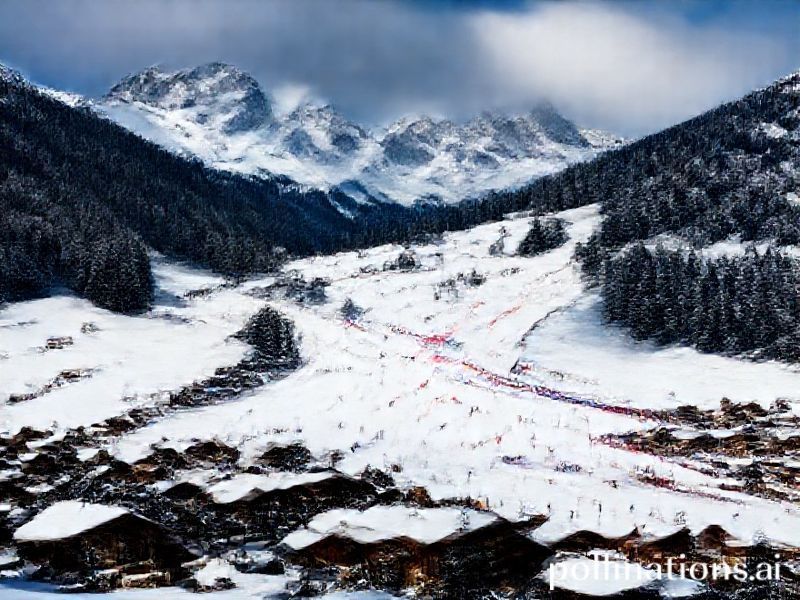
The phenomenon known as “alpine divorce” refers to the rising trend of separations and marital breakdowns in high-altitude mountain towns across the Western United States. Unlike coastal areas where divorce rates have stabilized, these communities—from Aspen to Jackson Hole—are experiencing a different pattern. Researchers and local therapists note that the pressures of living in these environments accelerate marital strain in ways that differ from urban or suburban settings.
While national divorce rates hover around 40-50%, some mountain towns report figures closer to 60-70%, particularly among long-term residents. The reasons are complex, blending economic stress, social isolation, and the psychological toll of high-pressure lifestyles. This article explores the unique factors fueling alpine divorce, how communities are responding, and what it reveals about modern relationships in extreme environments.
The Economic Pressure Cooker of Mountain Life
Living in a mountain town is expensive. Housing costs in places like Telluride, Colorado, or Park City, Utah, often exceed $1 million for modest homes. Yet wages for service workers, teachers, and even mid-level professionals rarely match these expenses. The result is a bifurcated community: wealthy remote workers and second-home owners on one side, struggling locals on the other.
This economic divide places immense strain on couples. Partners who once shared a modest existence find themselves juggling second mortgages, private school tuitions, or the pressure to keep up with neighbors who flaunt luxury lifestyles. Therapists in these areas report that financial stress is the most cited reason for divorce among long-term residents.
- Housing insecurity: Renters face annual lease increases of 20-30%, while homeowners grapple with property taxes that rise alongside home values.
- Seasonal unemployment: Service industry workers (chefs, ski instructors, bartenders) often work multiple jobs to survive the off-seasons, leaving little time for family.
- Wealth disparity: Couples where one partner is a remote worker earning a tech salary while the other works locally can create resentment over unspoken expectations.
One therapist in Jackson Hole, Wyoming, described a recent case where a couple married for 12 years filed for divorce after the husband’s tech salary couldn’t cover their $3.5 million home payments. “He was working 80-hour weeks in front of a screen, while she felt abandoned,” the therapist noted. “The house became a monument to their failure, not their success.”
The Isolation Paradox: Community vs. Loneliness
Mountain towns are often marketed as tight-knit communities where everyone knows your name. In reality, the social dynamics can be stifling. The pressure to conform to a specific lifestyle—whether it’s skiing, outdoor adventures, or a particular social circle—leaves little room for individuality. Couples who don’t fit the mold, or who prioritize different values, often face silent judgment.
Paradoxically, while these towns are physically close-knit, they can be emotionally isolating. The transient nature of the population means friendships are often superficial. Residents who stay long-term may find themselves in a social echo chamber, where disagreements about politics, lifestyle, or even parenting styles are avoided to maintain harmony. Over time, this suppression of authentic connection takes a toll on marriages.
Consider the case of a couple in Bend, Oregon, who stayed together for 15 years because they “fit in” with the outdoor-adventure crowd. When the wife wanted to move to a city for her career, the husband resisted, fearing social ostracization. Their eventual separation wasn’t acrimonious—it was more a quiet unraveling of shared dreams.
Local organizations are trying to address this. In Sun Valley, Idaho, a nonprofit called Community Connections hosts monthly potlucks and discussion groups aimed at fostering deeper relationships. “People come here for the mountains, but they stay for the people—or they leave because they can’t find their tribe,” said the group’s founder.
The Psychological Toll of High-Altitude Living
Living at high elevation isn’t just a physical challenge—it’s a psychological one. Studies show that chronic hypoxia (low oxygen levels) can affect cognitive function, mood, and stress resilience. In towns like Leadville, Colorado (elevation 10,152 feet), residents report higher rates of anxiety and depression, which often trickle into marital problems.
The lack of daylight in winter exacerbates these issues. In places like Truckee, California, residents experience as few as 4-5 hours of daylight during December. The resulting seasonal affective disorder (SAD) can strain even the healthiest relationships. Couples may withdraw from each other, leading to a cycle of isolation and resentment.
Therapists in these areas emphasize the need for mental health resources tailored to mountain living. Wellness programs that incorporate altitude-specific therapies—such as oxygen bars, light therapy, and mindfulness retreats—are gaining traction. However, accessibility remains an issue. Many rural towns lack licensed therapists, forcing residents to rely on telehealth or travel to nearby cities for support.
One couple in Breckenridge, Colorado, sought help after their second child was born. The wife, who struggled with postpartum depression, found relief in a local support group for mothers. Her husband, however, felt left out and began working longer hours. “We were both drowning,” she said, “but we didn’t know how to ask for help in the same way.”
Is There a Way Forward? Community and Counsel
Despite the challenges, some mountain towns are taking proactive steps to address alpine divorce. Local governments and nonprofits are investing in affordable housing initiatives, mental health programs, and social infrastructure to strengthen community bonds. The goal isn’t just to reduce divorce rates but to improve overall well-being.
In Park City, Utah, the city council recently allocated funds to expand affordable housing and launched a “Neighborhood Circles” program, where residents are paired with others for regular check-ins. The program aims to combat loneliness while providing a safety net for struggling families. Early data suggests it’s making a difference.
For couples already navigating divorce, mountain towns are also becoming hubs for alternative dispute resolution. Mediation services that incorporate outdoor therapy—such as hiking or equine-assisted sessions—are gaining popularity. These approaches recognize that healing in a natural environment can be more effective than traditional office settings.
Ultimately, alpine divorce reflects broader societal trends: the pressure to succeed, the erosion of community, and the challenges of modern relationships. But it also highlights resilience. In places where nature is both a draw and a challenge, residents are finding creative ways to rebuild—not just their lives, but their connections to each other.
As one longtime resident of Vail, Colorado, put it: “We came here for the mountains, but we’re staying for the people who understand what it’s like to fight for a life that feels real.”