<h2>What Is a Biobank and Why It Matters in Modern Science</h2>
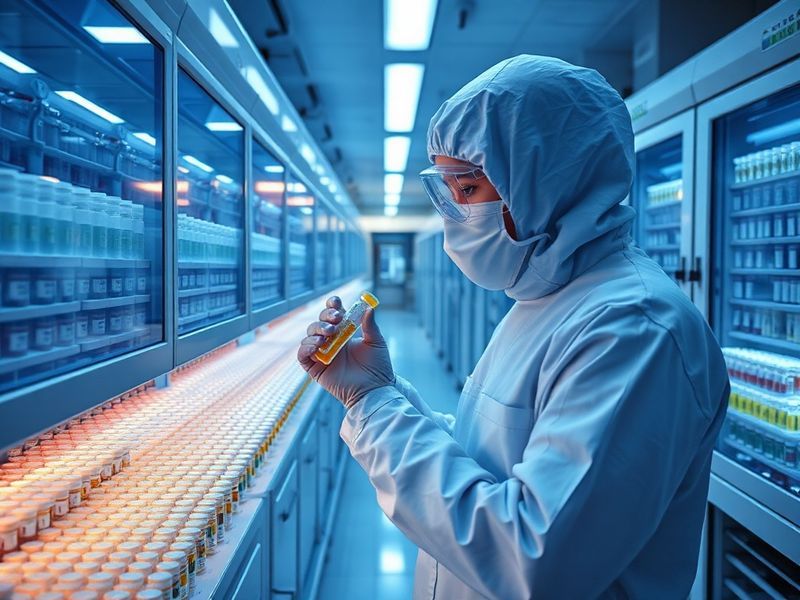
<p>In an era where medical breakthroughs hinge on data, biobanks have quietly become the unsung heroes of global health research. These vast repositories store biological samples—blood, tissue, DNA—alongside health records, forming the backbone of studies that seek to understand diseases, develop treatments, and even predict epidemics. Unlike a typical laboratory freezer, a biobank is a living archive, one that connects past samples to future discoveries.</p>

<p>Consider the 2020 COVID-19 pandemic. Researchers worldwide scrambled to sequence viral genomes, but they relied heavily on pre-existing biobanks to rapidly compare new virus strains with historical data. This allowed vaccines to be developed in record time. Biobanks don’t just store; they enable science to move faster than ever before.</p>

<h3>The Global Network of Biobanks: A Patchwork of Progress</h3>
<p>Biobanks are not confined to wealthy nations. In fact, some of the most innovative models are emerging from regions where health challenges are most acute. Take Africa, where biobanks are being established to address infectious diseases like malaria and tuberculosis. The African Centre of Excellence for Genomics of Infectious Diseases (ACEGID), based in Nigeria, collects and sequences samples from across the continent, helping track outbreaks and identify resistant strains.</p>

<p>In Europe, the UK Biobank stands as a titan. Launched in 2006, it has gathered health data and biological samples from half a million participants. Its open-access policy has led to over 3,000 research papers, covering everything from Alzheimer’s to nutrition. Meanwhile, in China, the National GeneBank in Shenzhen stores over 10 million biospecimens, positioning the country as a leader in genomic research.</p>

<p>This global network is not without challenges. Data privacy laws vary widely. In the European Union, strict GDPR rules govern how samples and data can be shared. In the United States, the Common Rule and HIPAA provide oversight, but compliance is complex. Meanwhile, in countries like India, biobanks are still in early stages, constrained by limited infrastructure and funding. Yet, the potential is immense—especially when these collections are shared across borders.</p>

<h3>Ethics and Trust: The Delicate Balance in Biobanking</h3>
<p>Biobanks operate in a moral gray area. They thrive on trust. Participants donate samples with the understanding that their data will be used responsibly. But trust is fragile. High-profile breaches, such as the 2018 Cambridge Analytica scandal, have made people wary of how personal information is handled—even in scientific contexts.</p>

<p>Ethical concerns extend beyond privacy. There’s the issue of informed consent. Many early biobanks collected samples under broad consent agreements, allowing future use without specific permission. While efficient, this practice has sparked debate. Should a participant’s consent cover all future research, or should they have the right to opt in or out?</p>

<p>Cultural attitudes toward biobanking also differ. In some Western countries, altruism is a driving force—people donate knowing their contribution may help future generations. In Japan, however, there’s a stronger emphasis on familial consent. In Indigenous communities, historical exploitation by researchers has led to skepticism. The Canadian First Nations have established their own biobanks, like the First Nations Information Governance Centre, to ensure Indigenous control over biological data. This model prioritizes community-led research and transparency.</p>

<p>One solution gaining traction is dynamic consent. Through digital platforms, participants can log in, review how their samples are being used, and even withdraw consent at any time. This approach empowers individuals and rebuilds trust—especially important as biobanks expand into areas like AI-driven research.</p>

<h3>From Storage to Discovery: How Biobanks Fuel Innovation</h3>
<p>Biobanks are more than just warehouses. They are engines of discovery. By linking biological samples to health records, researchers can identify patterns that would otherwise go unnoticed. For example, the UK Biobank helped uncover a genetic link between a rare variant and a higher risk of Parkinson’s disease. This kind of insight can lead to targeted therapies or early detection methods.</p>

<p>They also play a crucial role in precision medicine—a field that tailors treatments to individual genetic profiles. In oncology, biobanks have enabled the development of liquid biopsies, which detect cancer from a simple blood draw. These tests are less invasive and can spot tumors earlier than traditional imaging.</p>

<p>Even nutrition science benefits. Researchers studying metabolic health use biobank data to analyze how diet, genetics, and lifestyle interact. For instance, the PREDICT study, part of the Zoe Health Initiative, used blood samples from thousands of participants to show that personal responses to food vary widely—challenging one-size-fits-all dietary guidelines.</p>

<p>The potential extends beyond medicine. Environmental health studies use biobanks to track pollution exposure. For example, the Norwegian Mother, Father and Child Cohort Study has linked prenatal exposure to chemicals with developmental issues in children. This kind of longitudinal data is nearly impossible to gather without long-term storage.</p>

<h3>The Future of Biobanking: AI, Ethics, and Global Equity</h3>
<p>The next frontier for biobanks lies in artificial intelligence. Machine learning can sift through millions of samples and health records to identify subtle correlations. Projects like the UK Biobank’s AI partnership with DeepMind are already using neural networks to predict disease risk. But this raises concerns: Who controls the algorithms? Could biases in training data lead to unequal healthcare outcomes?</p>

<p>Another challenge is sustainability. Maintaining a biobank is costly. Freezers must be maintained at -80°C, staff need training, and digital infrastructure must be secure. Many low- and middle-income countries lack the resources to build and maintain large-scale biobanks. This risks widening global health disparities.</p>

<p>To counter this, international collaborations are forming. The Global Alliance for Genomics and Health (GA4GH) sets standards for data sharing and ethical practices. Initiatives like H3Africa, which builds biobanks across the continent, aim to ensure African researchers lead their own genomic studies. These efforts are vital to prevent a scenario where the Global South provides samples but doesn’t benefit from the findings.</p>

<p>Looking ahead, biobanks may evolve into decentralized networks, where samples and data are stored locally but accessible globally under strict governance. Blockchain technology is being tested to track sample provenance and consent, ensuring transparency and accountability.</p>

<h2>Conclusion: A Living Legacy for Future Generations</h2>
<p>Biobanks represent one of the most hopeful yet complex developments in modern science. They embody the promise of collective action—where individuals contribute to a shared resource that benefits all. Yet they also force us to confront difficult questions about consent, equity, and the boundaries of scientific progress.</p>

<p>As technology advances and global health needs grow, biobanks will remain at the heart of medical innovation. Their true value lies not just in what they store, but in what they enable: a healthier, more equitable future. For researchers, policymakers, and participants alike, the message is clear—biobanks are not just a scientific tool. They are a legacy in the making.</p>

<p>To learn more about how health data is shaping global research, explore our coverage of <a href="/category/health/">Health Innovation</a> and <a href="/category/science/">Scientific Breakthroughs</a>.</p>

---
METADATA
{
  "title": "Biobanks: The Hidden Powerhouses Fueling Global Health Research",
  "metaDescription": "Discover how biobanks store DNA and health data to drive medical breakthroughs, from COVID-19 vaccines to cancer treatments.",
  "categories": ["Health", "Science"],
  "tags": ["biobanking", "genomics", "medical research", "health data", "ethics in science"],
  "imageDescription": "A high-tech laboratory interior with rows of cryogenic storage tanks labeled with barcodes, glowing blue LED lights, and a researcher in a white lab coat reviewing digital data on a tablet. The setting is sterile yet futuristic, conveying precision and innovation."
}
---END METADATA---