Hossein Vafaei: How Iran’s First Snooker Champion is Changing the Game
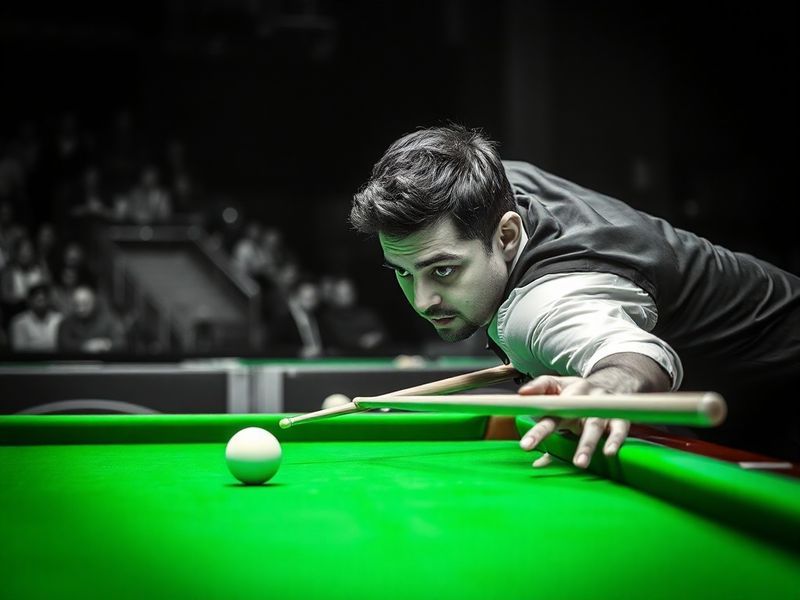
Hossein Vafaei Ayouri stands as a towering figure in modern snooker, transcending national boundaries to become the sport’s first Iranian world top-16 player. Born in 1994 in Tehran, his journey from the congested streets of the Iranian capital to the polished halls of Sheffield’s Crucible Theatre represents more than personal triumph—it signals a tectonic shift in the geography of cue sports.
Vafaei’s emergence arrives during a period when snooker, once confined to British and European strongholds, has become a genuinely global spectacle. His ascent coincides with the rise of players from the Middle East, East Asia, and Africa, challenging the sport’s traditional Western dominance. In this evolving landscape, Vafaei has not merely adapted; he has redefined what it means to compete at the highest level.
The Formative Years: A Childhood Carved by Resilience
Growing up in Tehran during the 1990s and early 2000s, Vafaei’s childhood unfolded against the backdrop of post-war reconstruction and social upheaval. His introduction to snooker came not through elite academies or state sponsorship, but through the makeshift tables that dotted Tehran’s working-class neighborhoods. These tables, often weathered by sun and neglect, became his first classrooms.
At age 15, Vafaei began competing in local tournaments, quickly distinguishing himself with a natural aptitude for tactical play. His early mentors included former Iranian champions who recognized his potential but lacked the resources to groom him professionally. This scarcity of infrastructure forced Vafaei to develop an independent training regimen, often practicing alone for hours to refine his stroke and shot selection.
By 16, he had earned a wildcard spot in the 2011 Asian Under-21 Championship, where he reached the semifinals. This performance caught the attention of World Snooker, which invited him to compete in European events under a developmental tour card. The move required financial sacrifice and cultural adjustment, as Vafaei navigated life in a foreign country with limited English and minimal financial support.
The Breakthrough: From Wildcards to World Rankings
Vafaei’s first major breakthrough came in 2017 during the China Open. As a qualifier ranked outside the top 64, he stunned the snooker world by defeating established stars like Mark Williams and Marco Fu en route to the quarterfinals. The run established him as a player capable of toppling the sport’s hierarchy.
His most defining moment arrived in 2022 at the Welsh Open. In a final against Joe O’Connor, Vafaei produced a masterclass in pressure snooker, grinding out a 9-5 victory to claim his first ranking title. The win made him the first Iranian to win a ranking event, a milestone that resonated deeply in a nation where snooker had long been a marginalized pursuit.
This victory was not merely personal. It represented the culmination of years of effort by Iranian cueists, many of whom had faced administrative barriers and cultural skepticism. Vafaei’s triumph validated their belief that excellence in snooker transcends geography and resource disparity.
Key Factors Behind His Success
- Technical Precision: Vafaei possesses an unusually smooth cue action, allowing for exceptional cue ball control and positional play.
- Mental Fortitude: Known for his calm demeanor, he excels in high-pressure moments, a trait cultivated through years of solitary practice.
- Adaptability: He has refined his game to excel on multiple table sizes and playing styles, from the slow cloth of the UK to the faster conditions of Asia.
- Cultural Bridge: Fluent in English and familiar with Western coaching styles, he navigates the international circuit with ease.
Cultural Impact: Snooker in the Islamic World
Vafaei’s success has had a profound cultural ripple effect across the Islamic world. In Iran, where billiards have historically been viewed with suspicion due to perceptions of gambling, his achievements have sparked renewed interest in cue sports. Schools and sports clubs have begun introducing snooker tables, framing the game as a legitimate athletic pursuit rather than a leisure activity linked to vice.
His presence has also influenced snooker’s global marketing strategy. World Snooker Tour has actively promoted Vafaei in Middle Eastern markets, broadcasting his matches in Persian and featuring him in campaigns targeting youth engagement. This outreach reflects a broader shift within the sport to diversify its audience and challenge its Eurocentric image.
Beyond Iran, Vafaei has inspired players from Saudi Arabia, the UAE, and Egypt. The Saudi Snooker Federation recently launched a development program modeled after Iran’s emerging talent pipeline, with Vafaei serving as a key ambassador. This cross-cultural exchange underscores how individual excellence can catalyze systemic change.
Global Rivalries and Future Aspirations
Vafaei’s career has intersected with some of snooker’s brightest talents, including Judd Trump, Ronnie O’Sullivan, and Mark Selby. While he has struggled for consistency against the sport’s elite, he has claimed notable victories, including wins over former world champions Neil Robertson and Shaun Murphy.
His most anticipated matchup remains against Iranian compatriot Ali Carter in a hypothetical clash of Middle Eastern snooker. Such a match would not only be a sporting spectacle but a cultural milestone, uniting two nations through athletic competition.
Looking ahead, Vafaei has set his sights on snooker’s ultimate prize: the World Championship. A victory at the Crucible would cement his legacy and further elevate the profile of Iranian and Middle Eastern players. His coach, former world number 11 and fellow Iranian Mehrdad Kohsar, has emphasized building physical endurance and mental resilience—areas identified as key to sustained success at the highest level.
What’s Next for Hossein Vafaei?
- Targeting multiple ranking titles within the next two seasons to solidify top-16 status.
- Expanding his role in developing snooker infrastructure in Iran and the broader Middle East.
- Competing in exhibition tours to grow his global fanbase, particularly in Asia and Europe.
- Pursuing coaching certifications to give back to the next generation of cueists.
Vafaei’s story is still being written, but its contours are clear: he is not just a snooker player, but a symbol of possibility in a sport undergoing rapid transformation. His journey from Tehran’s back alleys to the world stage reflects the broader democratization of global sports, where talent and determination can overcome geographic and economic barriers.
As snooker continues to expand beyond its traditional borders, players like Vafaei serve as both ambassadors and architects of change. His success challenges outdated notions of who can excel in cue sports and inspires a new generation to pick up a cue—not just as a pastime, but as a path to excellence.
In an era where sports are increasingly scrutinized for their social impact, Vafaei’s rise offers a compelling counter-narrative: one of perseverance, cultural influence, and quiet revolution on green baize.