St. George’s Day: History, Symbolism, and Modern Celebrations
“`html
St. George’s Day: Celebrating England’s Patron Saint
St. George’s Day, observed annually on April 23rd, is a day of national pride for England. Unlike other patron saint celebrations in the United Kingdom, such as St. Andrew’s Day for Scotland or St. Patrick’s Day for Ireland, St. George’s Day has historically received less widespread recognition. Yet, its cultural and historical significance remains deeply rooted in English tradition. This observance not only honors St. George as the patron saint of England but also serves as an opportunity to reflect on English heritage, identity, and values.
The origins of St. George’s Day trace back to the early Christian era. St. George, a Roman soldier born in the 3rd century AD, is best known for his legendary battle against a dragon—a tale that symbolizes the triumph of good over evil. While historical records about his life are scarce, his legacy as a martyr and warrior has endured for centuries. The association of St. George with England began during the Middle Ages, particularly after King Edward III established the Order of the Garter in 1348, naming St. George as its patron saint.
The Symbolism of St. George and His Flag
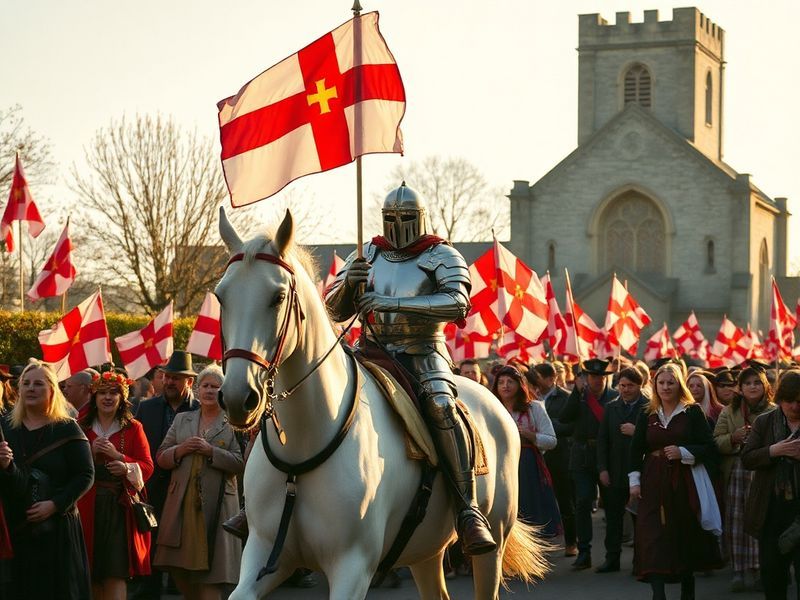
The red cross of St. George on a white background is one of the most recognizable symbols in England. This flag, dating back to the Crusades, became a prominent emblem during the reign of Richard the Lionheart. It was later incorporated into the royal coat of arms and the flag of England itself. The cross is also featured in the Union Jack, symbolizing England’s enduring presence within the United Kingdom.
St. George’s symbolism extends beyond the flag. The dragon-slaying legend, popularized in medieval literature, represents courage, chivalry, and the struggle against oppression. This narrative resonates with England’s historical battles, including the Hundred Years’ War against France. While the story is mythological, its themes of heroism and resilience continue to inspire national pride.
In modern times, the St. George’s flag is often displayed at sporting events, political rallies, and cultural celebrations. However, its use is not without controversy. Some associate the flag with far-right movements, which has led to debates about its true meaning. For many, though, it remains a symbol of English identity rather than political affiliation.
How St. George’s Day is Celebrated
Unlike St. Patrick’s Day in Ireland or St. David’s Day in Wales, St. George’s Day is not a public holiday in England. Despite this, communities across the country mark the occasion in various ways. Traditional celebrations include Morris dancing, flag-raising ceremonies, and reenactments of St. George’s legendary battle with the dragon. Schools often organize events to teach children about the saint’s history and significance.
In recent years, there has been a push to elevate the profile of St. George’s Day. Some cities hold festivals featuring English folk music, food, and literature. Pubs and restaurants may offer special menus with traditional dishes like roast beef, Yorkshire pudding, or afternoon tea. Meanwhile, historical sites such as Windsor Castle and Westminster Abbey host exhibitions and guided tours focused on England’s patron saint.
One notable event is the St. George’s Day Parade in London, which draws thousands of spectators. The parade typically includes marching bands, cultural performances, and displays celebrating English heritage. Such events highlight the growing interest in reclaiming St. George’s Day as a day of national celebration.
Regional Variations in Celebrations
Celebrations of St. George’s Day vary across England’s regions. In some areas, particularly in the north, the day is observed with less fanfare compared to southern counties. However, certain communities have unique traditions. For example, in Bristol, the St. George’s Day Festival includes a dragon-themed parade, paying homage to the saint’s legendary foe. In York, medieval reenactments bring the story of St. George to life, offering a glimpse into England’s past.
In contrast, some regions prioritize other cultural observances. For instance, Cornwall celebrates St. Piran’s Day with greater enthusiasm than St. George’s Day, reflecting its distinct Cornish identity. This diversity in observance underscores the complexities of national identity in the United Kingdom, where regional pride often takes precedence over broader national symbols.
St. George’s Day in the Modern Era
In an increasingly globalized world, St. George’s Day has taken on new meanings. For some, it is an opportunity to celebrate English culture in a multicultural society. Others view it as a chance to reflect on England’s role within the United Kingdom and its relationship with other nations. The day also serves as a reminder of the country’s rich history, from Roman times to the present day.
However, St. George’s Day is not without its challenges. The day’s association with English nationalism has led to debates about inclusivity. Some argue that celebrating St. George’s Day risks excluding non-English communities within the UK. Others contend that the day can be an inclusive celebration of shared values, such as bravery, justice, and community.
Efforts to modernize St. George’s Day have included initiatives to promote it as a day of multicultural celebration. For example, some organizations host events that highlight contributions from England’s diverse communities. These efforts aim to broaden the appeal of St. George’s Day beyond its traditional associations.
The Role of St. George’s Day in Education
Schools play a crucial role in keeping the spirit of St. George’s Day alive. Many institutions use the day to teach students about English history, literature, and civic values. For example, children may learn about the legend of St. George, the significance of the red cross flag, or the historical context of England’s patron saint.
Some schools organize creative projects, such as writing essays about what it means to be English or creating artwork inspired by St. George’s story. These activities help young people connect with their heritage in a meaningful way. Additionally, educational resources about St. George’s Day are increasingly available online, making it easier for teachers to incorporate the celebration into their curricula.
Why St. George’s Day Matters
St. George’s Day is more than just a celebration of a medieval saint. It is a day to reflect on what it means to be English in the 21st century. In a time of political and social change, the day offers an opportunity to celebrate shared values while acknowledging the diversity of modern England. Whether through cultural events, educational activities, or personal reflection, St. George’s Day invites people to explore their identity and heritage.
For those interested in delving deeper into English history and culture, Dave’s Locker Culture section offers a wealth of articles and resources. Similarly, the News section provides updates on national celebrations and cultural trends across the UK.
As England continues to evolve, St. George’s Day remains a touchstone for national pride and identity. Whether celebrated quietly at home or with grand public events, the day serves as a reminder of the enduring legacy of St. George and the values he represents. In a world of constant change, such traditions offer a sense of continuity and connection to the past.
Ultimately, St. George’s Day is what communities make of it. For some, it is a day of patriotism; for others, a chance to celebrate diversity. Whatever the interpretation, the day holds a unique place in England’s cultural calendar, inviting reflection, celebration, and connection.